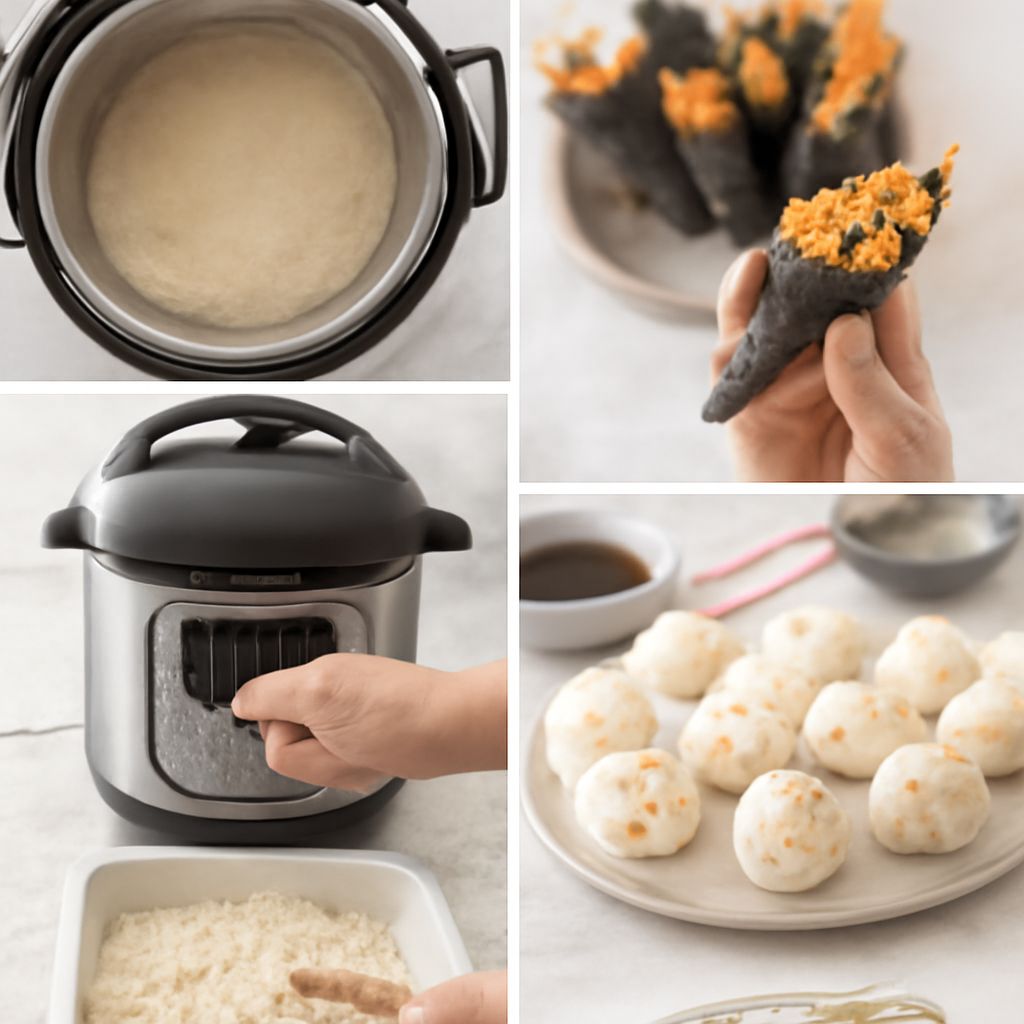
A sushi rice cooker is a rice cooker used to cook short-grain Japanese rice, then season it with vinegar, sugar, and salt so it becomes sushi rice. If you want the short answer to how to make sushi rice in a rice cooker, use sushi rice or another short-grain rice, cook it with slightly less water than plain rice, then fold in sushi seasoning while the rice is still warm.
You do not need a special machine for this. A standard electric rice cooker works well as long as you measure the rice, rinse it, and let the finished rice rest before mixing. The main difference is not the appliance itself but how you handle the rice after cooking.
Sushi Rice Cooker: Direct Answer
A sushi rice cooker is usually just a rice cooker used for making the rice base for sushi. It is not a separate category of appliance in most kitchens. What matters is that it cooks short-grain rice evenly and gives you a clean, slightly sticky texture that holds together without turning mushy.
If you are asking whether you need a special sushi rice cooker, the answer is no. Any reliable rice cooker can make sushi rice in a rice cooker as long as it has a normal white rice setting or a short-grain setting. The final texture comes from the rice type, water ratio, and seasoning, not from a special sushi-only model.
How It Works and What Makes Sushi Rice Different
Sushi rice is made from short-grain rice because it becomes tender and sticky enough to shape. Long-grain rice stays too separate and dry for sushi. After cooking, you season the rice with a mixture of rice vinegar, sugar, and salt. That seasoning gives sushi rice its clean tangy flavor and helps balance the fillings.
A rice cooker helps because it controls heat and timing for you. It cooks the rice until the water is absorbed, then switches to warm mode. That steady process reduces guesswork and makes it easier to get consistent results. Still, the rice cooker does not create sushi rice by itself; you have to prepare the rice correctly first.
Good sushi rice should look glossy, feel tender, and hold together when shaped. It should not be wet on the outside or hard in the center. If it is too sticky, you may have used too much water or stirred it too aggressively. If it is too dry, the rice may need a little more water or a longer rest.
How to Make Sushi Rice in a Rice Cooker
Use this basic method for the best results:
- Measure 2 cups short-grain sushi rice.
- Rinse it in cold water 3 to 5 times until the water looks mostly clear.
- Drain well for a few minutes.
- Add the rice to the rice cooker with 2 cups water for a firmer texture, or slightly less if your cooker tends to run wet.
- Cook on the white rice setting.
- Let the rice rest in the cooker for 10 to 15 minutes after it finishes.
- Transfer the rice to a wide bowl or tray.
- Mix in sushi seasoning while the rice is warm.
For the seasoning, a practical ratio for 2 cups uncooked rice is about 3 tablespoons rice vinegar, 1 tablespoon sugar, and 1 teaspoon salt. Warm the mixture just enough to dissolve the sugar and salt, then drizzle it over the rice.
Fold the seasoning in gently with a rice paddle or spatula. Do not stir hard or mash the grains. A cutting motion works better than stirring because it keeps the rice fluffy while distributing the seasoning evenly.
Success cues: the rice should taste balanced, look glossy, and hold its shape. Failure cues: gummy rice usually means too much water or overmixing; dry, crumbly rice usually means too little water or not enough resting time.
How to Use, Compare, or Recognize a Sushi Rice Cooker
When you shop for a sushi rice cooker, look for a model with a reliable white rice setting, a nonstick inner pot, and a keep-warm function. Those features matter more than the word “sushi” on the box. A basic rice cooker, a fuzzy-logic model, or a simple one-button cooker can all work if they cook short-grain rice well.
To recognize a good setup for sushi rice in a rice cooker, check whether the cooker handles small batches without scorching and whether the pot makes it easy to rinse and clean. If you make sushi often, a model with a flat paddle and measured rice cup can also help you repeat the same result.
Compare cookers by how evenly they cook short-grain rice, not by extra presets you may never use. If you mostly make sushi, onigiri, or donburi, a dependable rice cooker with consistent heat control will do the job better than a feature-heavy machine that cooks unevenly.