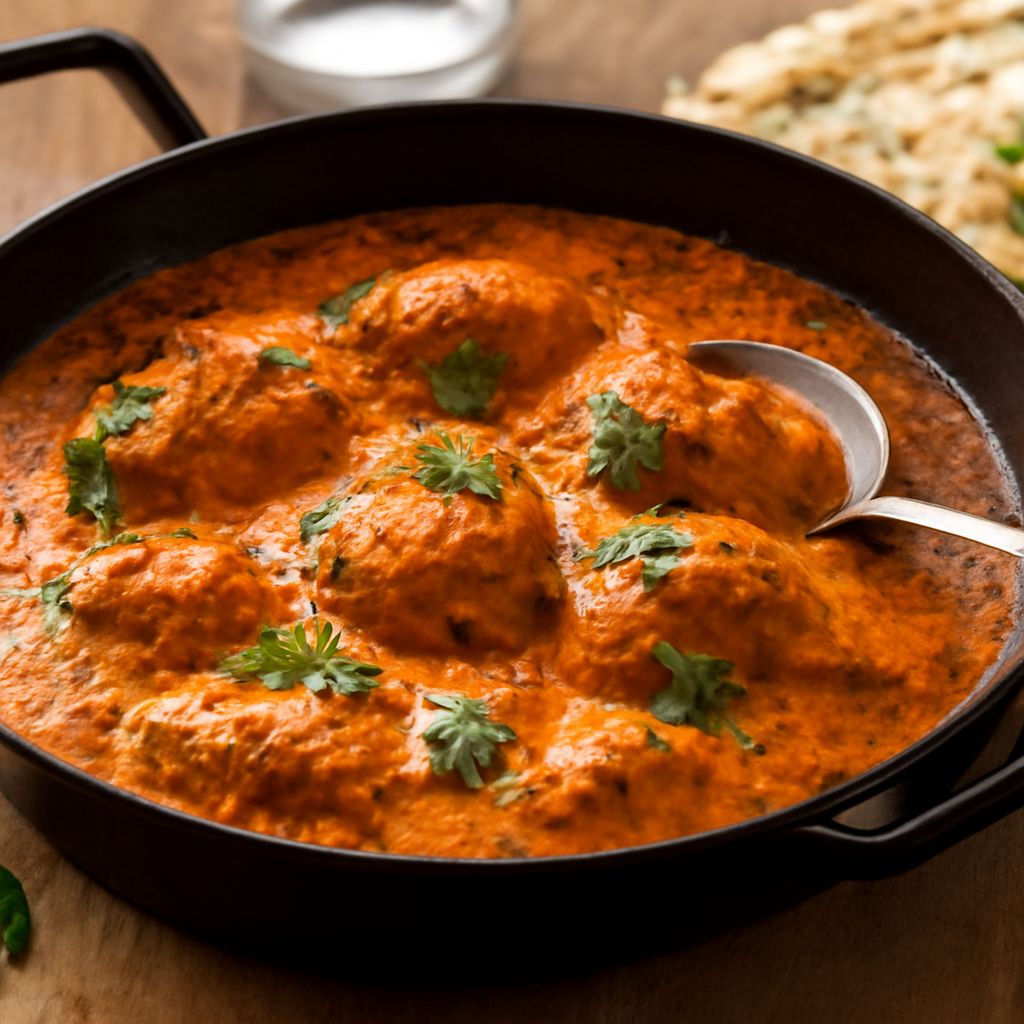
This chicken madras is a hot, tangy curry with a deeply cooked onion-tomato masala rather than a sauce made simply hot with extra curry powder. You build the heat in layers with dried chiles, cayenne, black pepper, and toasted spices, then balance it with tomato and tamarind.
This chicken madras curry serves four and takes about 20 minutes to prepare and 45 minutes to cook. Use boneless chicken thighs for the juiciest result, or substitute chicken breast with a shorter simmer.
Chicken Madras ingredients: quantities for 4 servings
For the chicken and masala:
- 1 1/2 pounds boneless, skinless chicken thighs, cut into 1 1/2-inch pieces
- 1 1/2 teaspoons fine sea salt, divided
- 2 tablespoons neutral oil, such as canola or avocado oil
- 1 large yellow onion, finely diced
- 4 garlic cloves, finely grated or minced
- 1 tablespoon fresh ginger, finely grated
- 2 dried red chiles, stemmed and broken into pieces
- 1 1/2 teaspoons ground coriander
- 1 teaspoon ground cumin
- 1 teaspoon sweet paprika
- 1 teaspoon ground turmeric
- 1 teaspoon cayenne pepper
- 1/2 teaspoon freshly ground black pepper
- 1/2 teaspoon ground cinnamon
- 1 cup crushed tomatoes
- 1 cup chicken stock or water
- 1 tablespoon tamarind concentrate
- 1 teaspoon brown sugar
To finish:
- 1 tablespoon fresh lemon juice, plus more to taste
- 2 tablespoons chopped cilantro
- Steamed basmati rice or warm naan, for serving
Keep 1/2 cup extra water or stock nearby. You may need it if the sauce reduces before the chicken is tender. For a milder version, use one dried chile and reduce the cayenne to 1/2 teaspoon. For a hotter madras chicken, keep both dried chiles, use the full cayenne, and add a third chile if you want a sharper burn.
Build the onion and spice base for Madras chicken
- Put the chicken in a bowl and toss it with 1 teaspoon of the salt. Set it aside while you build the masala. This short seasoning step gives the meat flavor without making a separate marinade necessary.
- Heat the oil in a wide, heavy pot or Dutch oven over medium heat. Add the onion and the remaining 1/2 teaspoon salt. Cook for 10 to 12 minutes, stirring often, until the onion is soft, golden, and reduced. Do not rush this step: pale, crunchy onion leaves the sauce thin and harsh.
- Add the garlic and ginger. Cook for 1 minute, stirring constantly, until fragrant and no raw garlic smell remains.
- Add the dried chiles, coriander, cumin, paprika, turmeric, cayenne, black pepper, and cinnamon. Stir continuously for 30 to 45 seconds. The spices should coat the onion and smell toasted, but they should not darken to the point of smoking. If the pot looks dry, add 1 tablespoon of water.
- Stir in the crushed tomatoes. Scrape the bottom of the pot, then cook the mixture for 8 to 10 minutes over medium-low heat. Stir every minute or two. The tomato should lose its raw, watery appearance, and the masala should become thick enough that your spoon leaves a brief trail across the bottom.
That reduced tomato and onion mixture is the curry’s flavor foundation. Letting the spices cook in the oil and tomato before adding liquid develops a rounder masala and prevents the finished sauce from tasting like raw spice powder.
Cook the chicken and sauce: timings and doneness cues
- Add the seasoned chicken to the cooked masala. Stir well so every piece is coated, then cook for 3 to 4 minutes. The chicken should become opaque on the outside, but it does not need to cook through at this stage.
- Pour in the stock, tamarind concentrate, and brown sugar. Stir to loosen the masala from the base of the pot. Bring the sauce to a gentle simmer, then reduce the heat to medium-low.
- Cover the pot partially and simmer boneless chicken thighs for 18 to 22 minutes. Stir every 5 minutes so the sauce cooks evenly and the chicken does not catch on the bottom. Keep the simmer gentle; vigorous boiling can make the chicken tough and cause the sauce to separate.
- Remove the lid and simmer for another 5 to 8 minutes, or until the sauce is thick enough to cling to the chicken. If it becomes thick before the chicken is tender, add the reserved stock or water 2 tablespoons at a time.
Check the largest piece of chicken by cutting into it or using an instant-read thermometer. It should be fully opaque in the center, tender when pierced, and register 165°F. Thigh meat may reach a slightly higher temperature and still remain juicy. The sauce should look glossy, with small pools of seasoned oil at the edges, and should coat a spoon instead of running off like soup.
Turn off the heat and stir in the lemon juice and cilantro. Taste after the lemon goes in, because the tamarind already supplies acidity. Serve the madras chicken over basmati rice or with naan while the sauce is hot and loose enough to spoon.
Adjusting Madras chicken curry for heat, tang, and consistency
Make your final adjustments in small amounts after the chicken is cooked:
- To increase heat: Stir in 1/4 teaspoon cayenne at a time, or add a pinch of crushed dried chile. Let the curry simmer for 2 minutes after each addition so the heat integrates.
- To soften heat: Add 2 to 3 tablespoons water or stock, then stir in 2 tablespoons coconut milk or plain yogurt off the heat. Yogurt can split if boiled, so keep it out of the active simmer.
- To increase tang: Add lemon juice 1 teaspoon at a time. If you want deeper sourness rather than a fresh citrus note, add 1/2 teaspoon more tamarind concentrate.
- To correct a sharp sauce: Add 1/4 teaspoon brown sugar, simmer for 1 minute, and taste again. Use restraint so the curry stays savory.
- To thicken a thin sauce: Simmer uncovered for 3 to 5 minutes, stirring often. Do not add flour; reducing the tomato masala keeps the flavor concentrated.
- To loosen a thick sauce: Add hot water or stock a tablespoon at a time until it flows around the chicken but still coats each piece.
Your finished madras chicken curry should taste hot first, then savory and warmly spiced, with tomato and tamarind keeping the heat bright rather than flat. Adjust the final salt only after reducing the sauce and adding the lemon.