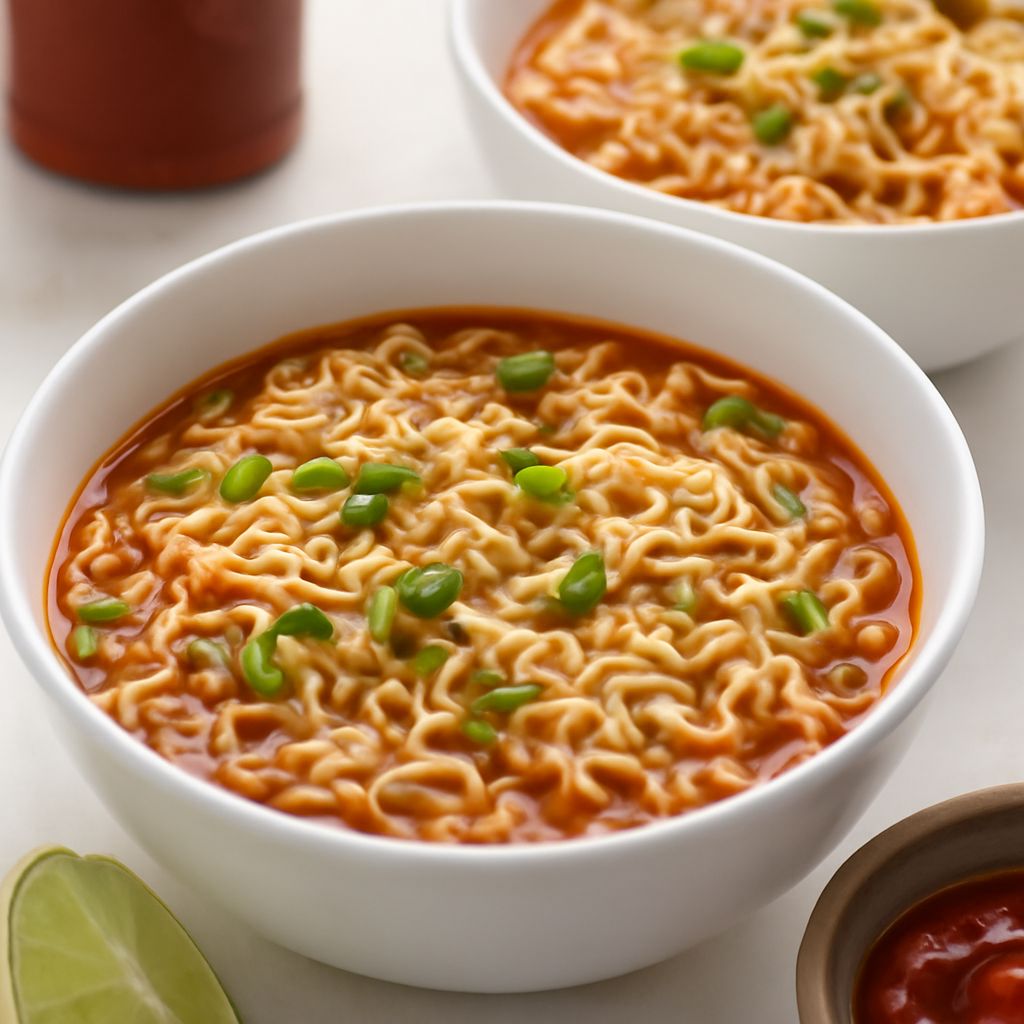
This homemade ramen seasoning makes about 8 tablespoons of dry mix. Use 1 tablespoon per bowl with 2 cups of water or unsalted broth, then add noodles and cook until tender. The blend balances salt, mushroom umami, garlic, onion, ginger, chile, pepper, and a little sugar.
This dry mix is a seasoning, not a complete traditional ramen broth. It gives you a fast, balanced foundation that you can build with chicken bouillon, miso, chili oil, vegetables, eggs, or other toppings.
Homemade Ramen Seasoning Ingredients and Ratios
Measure the ingredients into a small bowl or jar. Use fine-grained ingredients so the blend distributes evenly through the broth.
- 2 tablespoons dried mushroom powder: Adds savory, meaty umami.
- 1 tablespoon fine sea salt: Provides the main seasoning without making the mix overwhelmingly salty.
- 1 tablespoon nutritional yeast: Adds rounded, cheesy-sounding umami.
- 1 tablespoon garlic powder: Supplies a strong aromatic base.
- 2 teaspoons onion powder: Adds savory sweetness.
- 2 teaspoons ground ginger: Brings warmth and freshness.
- 2 teaspoons brown sugar: Balances salt, chile, and bitterness.
- 1 teaspoon ground white pepper: Adds gentle peppery heat.
- 1 teaspoon toasted sesame seeds: Adds nutty flavor and texture.
- 1 teaspoon red pepper flakes: Gives the base a mild chile note.
The full batch yields about 1/2 cup, or 8 tablespoons. That provides eight modestly seasoned bowls. For a stronger bowl, use 1 1/2 tablespoons, but taste the broth before adding more because the salt level rises quickly.
Mix and Store Your DIY Ramen Seasoning
- Add every ingredient to a bowl, jar, or small food processor.
- Whisk thoroughly, or pulse for a few seconds, until the mushroom powder, salt, and spices look evenly distributed.
- Transfer the mixture to an airtight jar and label it with the date.
To make your own ramen seasoning ahead of time, keep the jar in a cool, dry cupboard away from steam. Use a completely dry spoon each time. The mix keeps its best flavor for about 2 months; discard it if it develops moisture, clumps that do not break apart, or an off smell.
If your mushroom powder is coarse, pulse the finished mix briefly so it dissolves more smoothly. A little sediment is normal, but large pieces can make the broth taste uneven from bowl to bowl.
Ramen Noodle Seasoning Recipe: One Bowl and Broth Method
For one bowl, use:
- 1 tablespoon ramen seasoning blend
- 2 cups, or 16 ounces, water or unsalted broth
- 1 portion ramen noodles, about 3 to 4 ounces
- Pour the liquid into a saucepan and whisk in 1 tablespoon of the blend while it is still cold or lukewarm. This prevents mushroom powder and nutritional yeast from forming stubborn lumps.
- Bring the seasoned liquid to a gentle boil over medium-high heat.
- Add the noodles and cook for the time listed on the package, usually 2 to 4 minutes. Stir once or twice so the noodles separate.
- Taste the broth before adding toppings. Add up to 1/2 teaspoon more blend only if the broth tastes flat rather than simply under-salted.
- Serve immediately with an egg, sliced scallions, corn, spinach, mushrooms, tofu, or cooked meat.
The finished broth should taste savory first, with noticeable garlic and ginger, mild chile warmth, and a lightly sweet finish. If it tastes dusty, whisk the blend into the liquid before boiling and avoid adding extra dry powder directly to the bowl. If the broth tastes sharp or salty, dilute it with 2 to 4 tablespoons of water.
This ramen seasoning recipe also works without instant noodles. Use the same 1 tablespoon blend and 2 cups liquid for fresh ramen, soba-style wheat noodles, or cooked rice noodles. Adjust the cooking time to the noodle package.
Chicken-Style, Miso-Style, and Spicy Variations
Start with the same base blend, then add one measured flavor booster per bowl.
Chicken-style ramen
Combine 1 tablespoon base blend, 1 teaspoon chicken bouillon granules, and 2 cups water. Simmer with the noodles as directed. Add shredded cooked chicken, scallions, or a soft-boiled egg for a fuller bowl. Because bouillon is often salty, taste before adding any extra blend.
Miso-style ramen
Whisk 1 tablespoon white miso into a small cup with a few tablespoons of the hot broth until smooth. Stir it back into the saucepan after turning off the heat, along with 2 teaspoons base blend. Use 2 cups unsalted water or broth. Adding the miso off heat preserves its rounded flavor and prevents it from sticking in clumps.
Spicy ramen
Use 1 tablespoon base blend with 2 cups liquid, then add either 1 teaspoon chili oil, 1 teaspoon gochugaru, or 1/2 teaspoon cayenne. Chili oil adds richness, gochugaru gives fruity chile flavor, and cayenne creates sharper heat. Add the spice with the liquid so it disperses through the broth.
Adjust Salt and Umami for Seasoned Broth and Toppings
The full 1-tablespoon portion is designed for plain water or unsalted broth. Start with less when your other ingredients already contain salt or umami.
- Low-sodium broth: Start with 2 teaspoons blend per 2 cups broth. Taste after the noodles cook, then increase to 1 tablespoon if needed.
- Regular store-bought broth or bouillon: Start with 1 teaspoon blend. Add more only after tasting; you may need extra mushroom powder instead of extra salt.
- Miso, soy sauce, or fish sauce: Use 2 teaspoons blend, then add the salty ingredient in small amounts. For example, begin with 1 teaspoon soy sauce or 1 tablespoon miso per bowl.
- Salty toppings such as cooked bacon, ham, sausage, or seasoned chicken: Start with 2 teaspoons blend and avoid salting the broth until everything is assembled.
- Unsalted vegetables, tofu, egg, or plain cooked meat: Use the full 1 tablespoon blend because these toppings contribute little seasoning.
Reduce salt before reducing umami whenever possible. If the broth tastes savory but too salty, dilute it with water and add 1 teaspoon mushroom powder or a small amount of unsalted nutritional yeast. If it tastes bland but not salty, add mushroom powder, nutritional yeast, ginger, or chile rather than another pinch of salt.