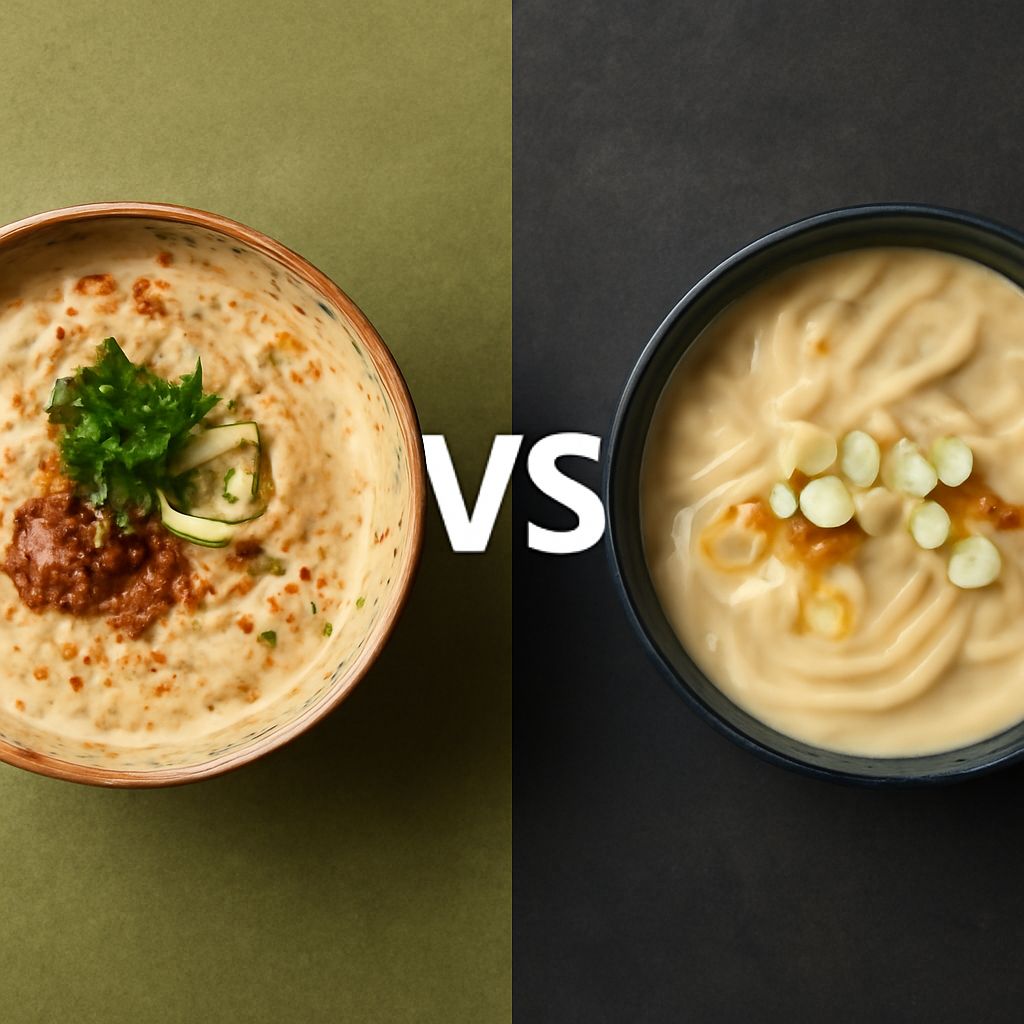
Udon vs ramen comes down first to the noodles, not the broth. Udon uses thick, smooth wheat noodles with a soft, springy chew, while ramen uses thinner wheat noodles made with alkaline kansui, giving them a firmer, more elastic texture. That difference affects how each noodle carries broth, toppings, and sauces.
Udon usually appears in dashi-based soups or simple hot, chilled, and stir-fried dishes. Ramen more often comes with a deeply seasoned meat, fish, or vegetable broth, but it also includes dipping and sauce-coated preparations. You can compare them by noodle structure, broth intensity, toppings, and how filling you want the meal to be.
Udon vs ramen: the noodle difference in ingredients, thickness, and chew
Udon noodles are made from wheat flour, water, and salt. They are typically thick, round, and pale, although regional styles vary. Their generous width gives you a substantial bite: soft on the outside, resilient in the center, and distinctly chewy without being springy in the same way as ramen.
Ramen noodles also use wheat flour, but the dough commonly includes kansui, an alkaline ingredient that changes the noodles’ color, flavor, and texture. Ramen noodles can be straight or wavy, narrow or medium-width, and soft or firm depending on the style and cooking time. They tend to feel more elastic and snappy than udon.
Thickness is a practical difference. Udon’s wide shape holds up well in a light dashi broth and gives each mouthful a pronounced chew. Ramen’s thinner strands offer more surface area for flavored oil and seasoned broth. Wavy ramen catches heavier soup particularly well, while straight ramen gives you a cleaner, more direct bite.
The noodles also respond differently after cooking. Udon stays plush and substantial, especially when served in a hot soup. Ramen is more sensitive to timing: a few extra minutes can turn a firm noodle soft. Restaurants may ask how firm you want ramen, while udon is more often served according to the dish’s intended texture.
The difference between udon and ramen: broths and common preparations
Traditional udon broth often begins with Japanese dashi made from ingredients such as kombu and dried bonito, then gains seasoning from soy sauce, mirin, or salt. The result may be clear and delicate or darker and more savory, depending on the region and recipe. The broth supports the noodles without necessarily overpowering them.
Common soup dishes include kake udon, served in a simple hot broth; kitsune udon, topped with sweet fried tofu; and tempura udon, paired with shrimp or vegetable tempura. Curry udon uses a thicker, warmly spiced curry broth and feels much richer than a basic dashi preparation.
Ramen broth usually has a more concentrated flavor profile. Shoyu ramen is seasoned with soy sauce, shio ramen with salt, and miso ramen with fermented soybean paste. Tonkotsu ramen uses a long-cooked pork-bone broth that is creamy and intensely savory. Chicken, seafood, and vegetable broths provide other important ramen traditions.
Broth color does not define the difference between ramen and udon. You can find light ramen and dark udon, and both noodles work with a range of seasonings. The noodle dough and shape remain the clearest starting point; the soup reflects the dish’s regional style, ingredients, and preparation.
Neither food requires a bowl of soup. For udon, yakiudon stir-fries the noodles with vegetables, meat, or seafood and a soy-based sauce. Bukkake udon uses a small amount of concentrated sauce poured over cold or warm noodles, while zaru udon serves chilled noodles with a separate dipping sauce.
Ramen has its own non-soup formats. Tsukemen presents cold or room-temperature noodles beside a hot, concentrated dipping broth. Mazesoba and abura soba coat noodles in seasoned sauce and oil rather than surrounding them with soup. These preparations make the difference between ramen and udon less about “soup versus no soup” and more about the noodle and its accompaniments.
Texture, toppings, and serving styles: from tempura udon to tsukemen
Udon toppings often emphasize contrast with the noodle’s mild flavor and soft chew. You may see scallions, grated ginger, wakame, kamaboko fish cake, fried tofu, tempura, or a raw egg. Because the noodles are thick, toppings tend to be easy to identify in each bite rather than blended into a dense, heavily seasoned mouthful.
Ramen toppings usually build layers of flavor and texture around the broth. Common choices include sliced chashu pork, marinated soft-boiled egg, menma bamboo shoots, nori, scallions, corn, bean sprouts, and mushrooms. Rich ramen can balance fatty pork with sharp scallions or crunchy vegetables, while lighter ramen may use delicate chicken or seafood toppings.
Serving temperature also changes the experience. Hot udon feels smooth, comforting, and filling, but chilled udon has a cleaner, firmer bite. Hot ramen delivers aroma as soon as the bowl arrives, while tsukemen lets you control how much concentrated broth reaches each noodle portion. Cold or sauce-based ramen gives you a more focused taste of the noodle itself.
For the difference between ramen and udon in everyday eating, think about pacing. Udon’s thick strands make the meal feel hearty even with a restrained broth. Ramen’s thinner noodles allow you to take in broth, aromatic oil, and toppings together, producing a more layered and intense bite.
Which one fits your meal: ramen vs udon?
Choose udon when you want a thick, chewy noodle and a lighter or more straightforward broth. Kake udon suits a simple meal, kitsune udon adds sweet-savory fried tofu, and tempura udon gives you crisp richness without requiring a heavy soup. Chilled zaru udon or bukkake udon works well when you want a refreshing, sauce-forward dish.
Choose ramen when you want thinner, springier noodles with a strongly seasoned broth or bold toppings. Shoyu and shio ramen offer more focused savory flavor, miso ramen adds fermented depth, and tonkotsu ramen is the richest option. Tsukemen suits you if you prefer dipping control, while mazesoba works when you want sauce, oil, and toppings without a full bowl of broth.
In short, pick udon for plush chew, broad noodles, and adaptable light-to-rich preparations. Pick ramen for elastic noodles, concentrated seasoning, and a more layered broth-and-topping experience. The best choice in a ramen vs udon comparison depends mainly on the texture and richness you want in that meal.