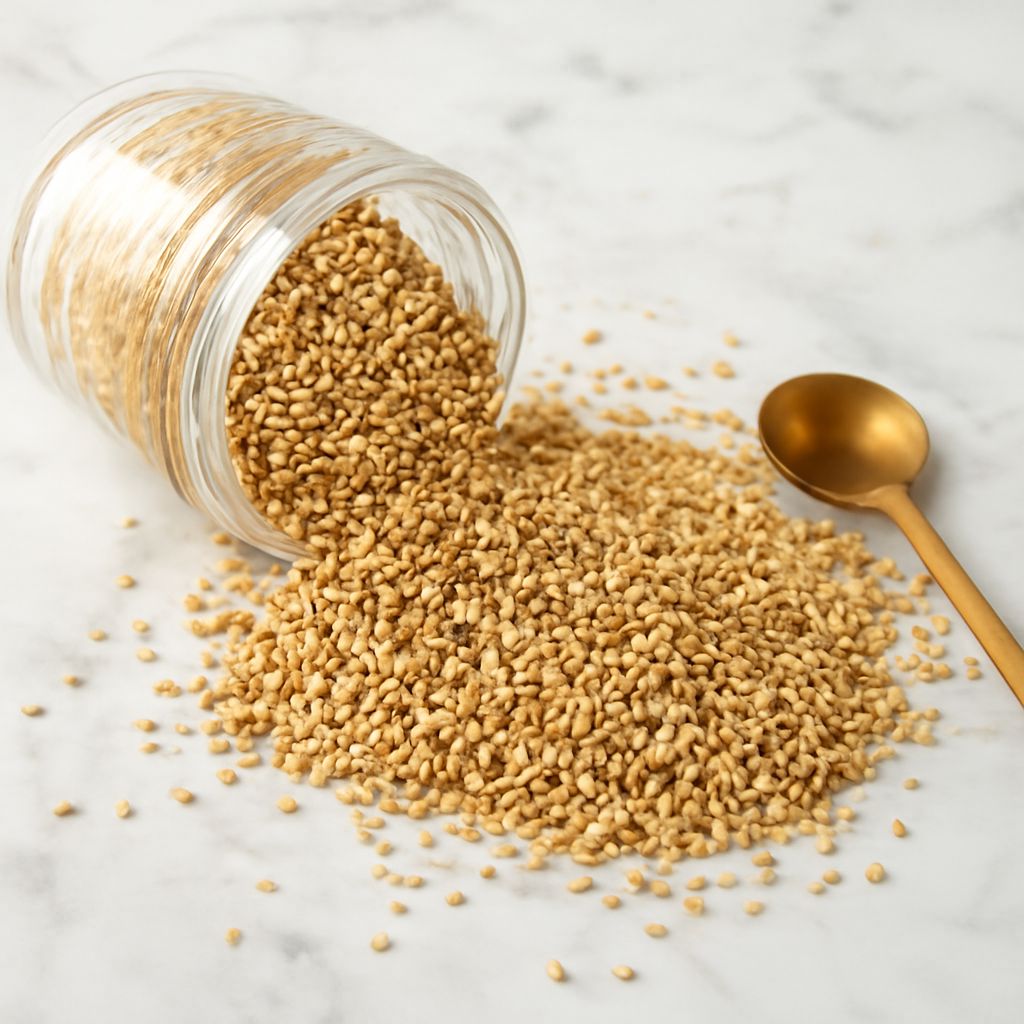
To learn how to toast sesame seeds, use a dry skillet for the fastest control or an oven for a larger, more even batch. For either method, spread the seeds in a single layer, keep them moving, and remove them as soon as they turn fragrant and lightly golden. Their small size means they can go from toasted to bitter within a minute.
Use 1/2 cup raw sesame seeds for either method. White or hulled seeds show color changes clearly; black sesame seeds need closer attention to aroma because their dark color makes browning harder to see.
Toast sesame seeds in a skillet
- Choose a wide, dry skillet so the seeds form a single layer. Add the sesame seeds without oil, butter, or other ingredients.
- Set the pan over medium-low to medium heat. Medium-low gives you more time to react, especially with a thin pan or a small batch.
- Stir with a wooden spoon or shake the skillet every 15 to 20 seconds. Keep moving the seeds across the cooking surface so they toast instead of scorching in hot spots.
- Continue for about 3 to 5 minutes. The seeds may seem unchanged at first, then color and aroma will develop quickly near the end.
- Remove the skillet from the heat when white seeds become pale golden and smell nutty. Do not wait for a deep brown color; carryover heat will continue to toast them.
- Immediately pour the seeds onto a cool plate, shallow bowl, or baking sheet. Spread them out so they stop cooking instead of browning in the hot skillet.
For a small batch, begin checking at 2 1/2 minutes. A crowded pan takes longer and toasts less evenly, so work in batches rather than piling the seeds several layers deep.
Roast sesame seeds in the oven
- Heat the oven to 350°F (175°C). For black sesame seeds, use 325°F (165°C) if you want a slower, easier-to-monitor roast.
- Spread 1/2 to 1 cup of sesame seeds over a rimmed baking sheet. Keep them in one even layer, with no bare patches that could expose seeds to concentrated heat.
- Bake for 7 to 10 minutes, shaking the sheet or stirring the seeds after about 4 minutes. Check again every 1 to 2 minutes afterward because the final stage moves quickly.
- Take the sheet out when the seeds smell distinctly nutty and white seeds are light golden. They may look slightly lighter than expected while still hot, but they will continue browning on the baking sheet.
- Immediately transfer the seeds to a cool plate or another baking sheet. Do not leave them on the hot tray to cool, or the residual heat can push them past the ideal stage.
Oven toasting works well when you need more than a skillet can hold comfortably. The skillet remains easier for a small quantity because you can adjust the heat and see the seeds continuously.
Check for golden color and a nutty aroma
Use several cues together rather than relying on the timer alone. White sesame seeds should shift from pale ivory to light gold, with a warm, nutty smell replacing their raw, grassy scent. A few seeds may pop or move slightly as moisture leaves them, but popping is not required for doneness.
Black sesame seeds will not show the same golden contrast. Watch for a stronger roasted aroma, a subtly deeper surface color, and a crisp, dry appearance. If you smell smoke, see pale seeds turning dark brown, or notice an acrid scent, remove them immediately and transfer them away from the heat. Bitter flavor usually means the seeds stayed hot too long.
When uncertain, taste one after cooling it briefly. A properly toasted seed tastes nutty and crisp, while an under-toasted seed tastes flat or grassy. The finished seeds should be aromatic without tasting sharp, burnt, or oily.
Cool and store toasted sesame seeds
Spread the hot seeds in a thin layer on a cool plate or baking sheet and let them cool for 10 to 15 minutes. Stir once or twice to release trapped heat. Cooling outside the pan is essential because sesame seeds continue cooking from carryover heat even after you turn off the burner or oven.
Once completely cool, transfer the seeds to an airtight jar or container. Store them in a cool, dark pantry for about 2 to 4 weeks, or refrigerate them for up to 3 months. For longer storage, freeze them in a well-sealed container for up to 6 months. Keep the container dry, and discard the seeds if they develop a stale, paint-like, or rancid smell.