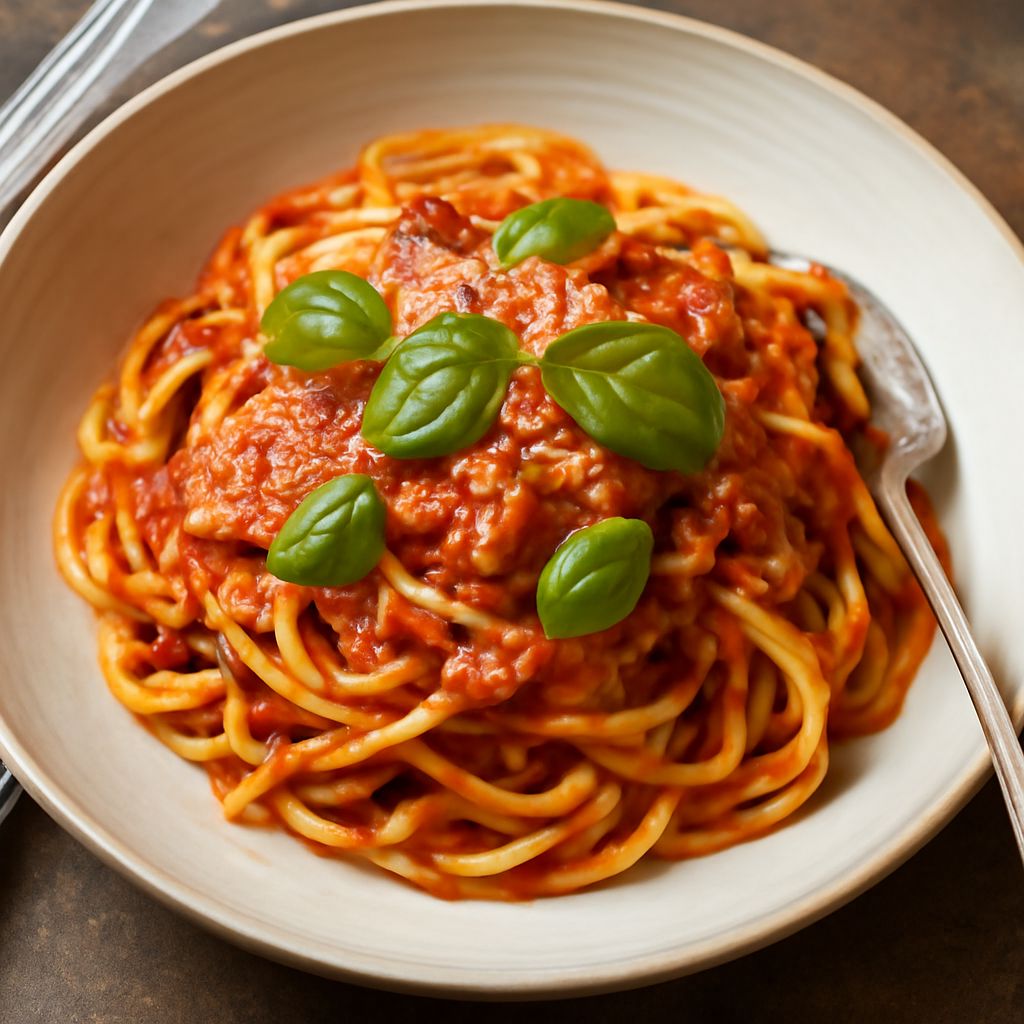
Italian noodles cover far more than one strand-like format. Italian pasta includes thin, smooth strands, ridged tubes, twisted shapes, tender sheets, and filled parcels, each designed to work with particular sauces. The shape affects how sauce clings, pools, or fills each bite.
Use dried pasta for firm texture and robust sauces, fresh pasta for delicate or rich pairings, and stuffed or baked forms when the pasta itself is part of the dish’s structure. These distinctions make traditional Italian pasta easier to choose and cook well.
Italian Noodles: Long and Short Dried Pasta Shapes
Long dried shapes suit sauces that can coat evenly as you twirl or lift them. Spaghetti works with bright tomato sauces, garlic and oil, or carbonara; bucatini, a thicker hollow strand, carries the tomato and guanciale sauce in bucatini all’amatriciana. Flat linguine offers more surface area for pesto or the light seafood sauce in linguine alle vongole.
Short shapes handle thicker sauces because their ridges, hollows, and curves trap ingredients.
- Penne rigate: The ridges grip tomato, cream, or spicy sauces, as in penne all’arrabbiata.
- Rigatoni: Wide ridges and a large center hold chunky ragù, sausage, and baked cheese sauces.
- Fusilli: Tight spirals catch pesto, minced vegetables, and finely chopped meats.
- Farfalle: Their pinched centers and broad edges suit lighter vegetable, cream, or pasta-salad preparations.
Choose smooth shapes for fluid sauces and ridged or hollow shapes for chunky, oily, or cheese-based sauces. That simple rule helps you match texture without treating every form as interchangeable.
Fresh and Stuffed Pasta: Italian Pasta Recipes with Ravioli and Tortellini
Fresh pasta contains more moisture and usually has a tender, delicate bite. Wide ribbons such as tagliatelle pair naturally with a substantial meat ragù in tagliatelle al ragù, while thinner fettuccine works with butter, cream, mushrooms, or finely grated cheese. Fresh sheets also absorb sauce readily, so you can use less sauce than you would with a heavily ridged dried shape.
Ravioli and tortellini need gentler treatment because the filling provides much of the flavor. Serve ricotta-and-spinach ravioli with brown butter, sage, and Parmesan. Pair meat-filled tortellini with a light broth in tortellini in brodo, or use a restrained cream sauce that does not overwhelm the filling. Boil stuffed pasta gently and remove it as soon as the dough is tender; vigorous cooking can split the seams.
Baked Pasta Shapes for Layered Sauces: Lasagne and Cannelloni
Lasagne uses broad sheets to create layers of ragù, béchamel, cheese, and pasta. The flat shape distributes sauce across the entire serving and softens as it bakes. Traditional lasagne al forno often combines meat ragù, béchamel, and Parmesan rather than relying on tomato sauce alone.
Cannelloni and manicotti are large tubes designed to be filled with ricotta, spinach, meat, or vegetables. Cover them generously with tomato sauce or béchamel before baking so the exposed pasta does not dry out. Use baked pasta when you want a structured dish that can hold a dense filling and a browned cheese topping.
Traditional Italian Pasta Pairings: Shape, Texture, and Sauce
Traditional pairings usually balance the pasta’s surface with the sauce’s weight. Thin spaghetti lets a smooth sauce move easily around each strand, while bucatini’s hollow center gives a bold sauce somewhere to collect. Ridged penne and rigatoni provide friction for thick sauces, and twisted fusilli catches small pieces of herbs, vegetables, and meat.
- Spaghetti carbonara: Long strands distribute the glossy egg, cheese, and cured-pork sauce.
- Tagliatelle al ragù: Broad fresh ribbons stand up to slow-cooked meat sauce.
- Penne all’arrabbiata: Ridged tubes hold the spicy tomato sauce.
- Orecchiette con cime di rapa: Cup-shaped pasta catches the greens, garlic, chili, and oil.
- Trofie al pesto: Twisted fresh pasta carries pesto through its folds.
Regional Fresh Pasta: Orecchiette, Trofie, and Cavatelli
Regional fresh pasta often reflects local ingredients and hand-shaping traditions. Orecchiette, meaning “little ears,” has a cupped center that catches vegetable sauces, breadcrumbs, and oil, especially in Puglia’s orecchiette con cime di rapa. Trofie from Liguria are short, slender twists traditionally paired with basil pesto, potatoes, and green beans.
Cavatelli are small hollow shells formed by pressing dough with your fingers. Their chewy texture and cavity suit broccoli rabe, sausage, beans, or chunky tomato sauces. Match these shapes by looking at the bite: a cup or hollow captures loose ingredients, a twist holds coating sauce, and a firm handmade shell supports hearty regional recipes.