Lithuanian food centers on ingredients that withstand cold winters and a short growing season: potatoes, rye, dairy, pork, mushrooms, fish, and hardy root vegetables. You will find these foods in filling soups, dumplings, baked casseroles, sourdough breads, and preserves designed to last through the colder months.
When you explore Lithuanian cuisine, look for a balance of earthy flavors, tangy fermented dairy, smoked meats, and fresh herbs. Traditional Lithuanian food also changes with the calendar: everyday meals stay practical, while weddings, Christmas, and other celebrations bring out elaborate pastries and festive cakes.
Lithuanian Food Staples: Potatoes, Rye, Dairy, Pork, and Preserves
Potatoes are the defining staple. You will see them grated into batters, boiled alongside meat, mashed into fillings, or served as a simple side dish. Their reliability made them especially valuable in a cool climate, where storage crops could feed a household long after the harvest.
Rye provides the other essential foundation. Dense rye bread, often fermented with a sourdough starter and flavored with caraway, accompanies soup, cheese, fish, and open-faced snacks. Dairy adds richness and acidity through sour cream, butter, curd cheese, kefir, and farmer cheese. Pork appears in sausages, bacon, dumpling fillings, and smoked cuts, where its fat helps flavor otherwise modest ingredients.
Preserves turn seasonal abundance into year-round food. You may find pickled cucumbers, sauerkraut, beet preparations, mushroom preserves, berry jams, and fruit compotes on the table. These foods add brightness to heavy dishes and reflect the practical habit of saving summer produce for winter.
Lithuanian Cuisine: Cepelinai, Kugelis, and Šaltibarščiai
Cepelinai are Lithuania’s best-known dumplings. Cooks combine grated and cooked potatoes into a sturdy dough, then fill it with minced pork, curd cheese, or mushrooms. After boiling, they typically serve the large, zeppelin-shaped dumplings with sour cream, bacon, and onion. Because they take time to prepare, cepelinai suit a relaxed weekend meal or a family gathering more than a quick weekday dinner.
Kugelis uses similar ingredients in a simpler form. You will find grated potatoes mixed with onion, bacon, eggs, and sometimes milk before the mixture is baked into a firm, savory casserole. It works as an everyday main course and reheats well, making it useful for feeding a family.
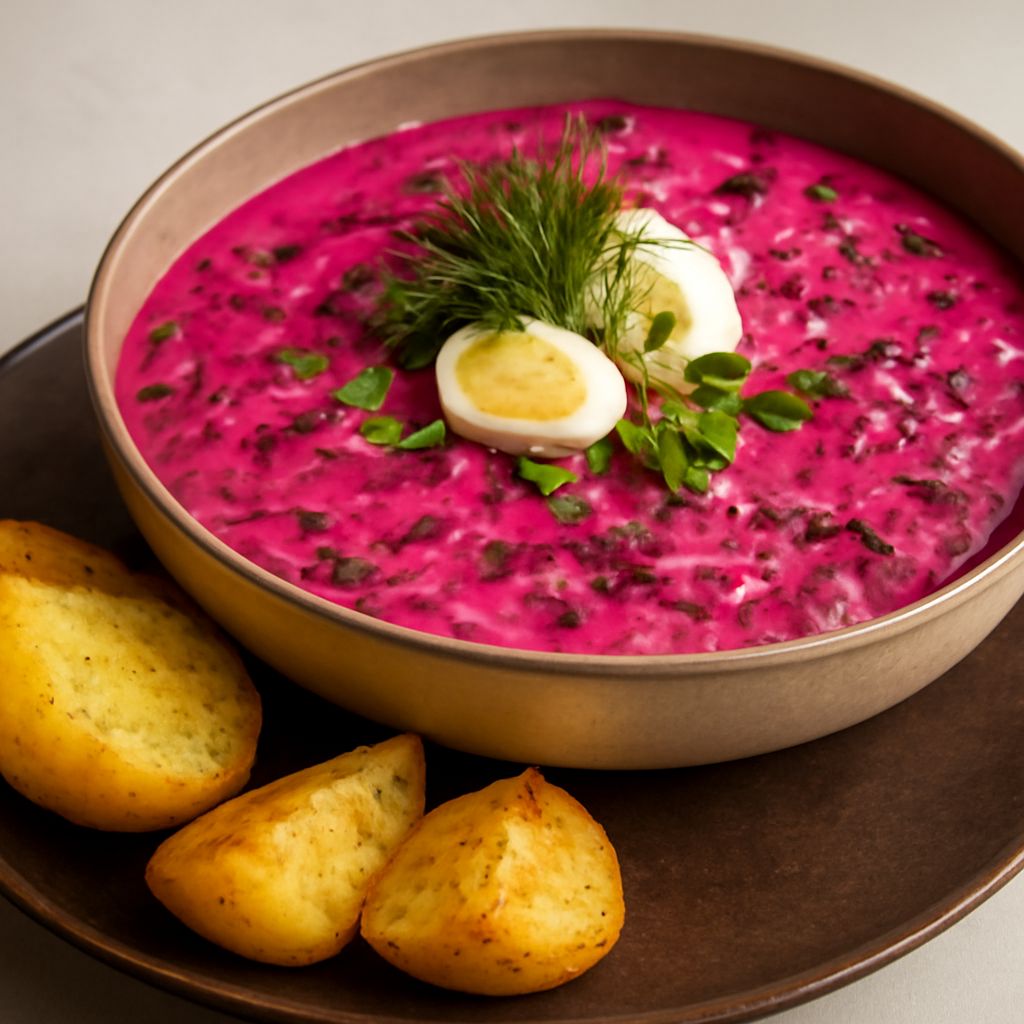
Šaltibarščiai offers a sharp contrast. This vivid cold beet soup combines cooked or pickled beets with kefir, cucumber, dill, and hard-boiled egg. You usually eat it with hot boiled potatoes on the side, creating a refreshing summer meal with enough substance for a full lunch.
Traditional Lithuanian Food for Everyday and Festive Tables
For an everyday Lithuanian meal, you might serve soup, potatoes, rye bread, and a modest portion of pork, fish, or mushrooms. Sour cream often finishes dumplings and vegetables, while dill, parsley, and chives provide fresh flavor. Simple meals make good use of leftovers: cooked potatoes can become a casserole, and yesterday’s meat can fill pastries or enrich soup.
Festive tables make the same ingredients more elaborate. Families prepare stuffed dumplings, roast pork, rich pastries, and layered or molded desserts for gatherings. At Christmas, mushroom dishes, fish, kūčiukai, and other meat-free foods traditionally share the table. Weddings and major celebrations often feature šakotis, whose dramatic branched shape makes it both a dessert and a centerpiece.
Rye Bread, Kibinai, and Šakotis: Breads, Snacks, and Sweets
Dark rye bread is more than an accompaniment. You can eat it with butter, cheese, smoked fish, or a spread of garlic and herbs. Its sour, slightly sweet flavor stands up to rich soups and salty preserved foods. Some versions include seeds, malt, or caraway for extra depth.
Kibinai are crescent-shaped pastries associated with Lithuania’s Karaim community. Their flaky dough traditionally encloses seasoned mutton and onion, although beef, chicken, and vegetable fillings are also common. They make a practical hand-held lunch or travel snack.
Šakotis is made by pouring layers of batter onto a rotating spit, allowing each layer to bake before the next one is added. The result resembles a tree with crisp ridges and a tender center. You are most likely to encounter it at weddings, holidays, and other large celebrations rather than as an everyday sweet.
Seasonal Foods: Mushrooms, Fish, Beets, and Smoked Foods
Forests supply chanterelles, boletes, and other mushrooms, which you may find fried with onions, folded into dumplings, stirred into sauces, or dried for winter soups. Lakes and the Baltic coast contribute fish such as herring, pike, perch, and smoked varieties. Smoking preserves fish and meat while adding a deep flavor that pairs naturally with rye bread, potatoes, and pickles.
Beets grow well in the region and appear fresh, pickled, or fermented. They bring color and acidity to soups and cold salads, especially in summer. In autumn, households traditionally preserve berries, apples, cucumbers, cabbage, and mushrooms. These preparations let you taste the harvest in winter, when hearty soups, smoked foods, and potato-based dishes become especially welcome.