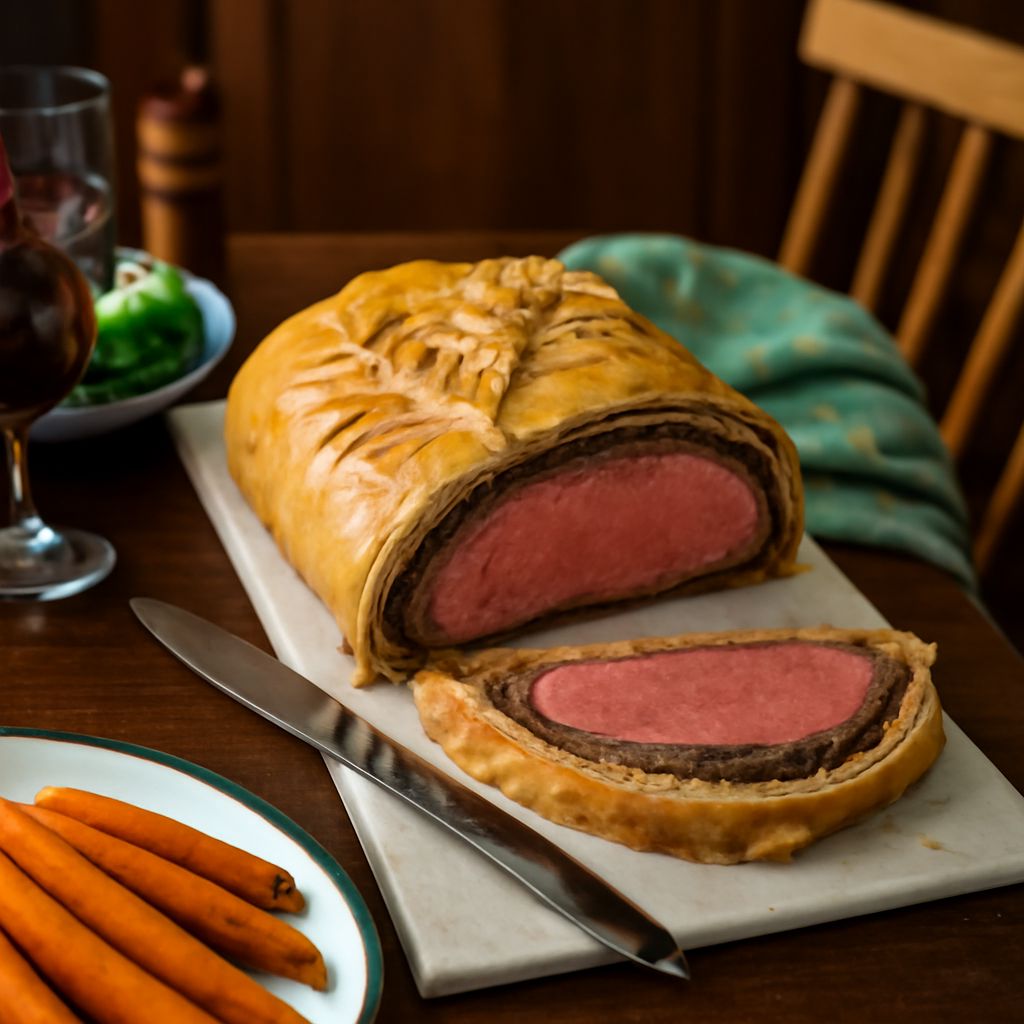
Beef Wellington is a culinary masterpiece that combines savory flavors and an impressive presentation. This classic dish, known for its flaky pastry and tender beef, is a favorite for special occasions and festive gatherings. Below, you’ll find a detailed beef wellington recipe, insights into its origins, and tips inspired by Gordon Ramsay’s famous wellington. Whether you’re a seasoned chef or a home cook, this guide will help you create an impeccable beef Wellington.
What is Beef Wellington?
Beef Wellington is a traditional dish that features a juicy beef tenderloin covered in mushroom duxelles, sometimes a layer of pâté, all encased in a golden puff pastry. The dish is celebrated for its rich flavors and elegant presentation. It’s a showstopper for events that call for something extraordinary, combining a tender meat center with the earthy and buttery notes of its outer layers.
A Step-by-Step Beef Wellington Recipe
Creating the perfect Beef Wellington requires attention to detail and patience. Here’s a recipe you can follow to make this classic dish at home.
- Ingredients:
- 2 pounds beef tenderloin
- Salt and freshly ground black pepper
- 2 tablespoons olive oil
- 1 pound mushrooms, finely chopped
- 1 shallot, minced
- 2 tablespoons unsalted butter
- 2 tablespoons Dijon mustard
- 12 slices prosciutto
- Puff pastry sheets, thawed
- 1 egg, beaten (for egg wash)
- Prepare the Beef: Season the tenderloin with salt and pepper. Heat olive oil in a skillet over high heat and sear the beef on all sides until browned, about 2 minutes per side. Remove from heat and let it cool. Brush with Dijon mustard.
- Make the Mushroom Duxelles: In the same skillet, add butter, then sauté the shallots and mushrooms over medium heat until all moisture evaporates, about 10 minutes. Season with salt and pepper and let it cool.
- Assemble the Wellington: Lay out the prosciutto on a sheet of cling film. Spread the mushroom duxelles over the prosciutto, then place the beef on top. Use the cling film to roll the prosciutto around the beef, forming a tight log. Chill for 15 minutes.
- Encase in Pastry: Roll out the puff pastry and place the beef at the center. Wrap the pastry around the beef, sealing the edges with beaten egg. Chill for another 15 minutes.
- Bake: Preheat your oven to 425°F (220°C). Place the Wellington on a baking sheet, seam-side down. Brush with the egg wash. Bake for 25-30 minutes or until the pastry is golden and the beef registers 125°F (51°C) for medium-rare.
- Rest and Serve: Let the Wellington rest for 10 minutes before slicing. Serve with your choice of sides, such as roasted vegetables or a fresh salad.
The Origins of Beef Wellington
The origins of beef wellington are shrouded in mystery, with several theories surrounding its creation. One popular belief suggests that the dish was named after Arthur Wellesley, the 1st Duke of Wellington, known for his victory at the Battle of Waterloo. Some culinary historians, however, argue that the dish may have been an adaptation of a French recipe, reflecting the influence of French cuisine on British cooking during the 19th century.
Gordon Ramsay’s Famous Wellington
When it comes to beef wellington, Gordon Ramsay’s version stands out for its perfection and popularity. Known for his meticulous attention to detail, Ramsay’s wellington adds layers of flavor with the inclusion of prosciutto and a mushroom mixture. His method emphasizes the importance of chilling each layer to ensure a perfect bake and crisp pastry. Ramsay’s take has inspired many home cooks and chefs to adopt his techniques for a flawless result.
Tips for Perfecting Your Wellington
Crafting a perfect beef wellington requires a few insider tips:
- Chill the Beef: Ensure each component is well-chilled to maintain the structure and prevent the pastry from becoming soggy.
- Control Moisture: Cook the mushroom duxelles thoroughly to remove excess moisture, ensuring a crisp pastry.
- Use Quality Ingredients: High-quality beef and fresh mushrooms make a significant difference in the final taste.
- Rest Before Slicing: Allow the wellington to rest after baking to retain the juices and make slicing easier.
- Experiment with Flavors: Personalize your wellington with different herbs or even try a layer of pâté for added richness.
By following these steps and tips, you can create a beef wellington that rivals even the most renowned chefs. Enjoy the process and savor the rewards of this culinary endeavor.