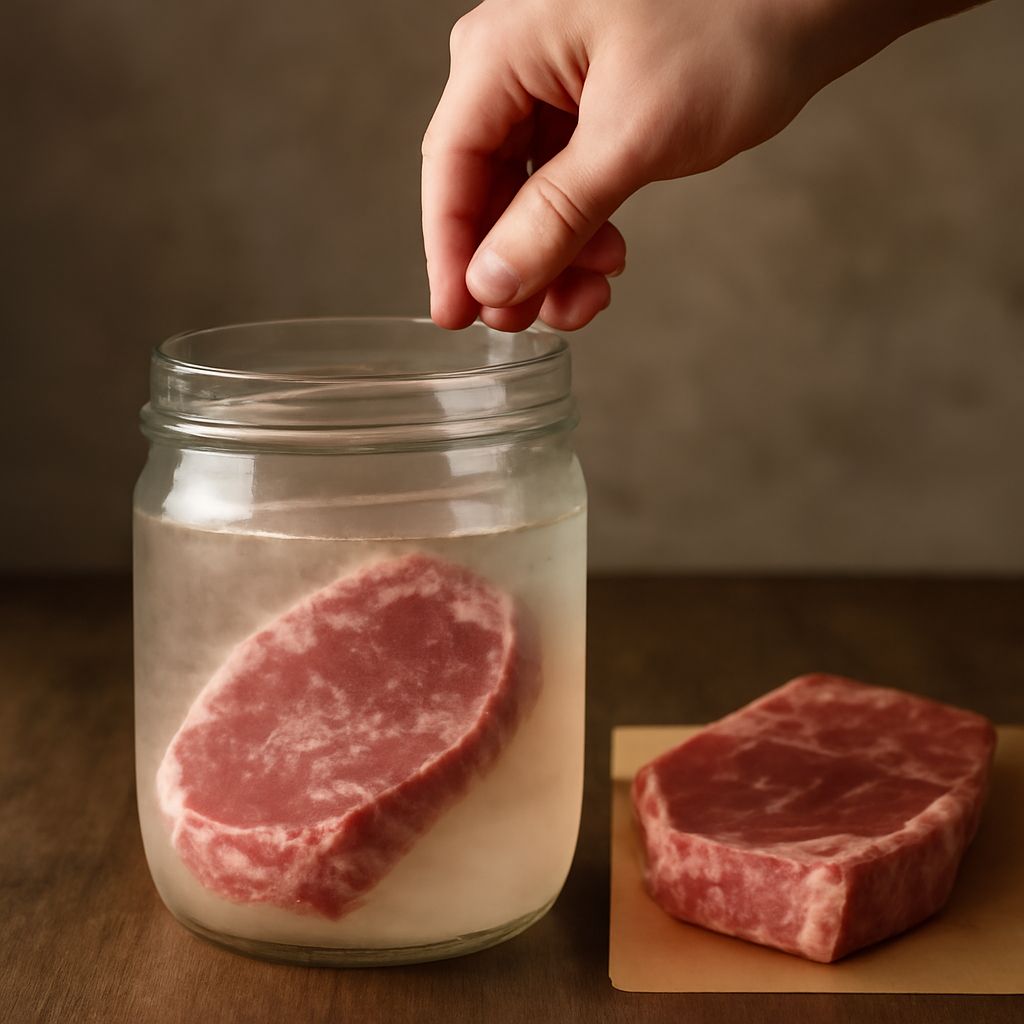
Brine means a saltwater solution used to season food and change how it cooks. In cooking, when you ask what does brine mean, the direct answer is simple: it’s salty water, often sometimes flavored, that you use to help food absorb seasoning and stay juicier.
You’ll see brine used with poultry, pork, fish, vegetables, and sometimes cheese or tofu. The basic idea is the same whether the brine is simple or seasoned: salt moves into the food and changes its texture and flavor.
What Does Brine Mean?
In cooking, brine usually refers to a liquid made with water and salt. A basic brine can be just those two ingredients. More often, cooks add sugar, herbs, garlic, peppercorns, citrus, or spices.
If you’re asking what does brine mean on a recipe label, it usually means the food will be soaked or stored in that salt solution before cooking. For example:
- Turkey or chicken brine: helps the meat season more evenly.
- Pork brine: can reduce dryness in lean cuts.
- Vegetable brine: can season and crisp or preserve certain vegetables.
The word can also mean the liquid itself, not just the process. A recipe might say “add the brine” or “discard the brine,” referring to that salt solution.
How Brine Works
Brine works because salt changes how food holds water and absorbs seasoning. When food sits in a brine, some salt and water move into the outer layers of the food. That helps season it more deeply than surface salt alone.
There are two common ways brines work:
- Wet brining: you submerge the food in salty water.
- Dry brining: you salt the food directly and let it rest so the salt draws out moisture, then that liquid gets reabsorbed along with the salt.
Not every brine is used the same way. A short brine can lightly season delicate food like fish. A longer brine may be better for larger cuts of meat. Too much time in brine can make food overly salty or soft, so timing matters.
What Brine Does to Food
If you want the practical answer to what does brine do, it does three main things: seasons, helps retain moisture, and can improve texture.
1. It seasons more evenly. Instead of flavor sitting only on the surface, brine helps salt reach farther into the food.
2. It can reduce dryness. This is why brines are common for lean meats like chicken breast, turkey, and pork loin. The food often cooks up juicier because the brining process changes how it behaves during heat.
3. It can affect texture. In some foods, brining makes the texture firmer or more tender depending on the ingredient and the concentration. For example, pickles and olives are stored in brines that preserve them and shape their final texture.
Brines are also useful for flavoring. A sugar-salt brine can add mild sweetness, while herb or spice brines can give the food a more complex taste before it even hits the pan or oven.
How to Use Brine or Recognize It in Recipes
When you see brines in recipes, look for the ingredient list and the soaking time. A recipe may call for a simple brine, a flavored brine, or a pre-brined ingredient from the store.
Use brine when you want food to be more seasoned throughout, especially if the ingredient is lean or prone to drying out. It’s common before roasting, grilling, smoking, or pan-cooking.
Recognize these recipe clues:
- “Brine overnight”: the food needs extended soaking before cooking.
- “Salt water solution”: the recipe is describing brine without using the word.
- “Pre-brined”: the ingredient already contains added salt and moisture, so you may need to season less.
To avoid problems, keep the brine balanced. Very salty brines can overpower food, and long soaking times can make delicate ingredients mushy. For most home cooking, you want a brine that improves flavor and moisture without masking the food itself.