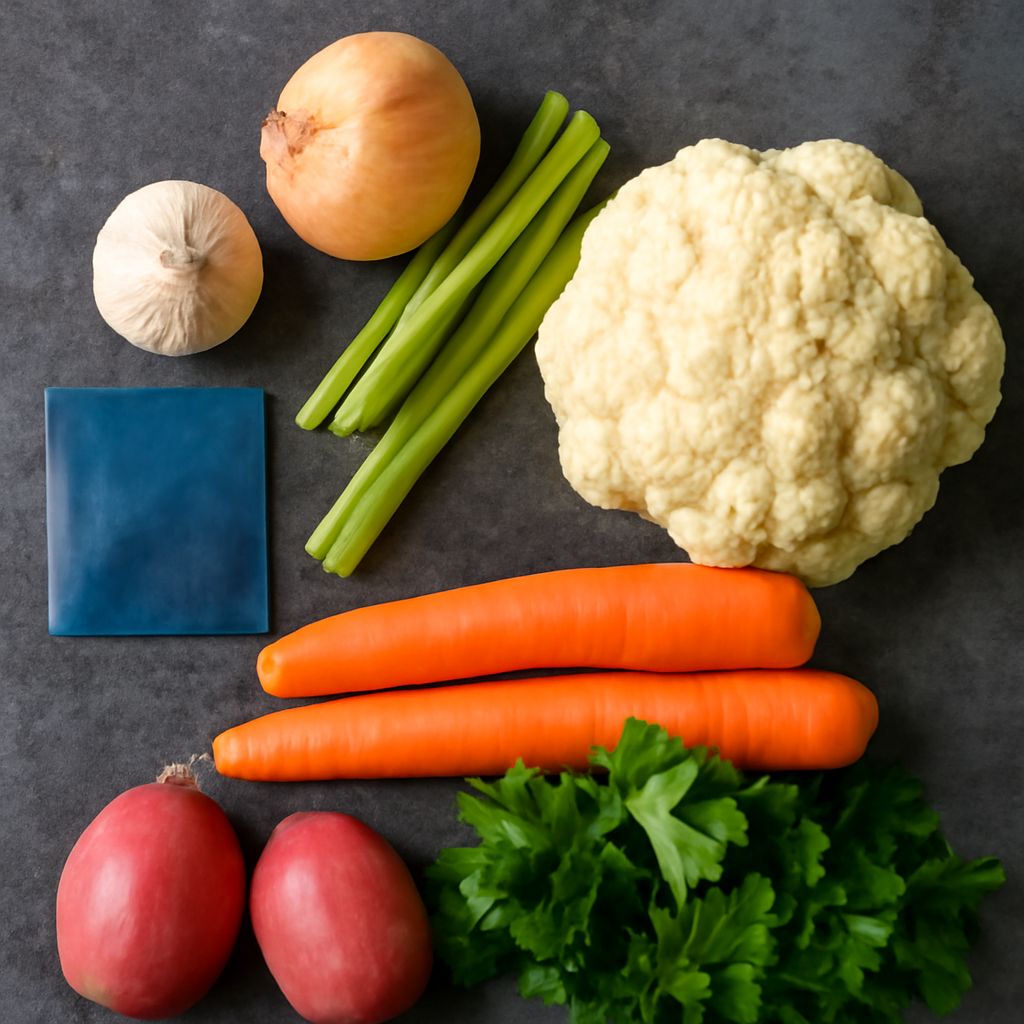
Carrot, celery, and onion are commonly called mirepoix, the classic aromatic base for soups, stews, sauces, and braises. The traditional proportion is 2 parts onion to 1 part carrot and 1 part celery, measured by weight.
For a practical home batch, use about 2 cups diced onion, 1 cup diced carrot, and 1 cup diced celery. Cut the vegetables evenly, then cook them gently in fat until soft and fragrant. Keep the mixture pale for delicate dishes or let it brown for deeper, roasted flavor.
What carrot, celery, and onion are called: mirepoix
Mirepoix is a mixture of aromatic vegetables cooked at the beginning of a dish to build its foundation of flavor. In the classic French version, onion supplies sweetness and savoriness, carrot adds sweetness and color, and celery contributes herbal, savory notes.
Mirepoix is usually not served as a separate vegetable side. You can leave it in a chunky soup or stew, blend it into a sauce, or strain it out after it flavors stock, gravy, or a braising liquid. Cooking the vegetables before adding liquid softens their sharp flavors and releases their aromas into the fat.
Mirepoix ratio: carrots, celery, and onion
The classic ratio is 2:1:1: two parts onion, one part carrot, and one part celery. Weight gives you the most consistent result, but you can use cups or handfuls for everyday cooking. The goal is balance, not mathematical precision.
- For a small pot: use 1 cup onion, ½ cup carrot, and ½ cup celery.
- For a larger batch: use 2 cups onion, 1 cup carrot, and 1 cup celery.
- For a sweeter base: add extra carrot, especially for tomato sauces or creamy soups.
- For a more savory base: increase the celery slightly or add garlic, herbs, or leek.
Use the ratio as a starting point rather than a rule. If you have less celery or prefer a milder flavor, the dish will still work. Keep the pieces similar in size so one vegetable does not burn while another remains undercooked.
Cut size and browning for the final dish
Match the dice to how you plan to serve the finished dish. Cut mirepoix into a small dice, about ⅛ to ¼ inch, when you want the vegetables to dissolve into a sauce, gravy, or puréed soup. Use a ¼- to ½-inch dice for most soups, risottos, and quick-cooking sauces.
Choose a larger ½- to 1-inch dice for rustic stews, long braises, and dishes where you want visible pieces. You can also cut the vegetables into large chunks for stock, where appearance matters less than extraction and easy straining.
For a light, clean flavor, sweat the vegetables without browning. For a darker stew, gravy, or braise, cook them longer until the edges turn golden brown. Browning adds nuttiness and caramelized flavor, but blackened pieces can make a stock or sauce bitter.
How to gently sweat mirepoix for soups, stews, sauces, and braises
- Dice the onion, carrot, and celery to the size your finished dish requires. If you are using the classic home batch, prepare 2 cups onion, 1 cup carrot, and 1 cup celery.
- Warm 1 to 2 tablespoons of butter, olive oil, or other cooking fat in a heavy pot over medium-low heat.
- Add the vegetables and a pinch of salt. Stir to coat them, then cook uncovered for about 10 to 15 minutes.
- Stir every few minutes. The vegetables are ready when the onion looks translucent, the carrot and celery have softened, and the mixture smells sweet and savory.
- Add stock, wine, tomatoes, meat, beans, or other ingredients according to your recipe. For a browned base, raise the heat slightly and cook for another 5 to 10 minutes until the vegetables develop golden edges.
Keep the heat gentle: sweating should soften the vegetables rather than fry them aggressively. If they stick or darken too quickly, lower the heat and add a splash of water or stock. In soup, leave the mirepoix in the pot; in a smooth sauce, blend it; and for a refined stock or braise, strain it after it has given up its flavor.
Regional cousins of carrots, onions, and celery
Many cuisines use a similar aromatic idea with different ingredients. Italian soffritto commonly combines onion, carrot, and celery cooked in olive oil, sometimes with garlic or herbs. The Cajun and Louisiana holy trinity uses onion, celery, and bell pepper, replacing carrot with pepper for a greener, more assertive flavor.
Spanish sofrito often builds around onion, garlic, tomato, and olive oil, while German Suppengrün may include leek, carrot, celeriac, and parsley root. These variations follow the same principle: gently cook aromatic vegetables first, then use their softened flavors to support the main ingredients.