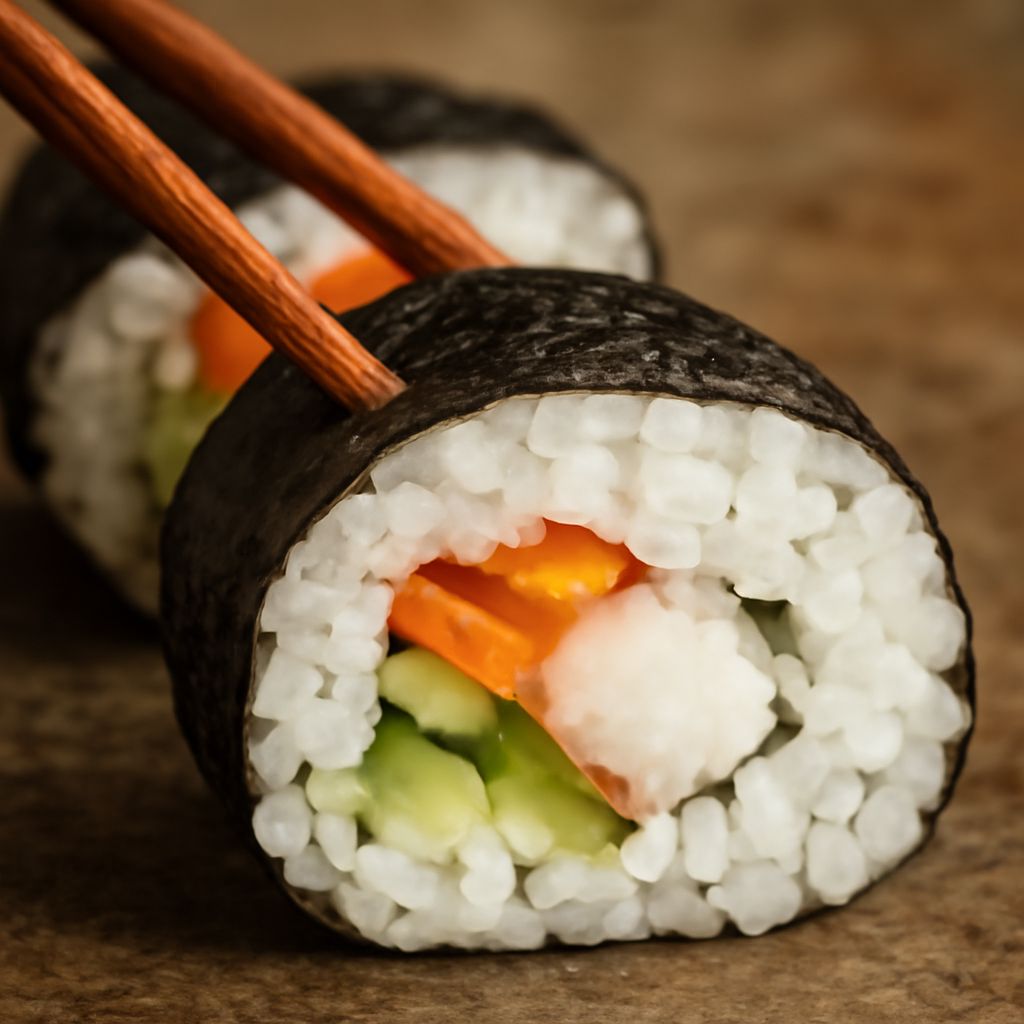
A maki sushi roll is sushi made by rolling seasoned rice and one or more fillings in or around a sheet of nori, then slicing the finished roll into pieces. The main formats differ by where the nori sits, how wide the roll is, how much filling it holds, and whether the shape is cut into pieces or served as a cone.
When you read “maki” on a menu, use those four clues to identify what you will receive. Hosomaki is narrow and simple, futomaki is wide and generously filled, uramaki places rice on the outside, and temaki is a hand-rolled cone.
What a Maki Sushi Roll Means
Maki means rolled sushi. In practical terms, a maki roll combines a sheet of nori, a layer of sushi rice, and a central filling. A bamboo rolling mat helps shape those ingredients into a compact cylinder, although skilled sushi chefs can also roll some formats by hand.
The nori may form the outside of the roll, as it does with most hosomaki and futomaki, or sit between the rice and filling, as it does with uramaki. A temaki uses the same basic ingredients but remains open-ended and cone-shaped instead of becoming a sliced cylinder.
“Maki roll sushi” is a menu phrase that generally points to this rolled category rather than to one particular recipe. The name does not identify the filling by itself. A roll might contain raw fish, cooked seafood, vegetables, egg, tofu, or a combination of ingredients.
Maki is separate from other sushi forms. Nigiri consists of hand-shaped rice topped with an ingredient, while sashimi is sliced seafood served without sushi rice. Neither is rolled, so neither is maki.
How Maki Is Rolled and Cut
To make a standard sushi maki roll, the chef places a sheet of nori on a bamboo mat, spreads a thin layer of seasoned rice over it, and lines the filling across the rice. The chef then lifts the mat and folds the nori over the filling, tightening the roll as it moves forward. The finished cylinder is pressed into shape and sliced with a damp, sharp knife.
Most cut maki rolls are divided into six or eight bite-size pieces, though the exact number depends on the roll’s diameter and the restaurant’s style. A clean cut keeps the rice from tearing and shows the filling clearly in the center. The ends may be trimmed before slicing, especially when the chef wants every piece to look uniform.
For inside-out rolls, the process changes slightly. The chef covers the mat with plastic wrap, places rice on the nori, and turns the sheet over before adding the filling. The filling still sits inside the nori sheet, but rice forms the visible outer layer after rolling.
Temaki follows a different finishing step. The chef cuts or holds a piece of nori, adds rice and fillings, and rolls it into a cone that you eat with your hands soon after it is made. Nori loses its crisp texture quickly when exposed to moisture, so temaki is usually served immediately.
Hosomaki and Futomaki: Nori, Diameter, and Filling
Hosomaki is a thin, narrow roll with nori on the outside. It usually contains one main filling, or a very small combination, and has a relatively small diameter. Because the filling quantity is limited, you can taste one ingredient clearly in each piece.
- Wrapper: Nori forms the outside.
- Size: Hosomaki is the slimmer cylindrical format.
- Filling: It normally uses one prominent ingredient with a modest amount of rice.
- Examples: Cucumber rolls, tuna rolls, salmon rolls, and pickled daikon rolls are recognizable hosomaki-style choices.
Futomaki is a thicker roll with nori on the outside and a larger amount of rice and filling. Its wider diameter lets the chef combine several colors, textures, and flavors in one cross-section. You may see vegetables, egg, seafood, and seasoned ingredients layered together rather than a single centerpiece.
- Wrapper: Nori remains the outer wrapper.
- Size: Futomaki is broad and substantial compared with hosomaki.
- Filling: It holds multiple ingredients and more filling overall.
- Shape: It is sliced into thick round pieces that show a varied interior.
The boundary between a narrow and wide roll can vary by restaurant, so diameter is a useful clue rather than an absolute measurement. If the menu emphasizes one simple filling, expect a hosomaki-like roll. If it lists several fillings and describes a larger, layered cross-section, it is likely futomaki.
Uramaki and Temaki: Nori Placement and Hand-Roll Shape
Uramaki is an inside-out roll. The nori wraps the filling but sits inside the rice layer, making rice the visible exterior. Chefs may coat that outer rice with sesame seeds, fish roe, or other toppings. Uramaki is often wider than hosomaki because the rice-and-nori structure can support several fillings, but its defining feature is nori placement, not size alone.
- Wrapper: Nori is inside, surrounding the filling.
- Exterior: Seasoned rice faces outward and may carry seeds or toppings.
- Filling: It can hold one ingredient or several, depending on the roll.
- Shape: It is rolled into a cylinder and cut into pieces.
Many familiar American-style rolls use the uramaki format. For example, a California roll typically places crab or imitation crab, avocado, and cucumber inside nori with rice on the outside. A salmon-and-avocado roll may use the same construction. These are named menu preparations, not separate maki categories; their format is uramaki when the rice surrounds the nori.
Temaki means hand roll. Instead of a compact cylinder, the chef forms nori into a cone and fills it with rice and ingredients. One end is pointed, while the wider end remains open. Temaki is larger in shape but not necessarily heavier in filling than futomaki, and it is designed for immediate hand-held eating.
- Wrapper: Nori forms the cone’s outer surface.
- Size: It is often a single generous serving rather than several small pieces.
- Filling: Fish, shellfish, vegetables, and sauces can extend toward the open end.
- Shape: The cone distinguishes it from every sliced cylindrical roll.
Maki-Style Sushi Fillings and Menu Clues
Fillings help you predict flavor, but they do not always tell you the formal roll format. Look first at the construction, then at the ingredients. Common choices include:
- Seafood: Tuna, salmon, yellowtail, shrimp, crab, imitation crab, eel, and cooked scallop can appear in narrow, wide, inside-out, or hand rolls.
- Vegetables: Cucumber, avocado, asparagus, pickled radish, carrot, and shiitake mushrooms add crunch, creaminess, or savory depth.
- Egg and tofu: Tamago, seasoned tofu, and other cooked ingredients often appear in vegetarian or mixed rolls.
- Finishing ingredients: Sesame seeds, fish roe, spicy mayonnaise, scallions, and sauces may add flavor without changing the underlying format.
Use the menu wording as a quick guide. “Thin,” “one filling,” or a simple ingredient name suggests hosomaki. “Thick,” “assorted,” or a long list of ingredients suggests futomaki. “Inside-out,” “rice outside,” or sesame-coated usually signals uramaki. “Hand roll” or “cone” identifies temaki.
In everyday restaurant language, maki-style sushi can include any of these rolled forms. To choose confidently, match the wrapper and shape to your preference: nori-forward and simple for hosomaki, substantial and varied for futomaki, rice-covered for uramaki, or crisp and hand-held for temaki.