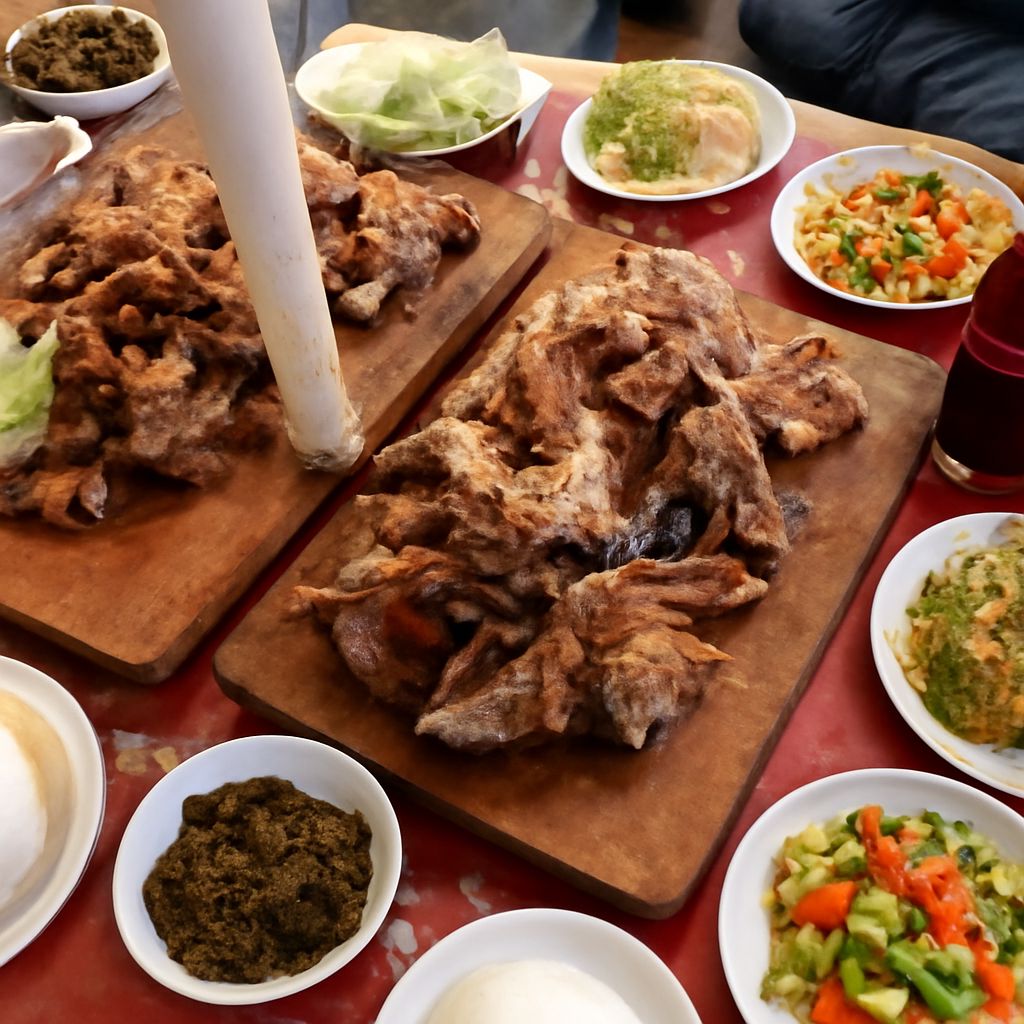
As you explore kenyan food, you find a cuisine shaped by maize, grains, beans, greens, meat, coconut, and aromatic spices. Meals vary widely by landscape and community, so a plate from the central highlands may look very different from one served along the Indian Ocean coast.
Rather than one fixed national menu, kenyan cuisine brings together farming traditions, pastoral cooking, Swahili coastal flavors, and urban influences. The most familiar kenyan dishes often follow a practical pattern: a filling staple, a vegetable or bean dish, a source of protein, and a bright condiment or relish.
Kenyan Food Staples: Maize, Grains, Beans, Greens, and Ugali
Maize is one of the foundations of everyday cooking. Ground into flour, it becomes ugali, a firm porridge prepared by stirring maize meal into boiling water until it reaches a smooth, doughlike consistency. You typically pinch off a piece with your fingers and use it to scoop up vegetables, beans, meat, or sauce. Some communities also prepare ugali from millet, sorghum, or cassava flour.
Beans and maize commonly appear together in githeri, a hearty boiled mixture that may be served simply or cooked with onions, tomatoes, peppers, and spices. Potatoes, peas, and leafy greens are also important, especially in the fertile central highlands. Mukimo combines mashed potatoes with maize, peas, beans, or greens, creating a substantial side dish with a softer texture than ugali.
Leafy vegetables add freshness and nutrients to starch-heavy meals. Sukuma wiki, usually made with chopped collard greens or kale, is sautéed with onion and tomato and served beside ugali, rice, or meat. Other greens, including amaranth and local leaves, appear according to season and region. These staple Kenyan foods are filling, adaptable, and designed to work with whatever produce a household has available.
Kenyan Dishes: From Sukuma Wiki and Githeri to Nyama Choma
Several dishes show how Kenyan cooking balances simplicity with strong flavor. Sukuma wiki turns inexpensive greens into a savory side through onion, tomato, oil, and sometimes a little chili. Githeri can be eaten as a complete bowl, but cooks may also add potatoes, carrots, or meat to make it richer. Rice, beans, and stewed vegetables provide other common combinations.
Nyama choma means roasted or grilled meat, traditionally associated with goat but also prepared with beef. The meat is often seasoned simply, allowing the smoky, browned exterior and its natural flavor to lead. You may eat it with ugali, chips, or a fresh salad called kachumbari, made with chopped tomatoes, onions, chili, and sometimes coriander and lemon or lime.
Nyama choma is especially popular at social meals, where people share pieces of meat and add condiments to taste. Samaki, or fish, is important near Lake Victoria and the coast, while chicken and beef appear widely in urban and rural cooking. Kenyan dishes can therefore range from a modest plate of ugali and greens to a generous grilled-meat spread.
Wheat-based chapati is another widely enjoyed food. The dough is rolled with oil, folded into layers, and cooked on a hot pan until tender and lightly crisp. You can serve it with beans, beef stew, lentils, eggs, or tea. Its portability also makes it popular for packed lunches and street food.
Coastal Flavors: Pilau, Chapati, Coconut, and Spice
Kenya’s coast has a distinct Swahili food tradition shaped by Indian Ocean trade and local ingredients. Rice replaces maize as the central starch more often, and cooks use coconut milk, seafood, tamarind, lime, and spices such as cardamom, cinnamon, cloves, cumin, and black pepper.
Pilau is a fragrant rice dish cooked with seasoned meat, onions, stock, and whole spices. The rice absorbs the savory cooking liquid, while the spices give it a warm, complex aroma. Coastal versions may include beef, chicken, or goat and are often served with kachumbari or another fresh relish. Pilau is also common in cities, where it appears at celebrations, restaurants, and family gatherings.
Coconut-based sauces pair naturally with fish, prawns, and vegetables. Along the coast, you may encounter grilled fish with lime, seafood simmered in coconut milk, or rice dishes flavored with chili and aromatics. Chapati also reflects the region’s Indian Ocean connections, although it is now eaten throughout Kenya. These flavors make coastal cooking notably different from the maize-and-beans emphasis of many inland meals.
Highland, Urban, and Pastoral Kenyan Foods
The central highlands support maize, beans, potatoes, peas, vegetables, and dairy farming. This abundance explains the popularity of githeri, mukimo, potatoes, and greens. Highland cooking often emphasizes boiled, mashed, or lightly sautéed ingredients that can feed a household efficiently.
Pastoral communities in drier northern and southern areas have traditionally relied more heavily on livestock than on crop farming. Milk, fermented milk, meat, and, in some traditions, blood provide important foods, while grilled or roasted meat suits herding lifestyles and communal gatherings. You should not treat these traditions as identical across Maasai, Samburu, Turkana, Somali, or other communities; available animals, climate, and cultural practice all influence what people eat.
Urban food culture brings these regional styles together. In Nairobi, Mombasa, Kisumu, and other towns, you can find ugali and sukuma wiki alongside pilau, biryani, chapati, samosas, burgers, and international dishes. Restaurants and street vendors adapt traditional recipes for quick service, while urban households combine foods from different parts of the country. Western Kenya also has strong fish traditions around Lake Victoria, often served with ugali and vegetables.
How a Kenyan Meal Comes Together
A useful way to understand a Kenyan meal is to build it in layers:
- Choose a staple: Start with ugali, rice, chapati, potatoes, mukimo, or githeri.
- Add vegetables or legumes: Serve sukuma wiki, other cooked greens, beans, peas, lentils, or a vegetable stew.
- Include protein when available: Add nyama choma, beef stew, chicken, fish, eggs, or milk-based foods.
- Brighten the plate: Use kachumbari, chili, lemon, lime, tomato relish, or a coconut-based sauce.
The combinations change with region, budget, season, and occasion. You might eat ugali with sukuma wiki on an ordinary evening, githeri as a one-pot lunch, nyama choma with kachumbari at a gathering, or coastal pilau with spiced meat and salad. That flexible structure—staple, vegetable, protein, and condiment—lets Kenyan meals stay both practical and deeply regional.