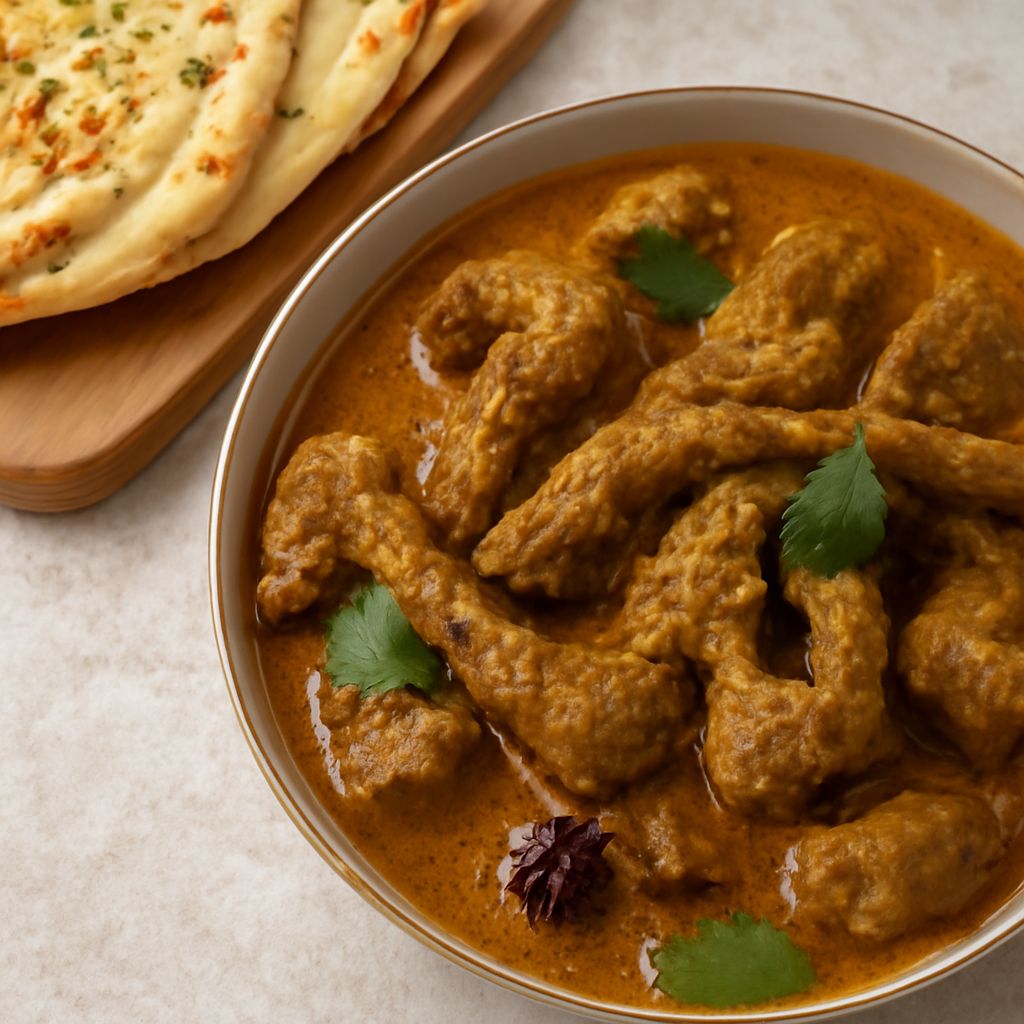
This Indian lamb curry recipe makes 4 to 6 servings of tender, deeply spiced meat in a rich onion masala. Allow about 20 minutes for preparation and 1 hour 45 minutes to 2 hours for cooking, depending on the cut you use.
Use this curry lamb recipe with a classic tomato finish, or make lamb curry with coconut milk for a smoother, mellow sauce. You will build flavor by browning the meat, slowly cooking the onions, and adding the finishing liquid only after the lamb is tender.
Lamb Curry Ingredients: Quantities, Yield, and Suitable Cuts
- Lamb: Use 2 1/4 pounds boneless lamb shoulder, cut into 1 1/2- to 2-inch pieces. Shoulder has enough connective tissue and fat for a long, tender simmer.
- Salt: 1 1/2 teaspoons kosher salt for the lamb, plus more to taste.
- Oil: 2 tablespoons neutral oil, such as avocado, canola, or grapeseed oil.
- Whole spices: 2 bay leaves, 1 cinnamon stick, 4 green cardamom pods, and 1 teaspoon cumin seeds.
- Onion masala: 2 large yellow onions, thinly sliced; 5 garlic cloves, finely grated or minced; 1 tablespoon grated fresh ginger; and 1 or 2 minced serrano chiles, optional.
- Ground spices: 2 teaspoons ground coriander, 1 teaspoon ground cumin, 1 teaspoon Kashmiri chile powder or sweet paprika, 1/2 teaspoon turmeric, and 1/2 teaspoon black pepper.
- Simmering liquid: 1 1/2 cups water or unsalted lamb or chicken stock.
- Tomato finish: 1 cup crushed tomatoes and 1 teaspoon garam masala.
- Coconut finish: 1 to 1 1/2 cups full-fat coconut milk and 1 teaspoon garam masala. Use coconut milk instead of the crushed tomatoes.
- To serve: Chopped cilantro, lime wedges, and basmati rice or naan.
Boneless leg of lamb also works, but it is leaner, so start checking it earlier. For bone-in shoulder, neck, or shank, use about 3 pounds and expect an additional 30 to 45 minutes of simmering. Avoid loin chops or very lean lamb cubes for this method; they can become dry before the sauce develops.
Brown the Lamb and Build the Onion Masala
- Season the lamb. Pat the lamb dry and toss it with the salt. Let it sit for 15 minutes while you prepare the onions and spices. Dry meat browns more effectively than damp meat.
- Brown in batches. Heat the oil in a heavy Dutch oven or wide, deep skillet over medium-high heat. Add enough lamb to leave space between the pieces. Brown for 2 to 3 minutes per side, turning until several surfaces are a deep golden brown. Work in two or three batches, adding a little oil if the pan looks dry. Transfer the browned lamb to a plate.
- Toast the whole spices. Reduce the heat to medium. Add the bay leaves, cinnamon, cardamom, and cumin seeds to the same pan. Stir for 30 to 45 seconds, until the cumin smells nutty and the cardamom is fragrant.
- Cook the onions slowly. Add the sliced onions and a small pinch of salt. Cook for 12 to 18 minutes, stirring often, until they are soft and deep golden brown. This is a key flavor cue: pale, merely softened onions produce a thin-tasting sauce, while burnt onions add bitterness. If the bottom starts to catch, add 1 or 2 tablespoons of water and scrape it clean.
- Finish the masala base. Add the ginger, garlic, and serrano chile. Cook for 1 minute, until the raw garlic smell fades. Stir in the coriander, cumin, chile powder, turmeric, and black pepper. Add 2 tablespoons of water and cook for 30 to 60 seconds, stirring constantly, until the spices form a thick paste and the oil begins to show around the edges.
Return the lamb and any accumulated juices to the pan. Toss it through the onion-spice paste so every piece is coated. This onion masala should smell toasted and rounded rather than sharply raw before you add the simmering liquid.
Add Liquid and Slow-Simmer Until the Lamb Is Tender
Pour in the water or stock and scrape up the browned bits from the bottom. Bring the liquid just to a boil, then immediately reduce the heat to low. Cover the pot and simmer gently for 75 to 105 minutes for boneless shoulder, stirring every 20 minutes.
The curry should barely bubble, not boil aggressively. A hard boil tightens the lamb and can cause the sauce to reduce before the meat is tender. If the pot looks dry during cooking, add 1/4 cup water at a time. Keep enough liquid in the pan for the lamb to simmer, but do not completely submerge the pieces.
Begin checking at 75 minutes. The lamb is ready when a fork slides into a piece with little resistance and the meat nearly pulls apart when pressed. A chewy piece is not a sign that the lamb has overcooked; it usually needs more gentle cooking. Continue in 10- to 15-minute increments until tender. If you are using bone-in shoulder, neck, or shank, the total time may reach 2 to 2 1/2 hours.
Once the lamb is tender, remove the lid. If the sauce is very loose, simmer it gently for 5 to 10 minutes before adding the final liquid. You want a concentrated sauce that clings lightly to the lamb, with enough room for the tomato or coconut milk to bring its own moisture.
Finish the Sauce With Tomato or Coconut Milk
For a tomato lamb curry: Stir in the crushed tomatoes and garam masala. Simmer uncovered over low to medium-low heat for 10 to 15 minutes, stirring occasionally, until the tomato darkens slightly and the sauce coats the back of a spoon. Taste and add salt as needed. A squeeze of lime at the end brightens the rich masala.
For lamb curry with coconut milk: Leave out the crushed tomatoes. Stir in 1 to 1 1/2 cups full-fat coconut milk and the garam masala only after the lamb passes the tenderness check. Keep the heat low and simmer for 5 to 8 minutes, just until the sauce is hot and lightly thickened. Do not boil the coconut milk hard or leave it bubbling for a prolonged period, or it can split and turn oily. If the sauce needs more body, reduce the stock before adding the coconut milk rather than trying to cook the coconut milk down aggressively.
Adjust the salt, then scatter the curry with cilantro and serve with basmati rice or naan. Add lime wedges at the table for a sharper finish.