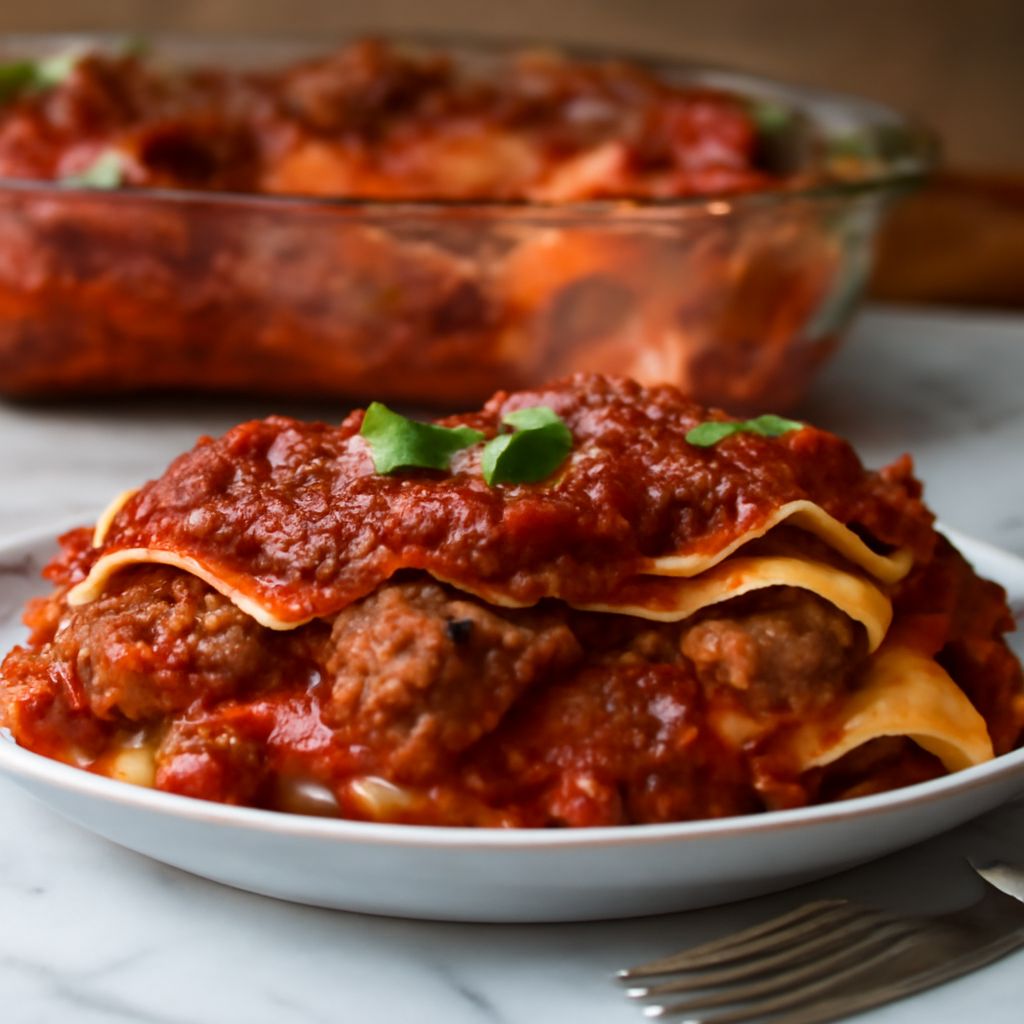
This authentic Italian lasagna recipe follows the Emilia-Romagna approach to lasagna al forno: green spinach pasta, slow-cooked ragù alla bolognese, silky béchamel, and Parmigiano-Reggiano. It serves 8 in a 23 × 33 cm baking dish and gives you distinct layers without an overly wet center.
Regional recipes vary, so this version does not combine every Italian and Italian-American tradition. Prepare the ragù and béchamel ahead if you like, then assemble, bake, and rest the lasagna before cutting.
Authentic Italian Lasagna Recipe: Choose an Emilia-Romagna Style
Yield and equipment: 8 servings in a 23 × 33 cm baking dish
You need one 23 × 33 cm baking dish, a large pot for blanching the pasta, a heavy saucepan for the ragù, and a medium saucepan for the béchamel. Lightly butter the baking dish before you begin assembling.
The defining build: green spinach pasta, ragù alla bolognese, béchamel, and Parmigiano-Reggiano
Emilia-Romagna’s lasagna al forno uses fresh green lasagne sheets colored with spinach rather than plain pasta. The layers alternate meat ragù and béchamel, with finely grated Parmigiano-Reggiano adding salt and a toasted finish. The béchamel supplies moisture and richness, while the ragù provides the concentrated meat and tomato flavor.
How Authentic Italian Lasagna Varies by Region
Emilia-Romagna’s defining combination of spinach pasta, ragù, béchamel, and Parmigiano
There is no single formula that defines every authentic Italian lasagna. In Emilia-Romagna, the classic combination is green pasta, ragù, béchamel, and Parmigiano-Reggiano. In Campania, lasagna may feature ricotta, mozzarella, meatballs, and other celebratory additions. Other areas use different meats, cheeses, or pasta shapes.
Keep one regional logic instead of combining every lasagna tradition
This traditional Italian lasagna stays with the Emilia-Romagna structure from beginning to end. Use no ricotta or mozzarella here; their absence keeps the béchamel-based layers balanced and makes the finished dish easier to portion. You can prepare each component separately, but keep the ragù loose enough to moisten the pasta and the béchamel pourable enough to spread thinly.
Traditional Italian Lasagna Recipe: Prepare the Sauce, Pasta, and Cheese
Ragù quantities: pancetta, soffritto, beef and pork, wine, tomatoes, stock, and milk
- 2 tablespoons extra-virgin olive oil
- 100 g finely chopped pancetta
- 1 small onion, 1 carrot, and 1 celery stalk, all finely diced
- 500 g ground beef
- 250 g ground pork
- 150 ml dry white wine
- 700 g passata or finely crushed tomatoes
- 250 ml beef or chicken stock
- 150 ml whole milk
- 1½ teaspoons fine salt, plus black pepper to taste
Heat the oil in a heavy pot over medium heat. Add the pancetta and cook for about 5 minutes, until it has rendered some fat. Add the onion, carrot, and celery. Cook for 8 to 10 minutes, stirring occasionally, until the soffritto is soft but not browned.
Add the beef and pork. Break the meat into small pieces and cook for 10 to 12 minutes, until no pink remains and the excess moisture has evaporated. Pour in the wine and simmer until almost completely reduced. Stir in the tomatoes, stock, salt, and a few grinds of pepper.
Partially cover the pot and simmer gently for 1½ to 2 hours, stirring every 20 to 30 minutes. Add the milk during the final 20 minutes. The finished ragù should be rich and loose enough to spread, but it should not release a pool of liquid. If it looks watery, simmer uncovered for a few minutes before assembling.
Béchamel quantities: butter, flour, whole milk, nutmeg, and salt
- 80 g unsalted butter
- 80 g all-purpose flour
- 1 liter whole milk, warmed
- 1 teaspoon fine salt
- ⅛ teaspoon freshly grated nutmeg
Melt the butter in a saucepan over medium heat. Whisk in the flour and cook for 2 minutes without letting the mixture brown. Gradually add the warm milk, whisking constantly to prevent lumps. Bring the sauce to a gentle simmer and cook for 8 to 10 minutes, stirring, until it coats a spoon but still pours easily. Season with salt and nutmeg. If it becomes too thick while standing, whisk in a splash of milk.
Pasta and cheese quantities: about 500 g fresh green lasagne sheets and 150 g Parmigiano-Reggiano
- About 500 g fresh green lasagne sheets
- 150 g finely grated Parmigiano-Reggiano
- Butter for the baking dish
If the fresh sheets are not labeled ready to bake, blanch them in salted boiling water for 30 to 45 seconds. Transfer them to cold water, then drain and lay them flat between clean kitchen towels. Remove as much surface water as possible; wet pasta contributes to a loose lasagna. Ready-to-bake fresh sheets can go directly into the dish.
Traditional Italian Lasagna: Layer, Bake, Rest, and Serve
Layer order: ragù, pasta, ragù, béchamel, and Parmigiano; repeat and finish with béchamel and cheese
Heat the oven to 190°C/375°F. Divide the ragù into six portions, the béchamel into five portions, and the Parmigiano into five portions. Spread a thin layer of ragù over the buttered dish. This first layer prevents the pasta from sticking.
- Arrange one-fifth of the pasta sheets over the ragù, overlapping them slightly if needed.
- Spread one portion of ragù over the pasta.
- Add one portion of béchamel and spread it nearly to the edges.
- Sprinkle with one portion of Parmigiano-Reggiano.
- Repeat the pasta, ragù, béchamel, and cheese sequence until you have five pasta layers.
Finish with the fifth layer of pasta, the remaining ragù, the remaining béchamel, and the remaining Parmigiano. The top should be fully covered with béchamel and cheese, with no dry pasta edges exposed. Keep each sauce layer thin; thick layers can slide apart and leave the center undercooked.
Control moisture with a loose but not watery ragù, drained pasta, and restrained sauce layers
Do not assemble with a steaming-hot, watery ragù. Let it cool for 10 to 15 minutes so it thickens slightly, while keeping it spreadable. Pat blanched pasta dry before layering, and avoid pouring extra liquid into the dish. The sauce should reach the edges without collecting around them.
Bake at 190°C/375°F covered for 25 minutes, then uncovered for 15–20 minutes until bubbling and browned
Cover the dish loosely with foil, tenting it so the foil does not touch the cheese. Bake for 25 minutes. Remove the foil and continue baking for 15 to 20 minutes, until the edges bubble vigorously, the center is hot, and the top is browned in patches. If the top colors too quickly, replace the foil for the final minutes.
Rest for 20–30 minutes before cutting, when the center is set and the lasagna remains hot
Let the lasagna rest uncovered for 20 to 30 minutes. This allows the béchamel and ragù to settle so the slices hold their layers while remaining hot. Cut into eight portions with a sharp knife, making sure each serving includes pasta, ragù, béchamel, and the browned Parmigiano topping.