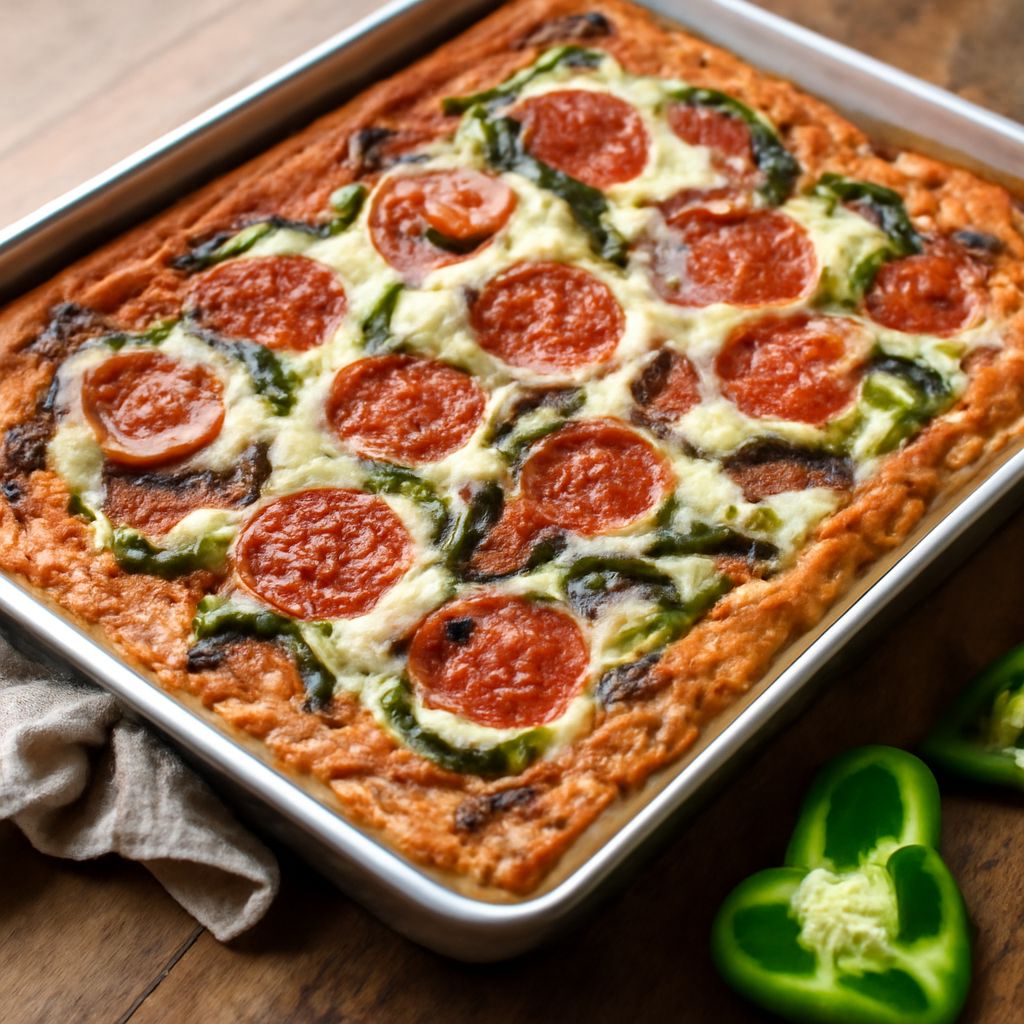
This Sicilian pan pizza uses 500 g of flour, a 13×18-inch pan, and a high-hydration dough to create a thick, airy crumb with a crisp, golden bottom. The recipe yields 12 square pieces and works best with an overnight fermentation followed by a gentle in-pan proof.
Use plenty of olive oil in the pan, handle the dough with oiled fingers, and stretch it gradually. The dough should keep its bubbles rather than being pressed flat.
Sicilian pizza crust: dough quantities for one 13×18-inch pan
Prepare the dough with these measured ingredients:
- 500 g bread flour or strong all-purpose flour
- 400 g lukewarm water, about 80% hydration
- 5 g instant yeast
- 12 g fine sea salt
- 20 g olive oil for the dough
- 35 g olive oil for the pan, plus more for your hands
For the toppings, use 300 g crushed tomatoes, 1 teaspoon fine salt, 1 teaspoon dried oregano, 250 g low-moisture mozzarella, and 40 g finely grated pecorino or Parmesan. Add thinly sliced onion, drained olives, roasted peppers, cooked sausage, or anchovies if you like. Keep wet toppings modest so they do not soften the base.
Coat the entire 13×18-inch metal pan with the 35 g of olive oil, including the corners. A dark metal pan browns the bottom quickly; if you use a light aluminum pan, expect to add a few minutes to the bake. This quantity of dough fills the pan with a finished crust about 1 to 1½ inches thick.
How to make Sicilian pizza with a high-hydration dough
- Stir the flour and yeast together in a large bowl. Add 375 g of the water and mix until no dry flour remains. Cover and rest for 15 minutes. This short rest hydrates the flour and makes the sticky dough easier to strengthen.
- Add the remaining 25 g water, salt, and 20 g olive oil. Mix with a wet hand or sturdy spoon for 2 to 3 minutes. The dough will look loose and glossy. Do not add extra flour.
- Cover the bowl and give the dough three folds at 15-minute intervals. To fold, lift one edge of the dough, stretch it upward without tearing, and fold it over the center. Turn the bowl and repeat three or four times. After the final fold, the dough should hold its shape briefly but still spread slowly.
- Leave the dough at room temperature for 60 to 90 minutes, until it looks slightly inflated and has risen by roughly one-third. It does not need to double. Cover it tightly and refrigerate for 12 to 24 hours.
For a same-day version, skip the refrigerator and let the dough rise at room temperature for 2 to 3 hours after the folds. The flavor will be milder, but the crust can still be airy if you avoid overworking it.
Remove refrigerated dough from the refrigerator about 60 minutes before panning. A cool dough is easier to handle at first, but it should lose its chill before you try to stretch it into the corners.
Authentic Sicilian pizza recipe: in-pan proofing and topping order
Pour the chilled dough into the oiled pan. Turn it once so both sides are coated, then use oiled fingertips to nudge it outward. Stretch only until the dough resists. If it springs back or leaves the corners empty, cover the pan and rest it for 20 minutes before trying again. Two or three gentle stretches are better than one forceful stretch.
Once the dough reaches the edges, let it proof in the pan for 2 to 4 hours at room temperature. The timing depends on the room and dough temperature. It is ready when the surface is visibly puffy, small bubbles appear near the edges, and a light fingertip press leaves an indentation that fills slowly. If the dough still feels dense and tight, give it another 30 minutes.
Choose one of these topping orders:
- Sauce-over-cheese, sfincione-inspired: Scatter the mozzarella over the dough first, then spoon on the crushed tomatoes. Finish with pecorino, oregano, onion, and a few breadcrumbs. The cheese protects the dough from excess tomato moisture while the sauce remains distinct on top.
- Classic cheese-forward pan pizza: Spread the tomatoes in a thin layer, leaving a narrow border. Add mozzarella, pecorino, and your cooked or drained toppings. Finish with oregano and a light drizzle of olive oil.
Use about 250 to 300 g sauce rather than flooding the surface. Drop toppings on gently so you do not deflate the dough. Avoid pressing down, dragging the dough, or stretching it after topping. For an especially crisp bottom, keep the center layer no thicker than the edges and drain mozzarella or vegetables before using them.
Bake for an airy crumb and crisp, golden base
Place a rack in the lower third of the oven and heat it to 500°F (260°C) for at least 45 minutes. The fully heated oven gives the pan enough energy to brown the bottom before the center dries out.
- Put the topped pan on the lower rack and bake for 18 to 25 minutes. Rotate it once after 12 minutes if your oven browns unevenly.
- Look for deeply golden edges, bubbling cheese, and sauce that has darkened slightly in spots. Lift a corner with a spatula: the bottom should be firm and well browned, not pale or soft.
- If the top is dark but the base is light, move the pan to the lowest rack for the final 3 to 5 minutes. If the base browns too quickly, move the pan up one rack and reduce the oven to 475°F.
- Let the pizza cool in the pan for 3 minutes, then loosen the edges and transfer it to a rack or cutting board. Resting briefly keeps the crumb set while allowing steam to escape from the crisp base.
Cut the pizza into 12 squares. The finished Sicilian pizza crust should have a lightly crisp, oil-fried bottom, browned edges, and an open, springy interior with no dense strip beneath the toppings. If the center feels gummy, return the pan to the oven for 3 to 5 minutes; if the crumb is tight, the dough was likely pressed too firmly during spreading or proofed before it became fully puffy.