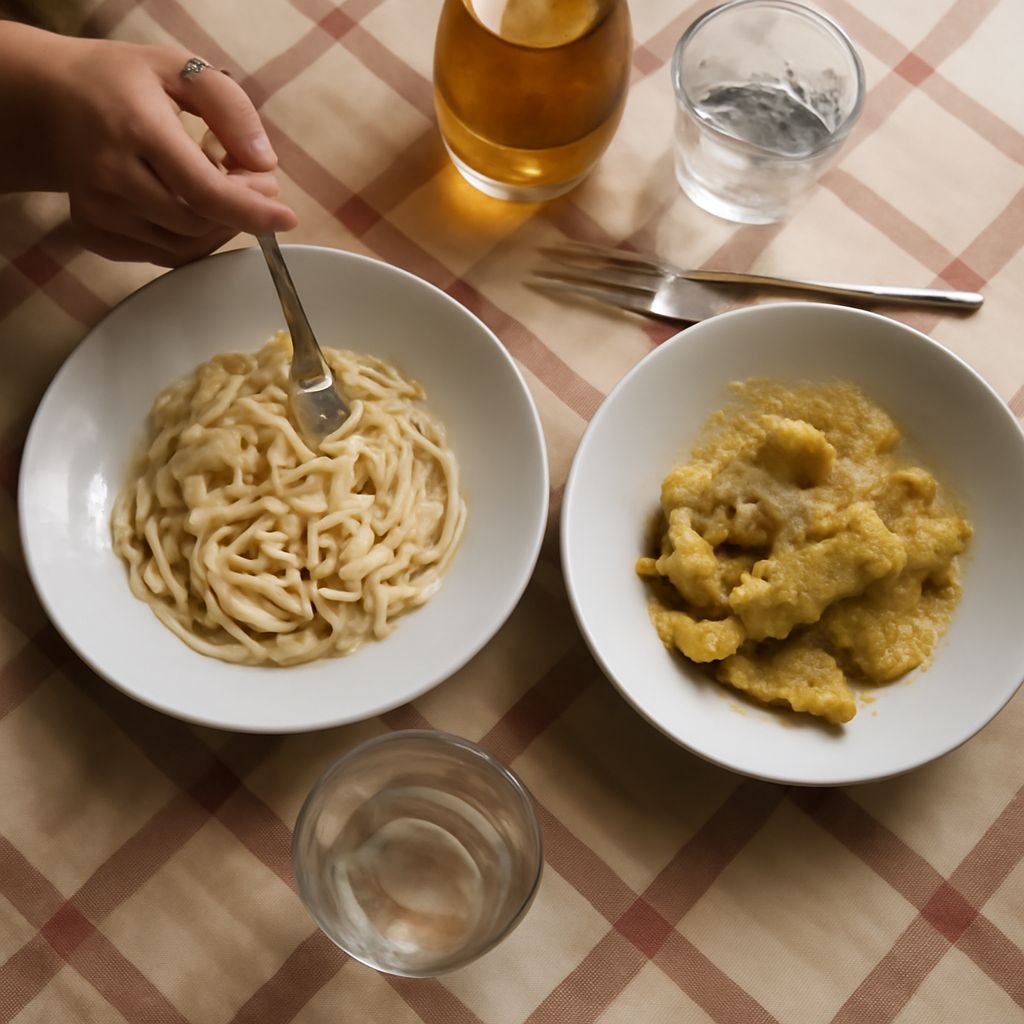
Roman dishes are the everyday expression of modern cucina romana: pasta sharpened with pecorino and pepper, guanciale rendered into sauce, braised vegetables, fried snacks, and simple roast meats. If you want a practical introduction, start with cacio e pepe, carbonara, amatriciana, saltimbocca, carciofi, and supplì.
Traditional Roman food reflects cucina povera, or “poor cooking,” which makes full use of affordable staples and leftovers rather than luxury ingredients. The dishes below belong to present-day Rome and Lazio; they are not a guide to ancient Roman banquet food.
Roman Dishes: Cacio e Pepe, Carbonara, and Amatriciana
Cacio e pepe is the simplest Roman pasta: tonnarelli or spaghetti tossed with Pecorino Romano, plenty of black pepper, and starchy pasta water. The hot water helps the cheese form a glossy sauce. Add the cheese gradually off the strongest heat to avoid a clumpy result.
Carbonara combines guanciale, egg yolks, Pecorino Romano, and black pepper. You create the sauce from the eggs, cheese, and pasta water, then toss it with the hot pasta after removing the pan from direct heat. Traditional versions do not use cream. Guanciale also anchors amatriciana, which adds tomato, Pecorino, and usually chili to bucatini or another long pasta.
For a fourth pasta staple, order gricia: guanciale, pecorino, and pepper without tomato. Together, these sauces show how Roman cooking builds intense flavor from a short ingredient list.
Traditional Roman Food: Saltimbocca, Quinto Quarto, and Carciofi
Saltimbocca alla romana is a quick second course of veal layered with prosciutto and sage, then cooked in butter or olive oil and finished with white wine. You may also see abbacchio, young lamb roasted or grilled with garlic, rosemary, and wine.
Roman quinto quarto means the “fifth quarter”: offal and other parts left after the prized meat cuts were claimed. This tradition turned inexpensive ingredients into deeply flavored specialties. Coda alla vaccinara braises oxtail with tomato, celery, wine, and aromatics until tender. Trippa alla romana simmers tripe in tomato sauce and is finished with mint and Pecorino. These dishes are central examples of cucina povera, not novelty foods added for tourists.
Vegetables balance the richer plates. Carciofi alla romana stuffs globe artichokes with mint, parsley, garlic, and olive oil before braising them. Carciofi alla giudia, associated with Rome’s Jewish quarter, fries the artichoke until the leaves open and turn crisp. Look for puntarelle, a bitter chicory salad dressed with anchovy, garlic, vinegar, and olive oil.
Roman Street Foods: Supplì, Pizza al Taglio, and Porchetta
Supplì is a fried rice croquette made with tomato-seasoned rice and a melting center of mozzarella. You eat it hot, often as an antipasto or a quick snack. Its name is linked to the French word surprise, referring to the cheese hidden inside.
Pizza al taglio is rectangular pizza sold by weight. Choose a slice with toppings such as tomato and mozzarella, potatoes, seasonal vegetables, or cured meats; the baker cuts it with scissors. It is practical for lunch or a walking snack. Porchetta, seasoned roast pork flavored with fennel, garlic, and rosemary, usually arrives sliced in a crusty bread roll. Rustic loaves and rolls also help you mop up sauces from pasta and braises.
Roman Meals: Courses, Market Bites, and a Typical Day
When you sit down for Roman meals, the traditional sequence is flexible but useful: an antipasto such as supplì, fried zucchini flowers, or cured meat; a primo of pasta, soup, or gnocchi; a secondo of meat or fish; and a contorno of vegetables. You do not need every course. A pasta dish with a salad or cooked vegetable makes a complete everyday meal, while saltimbocca or trippa may follow a smaller first course.
A typical day might begin with a cornetto and cappuccino, followed by a market pastry or pizza al taglio when you need something quick. At lunch, choose carbonara, amatriciana, or a plate of braised offal with bread. Dinner can stretch from fried vegetables and a pasta primo to artichokes with roast lamb. For a casual evening, order supplì, porchetta in a roll, and a glass of wine instead of a full multi-course meal.