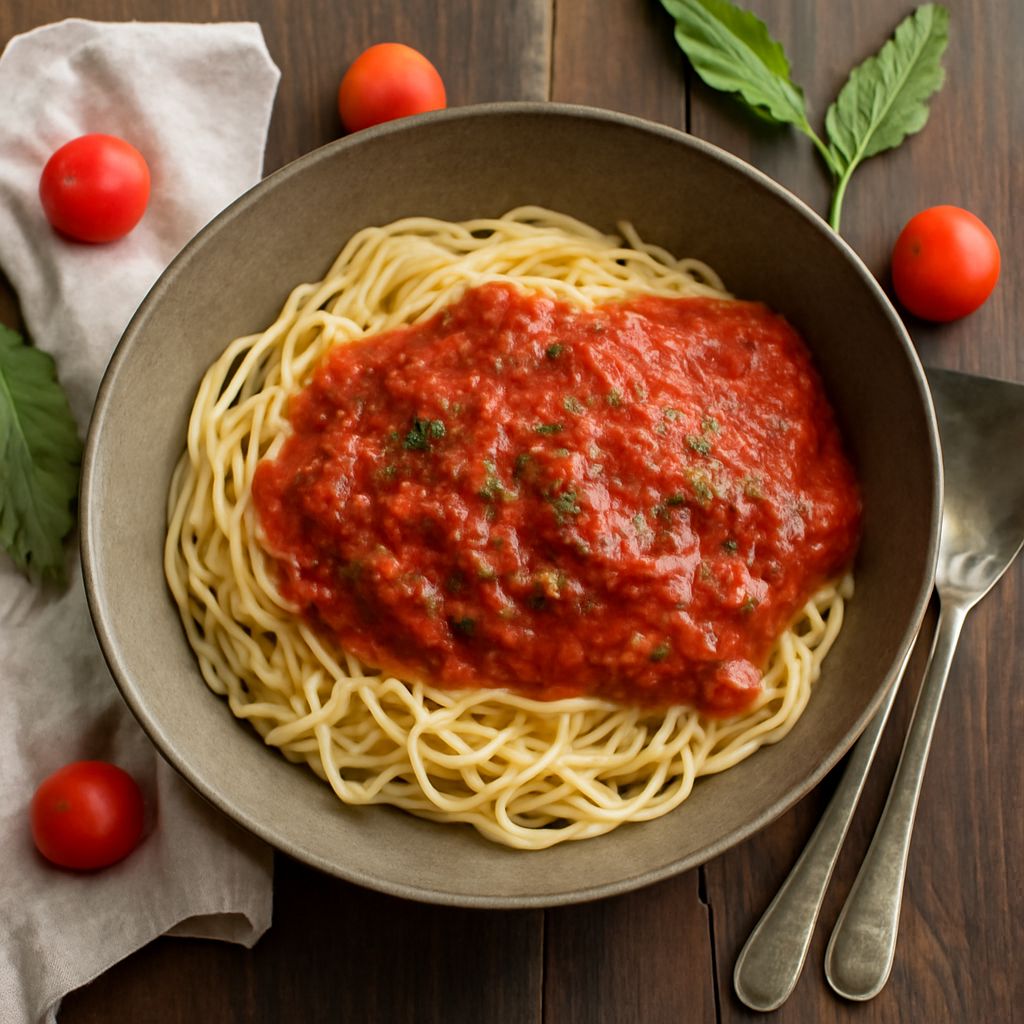
This authentic Italian marinara sauce takes about 35 minutes from start to finish and yields roughly 5 cups, enough for 1 pound of pasta or several pizzas. You build its flavor with good tomatoes, gently cooked garlic, fruity olive oil, and a brief simmer that keeps the sauce bright.
The finished sauce should be loose enough to coat pasta but thick enough to sit on a pizza without spreading into a puddle. Use it immediately, or cool it and refrigerate it for up to 4 days.
Authentic Italian Marinara Sauce Ingredients
- 2 cans (28 ounces each) whole peeled tomatoes, preferably San Marzano-style or another high-quality Italian tomato
- 1/4 cup extra-virgin olive oil
- 5 garlic cloves, thinly sliced or finely chopped
- 1/2 teaspoon red pepper flakes, optional
- 1 teaspoon kosher salt, plus more to taste
- 8 to 10 fresh basil leaves, torn
- 1/2 teaspoon dried oregano, optional, especially for pizza
Whole peeled tomatoes usually give you better control over texture than pre-crushed tomatoes. Check the can for tomatoes that look red and ripe rather than pale, watery, or heavily seasoned. If your tomatoes taste sharply acidic, a small pinch of sugar can round out the sauce, but balanced tomatoes should not need it.
Italian Marinara Sauce Recipe: Quantities, Yield, and Timing
- Yield: about 5 cups, or 6 servings with pasta
- Prep time: 10 minutes
- Cook time: 25 minutes
- Total time: about 35 minutes
- Crush the tomatoes by hand in a bowl, or crush them directly in the pot with a wooden spoon as they cook. Remove any tough stem ends.
- Warm the olive oil in a wide, heavy saucepan over medium-low heat. Add the garlic and red pepper flakes.
- Cook the garlic for 2 to 3 minutes, stirring often, until fragrant and lightly golden at the edges.
- Add the tomatoes, salt, basil, and oregano if using. Stir well and bring the sauce to a gentle simmer.
- Simmer uncovered for 20 to 25 minutes, stirring every few minutes and crushing any remaining large tomato pieces.
- Remove the basil stems, taste, and adjust the salt. Leave the sauce chunky or blend it briefly for a smoother finish.
Build and Simmer the Sauce
Garlic handling determines whether the sauce tastes sweet and aromatic or harsh and bitter. Start the garlic in moderately warm oil instead of dropping it into smoking-hot oil. Keep the heat at medium-low and stir continuously enough to prevent scorching. The garlic is ready when it smells fragrant and turns pale gold. If it becomes dark brown, discard it and start again; burnt garlic will flavor the entire pot.
Add the tomatoes as soon as the garlic reaches that light-golden stage. The mixture may sputter, so pour carefully and stir immediately. A wide pan helps water evaporate evenly while leaving enough surface area for the tomatoes to cook without a long reduction.
Keep the simmer gentle. You should see small bubbles rising around the edges and occasionally across the surface, not a vigorous boil. A 20- to 25-minute simmer softens the tomatoes, blends the olive oil, and concentrates flavor while preserving the fresh, bright character expected from traditional marinara. Longer cooking can make the sauce darker, sweeter, and heavier, moving it away from a quick tomato sauce.
For a rustic sauce, crush the tomatoes with a spoon until no piece is larger than a bite. For a smooth sauce, use an immersion blender for only a few seconds. Do not overblend: excessive blending can make tomato seeds taste bitter and give the sauce a thin, foamy texture.
Traditional Marinara: Adjust Texture and Use
Judge the consistency after the sauce has cooled for a minute. It should fall from a spoon in a thick stream and lightly coat the back of the spoon. If it looks watery, simmer for another 3 to 5 minutes. If it becomes too thick, stir in 1 to 2 tablespoons of water, pasta water, or tomato juice at a time.
Toss the sauce with hot spaghetti, penne, or other pasta, adding a splash of pasta water to help it cling. Spoon it over baked eggplant or meatballs, use it as a dipping sauce, or spread a thin layer on pizza dough. Add the basil near the end for a fresh herbal note, and finish pasta with a drizzle of olive oil or grated Parmesan if desired.