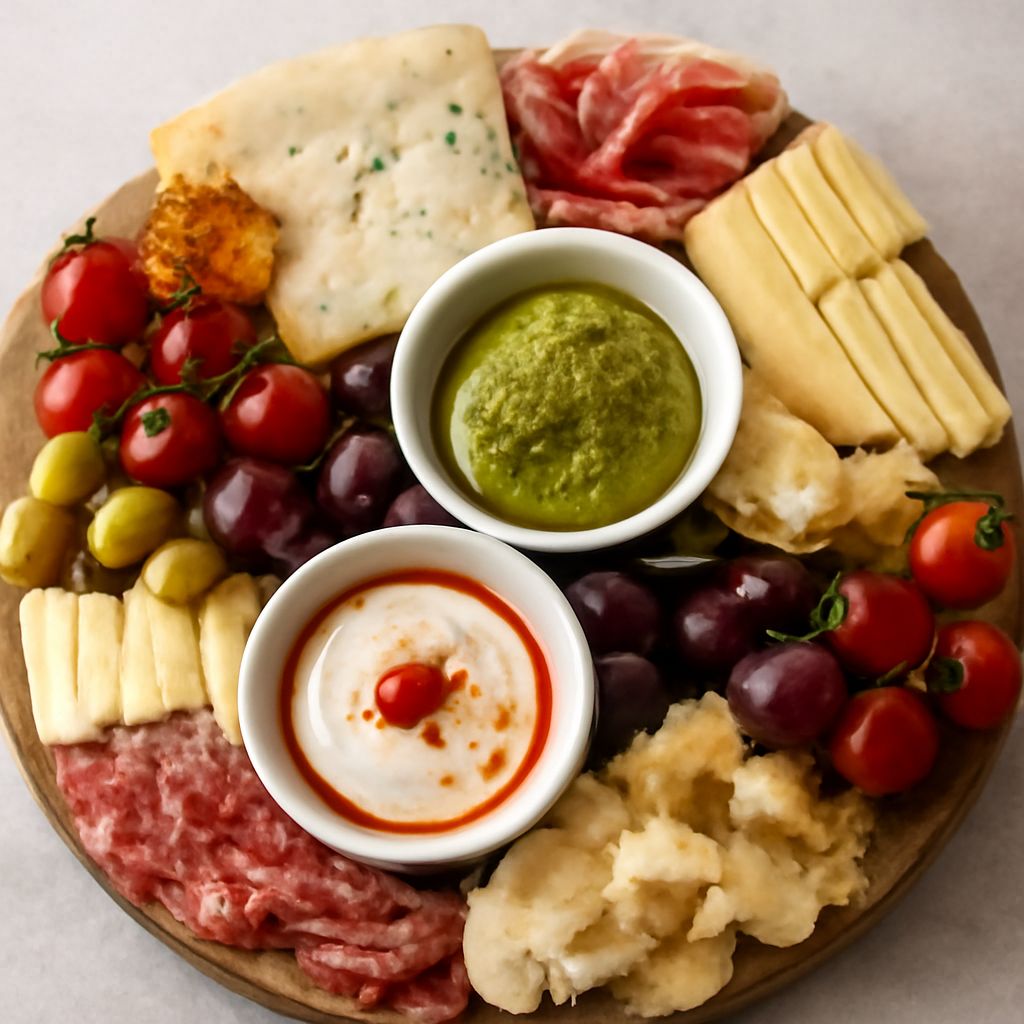
For an Italian charcuterie board served as an antipasto, plan on 1½ to 2 ounces of cured meat and 1½ to 2 ounces of cheese per person. Add about 1 cup of accompaniments and 2 to 3 ounces of bread or crackers per person. This gives you a balanced board with enough variety without letting meat overwhelm the table.
For six guests, use 12 ounces of Italian charcuterie, 12 ounces of cheese, 6 ounces of bread and crackers, and about 6 cups of olives, vegetables, fruit, nuts, and preserves combined. Adjust downward for a pre-dinner nibble or upward if the board replaces a meal.
Italian Charcuterie Board: Portions and a Complete Sample Plan
Build the board around four to six different meats and cheeses, then fill the remaining space with contrasting textures and flavors. A complete six-person plan could include:
- Meats: 4 ounces prosciutto di Parma, 3 ounces finocchiona, 3 ounces soppressata, and 2 ounces bresaola.
- Cheeses: 4 ounces fresh mozzarella, 4 ounces aged Parmigiano-Reggiano, and 4 ounces Gorgonzola dolce.
- Accompaniments: 1 cup Castelvetrano olives, 1 cup marinated artichokes, 1 cup roasted peppers, 1 cup grapes and sliced pear, ½ cup almonds, and ½ cup fig preserves.
- Carriers: 3 ounces grissini, 3 ounces crusty bread, and 3 ounces sturdy crackers.
This combination covers silky, firm, creamy, crumbly, mild, salty, sweet, and tangy elements. For a smaller board, keep the same balance with two meats, two cheeses, three accompaniments, and one bread or cracker option per two people.
Choose Italian Charcuterie and Cheese by Intensity
Choose meats and cheeses in contrasting styles rather than buying several versions of the same salty, firm food. Start with one mild item, one rich or creamy item, and one assertive item. Then add a fourth selection if you need more variety.
- Mild and delicate: Prosciutto, mortadella, fresh mozzarella, burrata, or young pecorino.
- Firm and savory: Bresaola, speck, aged Parmigiano-Reggiano, or aged Asiago.
- Bold and spicy: Soppressata, ’nduja, or Calabrian salami. Serve smaller portions because these flavors dominate quickly.
- Strong and creamy: Gorgonzola or Taleggio. Pair these with fruit, honey, or preserves instead of another intensely salty accompaniment.
Use different cuts to vary texture: fold prosciutto into loose ribbons, slice salami thinly, and cut firm cheese into bite-size shards or wedges. If you choose a pungent cheese, keep the meats simpler. If your meat selection includes spicy salami, use mild cheeses and fresh fruit to restore balance.
Build an Italian Cheese Board with Bread and Accompaniments
Think of each accompaniment as a counterpoint to a specific meat or cheese. Sweet foods soften salt and heat, acidic foods refresh rich bites, and crunchy foods offset soft textures.
- Olives: Use buttery Castelvetrano for mild boards or briny Gaeta and Kalamata olives for stronger selections.
- Vegetables: Add marinated artichokes, roasted peppers, grilled zucchini, or pickled vegetables for acidity and moisture.
- Fruit: Offer grapes, pear, figs, or apples. Fresh fruit suits salty meats; dried apricots and dates suit aged cheese.
- Nuts: Choose almonds, hazelnuts, or pistachios for crunch. Keep them lightly salted so they do not compete with the charcuterie.
- Preserves: Serve fig jam, mostarda, or honey with aged and blue cheeses. Use only a small bowl—about 1 tablespoon per person.
- Bread and crackers: Pair crusty bread with creamy cheese, grissini with prosciutto, and neutral crackers with spreads or bold cheese.
Keep wet foods in small bowls or on separate plates so they do not soften crackers or stain delicate meats. Provide a small knife for each soft cheese and separate tongs for meats and pickled items.
Arrange and Serve the Board for Contrast and Temperature
Use a large wooden board, slate, or platter with enough room for guests to reach every item. Place bowls of olives, vegetables, and preserves first; they act as anchors. Set cheese wedges and larger meat piles around them, then fill open spaces with bread, crackers, fruit, and nuts.
- Set out bowls and ramekins, spacing them across the board.
- Place cheeses in separate zones, moving from mild to strong around the platter.
- Arrange folded prosciutto, overlapping salami, and loose bresaola near compatible cheeses.
- Add bread and crackers in short stacks or clusters so they remain easy to pick up.
- Fill gaps with fruit, nuts, and small vegetables, keeping colors and textures distributed.
Take refrigerated meats and cheeses out 30 to 45 minutes before serving. Keep burrata, fresh mozzarella, and other very soft cheeses cool until about 20 minutes before serving. Serve the board at cool room temperature, and replace perishable items if they sit out for an extended period. Put mild foods near the edge for an easy first bite and reserve the strongest cheese, spicy salami, and most acidic accompaniments for clearly separated areas.