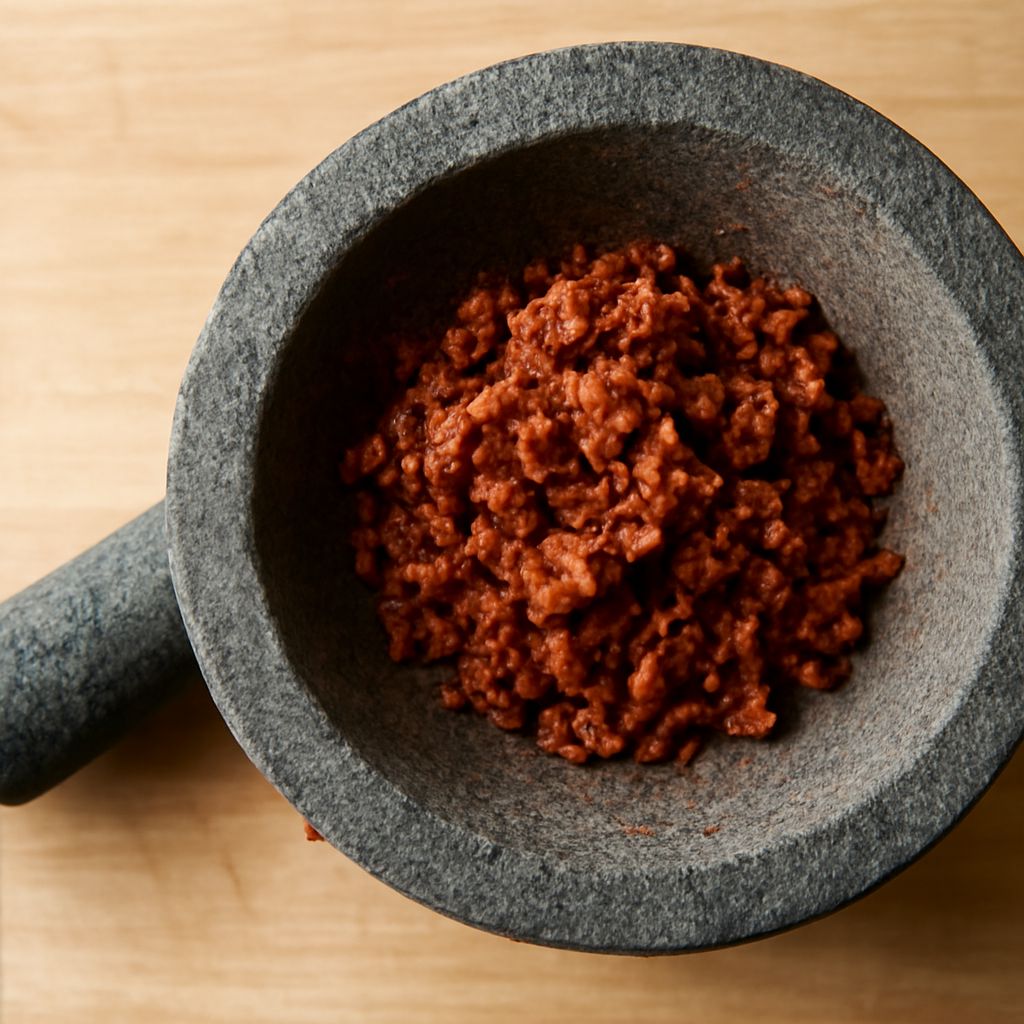
You have found a packet of ready-to-eat dried beef and want to turn it into something satisfying. Preparing pemmican at home brings that savory meat together with melted fat in a compact, richly flavored bite.
There are many versions of this traditional food, and a homemade pemmican recipe is an inviting place to begin. This small batch uses a modern ingredient and belongs in the refrigerator, ready to be sliced and enjoyed over the next few days.
A food with a longer story
Pemmican is associated with Indigenous peoples of the North American Plains and other regions, including Métis communities. Traditionally, people prepared dried, pounded meat with rendered fat; some versions included berries. The combination drew on knowledge of local animals, seasons, and preservation, and became an important food for travel and trade.
Pemmican recipes differ among communities, and a modern recipe cannot stand in for all of them. Here, commercially prepared meat replaces the careful drying and processing practiced in those food traditions. The result offers a taste of the combination rather than a claim to reproduce a particular community’s method or storage life.
Pemmican Recipes for a Small Batch
This way to prepare pemmican makes about four small servings. You need a kitchen scale, a food processor or sturdy chopping knife, a small saucepan, a mixing bowl, and a shallow container. Have a clean spoon and a piece of parchment ready, too.
- 4 ounces fully cooked, ready-to-eat freeze-dried lean beef, weighed dry
- 4 ounces plain rendered beef fat, or tallow, weighed solid
- 1 tablespoon finely chopped unsweetened dried berries, optional
Check the meat label carefully. Choose a product explicitly labeled fully cooked and ready to eat, and follow its package directions. Raw freeze-dried meat, meat intended to be cooked after rehydration, and meat that has merely been dried are not interchangeable with it. For tallow, use a food-grade rendered product; the fat should be clean and free of meat scraps. The optional berries lend a small tart accent, like a bright thread in a dark cloth.
Learning how to make pemmican starts with keeping water out of the mixture and working with clean, dry equipment. Wash and dry your hands, then clean and dry the work surface and utensils. Use the meat and fat within their package dates and follow any storage instructions after opening.
Mix, press, and chill
- Break the ready-to-eat meat into small pieces. Pulse it in a food processor, or chop it finely, until it resembles coarse crumbs. A little variation in texture is welcome; very large pieces make the finished batch harder to slice.
- Place the tallow in a small saucepan over low heat. Let it melt gently, then remove it from the heat. It should be liquid and warm enough to pour, without smoking or browning.
- Put the meat crumbs and optional berries in a bowl. Pour in most of the melted fat and stir thoroughly. Add the rest a little at a time, mixing until the crumbs are evenly coated and a spoonful pressed together holds its shape.
- Line a shallow container with parchment. Press the mixture firmly into an even layer about 1/2 inch thick. Cover and refrigerate promptly until firm, then cut into small squares.
This pemican recipe should look cohesive, with a gentle sheen rather than dry pockets of meat. If the mixture seems a little loose while warm, chilling will help the fat set. The finished pieces should hold together when lifted and soften pleasantly as they warm in the mouth.
Recipes for homemade pemmican can take on different flavors. For a variation on the pemmican recipe, omit the berries for a wholly savory bite, or use a different ready-to-eat, fully cooked freeze-dried lean meat with a flavor you enjoy. Keep the same starting weights and check the package instructions. Different products can absorb fat differently, so judge the mixture by its texture as well as the scale.
Store and serve thoughtfully
Treat this home mixture as a refrigerated food. Place the squares in a covered container and refrigerate at 40°F or below as soon as they are made. As a conservative guide, use them within three to four days or freeze promptly for longer storage. USDA guidance on leftovers recommends those temperatures and time frames for refrigerated cooked food.
Do not leave the batch at room temperature for more than two hours, or more than one hour when the temperature is above 90°F. If it has been left out longer, discard it. Homemade preparation and dry ingredients alone do not establish that this mixture is safe for room-temperature travel storage.
Serve a small square alongside crisp vegetables or bread, and let the flavor of the meat come forward. Keep the remainder chilled. Making pemmican for a meal is easiest when you prepare only what you expect to enjoy within the storage window.
The most likely problem is a crumbly mixture that will not hold when pressed. Return it to the bowl, warm a little additional food-grade tallow, and mix it in a teaspoon at a time until the crumbs cling together. Press and chill again promptly; keep the finished batch refrigerated.