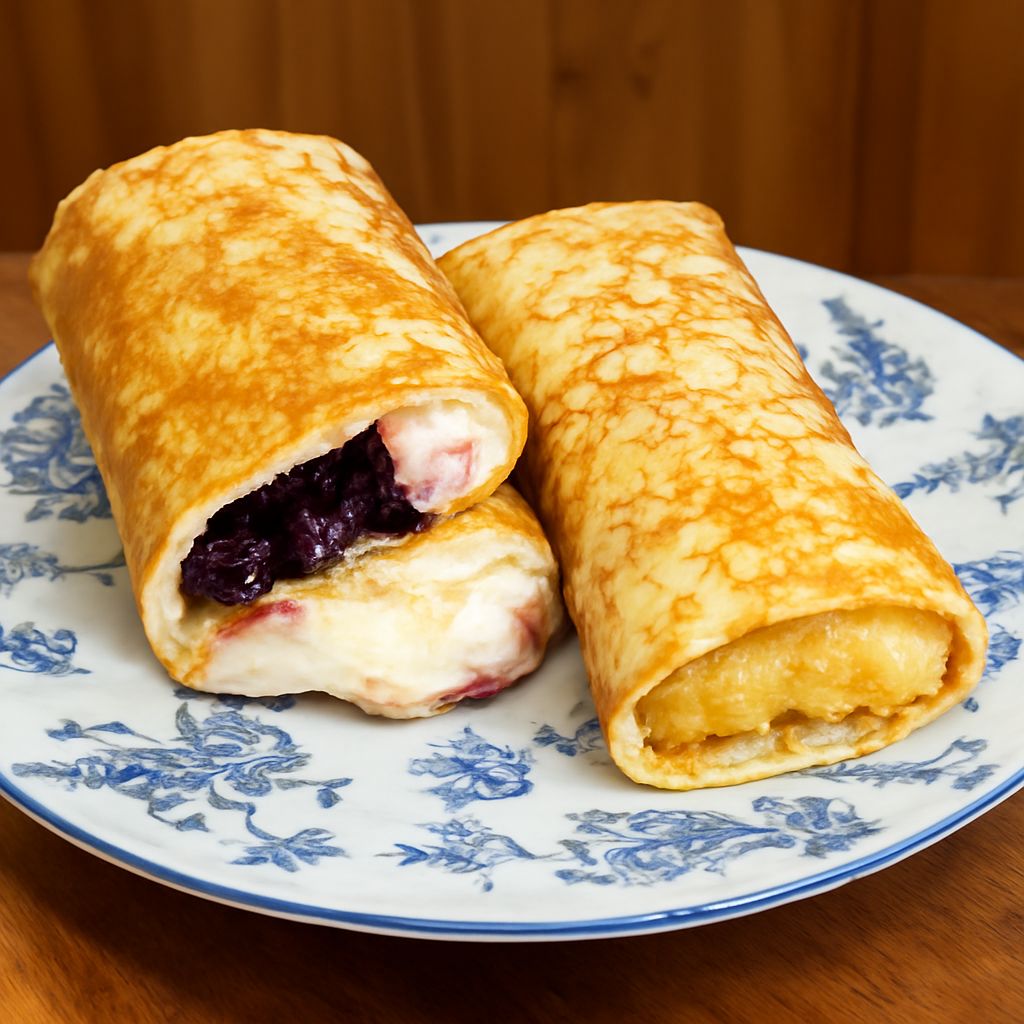
A warm pan is waiting, and the first ladleful of batter is ready to spread. This Russian-style crepe should be thin enough to fold around a filling, with delicate golden spots and edges that lift easily from the pan. A few simple texture cues make the difference between a tender stack and a torn first attempt.
These blini are the thin, unleavened kind made with milk and eggs. Russian cooks also make thicker or yeasted versions, so the name does not point to just one batter. Here the goal is a flexible pancake that can be served with sour cream and jam or folded around a savory filling.
Russian Crepe Batter: What to Expect
This russian blini recipe makes about 10 to 12 thin pancakes in an 8-inch nonstick skillet. Allow roughly 15 minutes to mix and rest the batter, then about 25 minutes to cook. The exact yield depends on the size of the pan and the amount of batter used each time.
The batter should pour like heavy cream, not sit in a mound like American pancake batter. It needs enough flour to hold together and enough liquid to run quickly across the warm surface. A short rest gives the flour time to absorb liquid, so check the consistency again before cooking.
Ingredients
- 1 cup all-purpose flour
- 2 large eggs
- 1 1/2 cups milk, plus 1 to 3 tablespoons more if needed
- 1 tablespoon sugar
- 1/4 teaspoon fine salt
- 2 tablespoons unsalted butter, melted and slightly cooled, plus a little for the pan and stack
- Sour cream and jam, or a filling of your choice, for serving
The small amount of sugar suits either a sweet or savory topping. For a savory-only batch, reduce it to 1 teaspoon. Let the melted butter cool briefly before adding it so it does not cook the eggs on contact.
Mix the batter
- Whisk the flour, sugar, and salt together in a medium bowl.
- In another bowl, whisk the eggs with about half the milk. Slowly whisk the liquid into the flour mixture until smooth. Adding it gradually helps prevent stubborn lumps.
- Whisk in the remaining milk and the melted butter. Let the batter stand for 10 minutes, then stir again. If it no longer pours easily, add milk a tablespoon at a time until it flows in a thin stream.
A few small bubbles are fine. Large lumps are not: press them against the side of the bowl with the whisk, or pass the batter through a sieve. This blin recipe does not need baking powder; its lightness comes from the thin layer of batter and the heat of the pan.
Cook a Thin, Even Stack
Set an 8-inch nonstick skillet over medium heat. When a drop of water sizzles on the surface, wipe the pan with a small amount of butter. Too much fat makes the batter slide into uneven pools; a thin film is enough. Have a plate and a flexible spatula close at hand.
Lift the pan from the heat and pour about 1/4 cup batter into the center. Immediately tilt and rotate the pan so the batter reaches the edges in a thin layer. Return it to the heat. If a small gap remains, dab in a little batter before the surface sets. It is breakfast, not a geometry examination.
Cook for about 1 to 2 minutes, until the top looks mostly dry and the edges begin to lift. Slip the spatula underneath and turn the pancake. Cook the second side for 20 to 40 seconds, until lightly spotted, then slide it onto the plate. The timing depends on your stove and pan; the dry surface and lifting edges are more useful signals than the clock alone.
Stack each pancake on top of the last and brush lightly with butter if you like. The warmth and a loose covering of foil keep the stack soft and flexible. Stir the batter occasionally as you work, and add a little milk if it thickens too much. The first russian crepe is a test of the pan’s heat and the batter’s flow; adjust either before cooking the rest.
Serve Them While Warm
For a simple sweet plate, fold each pancake into quarters and serve with sour cream and a spoonful of jam. The cool, tangy cream balances the fruit, while the thin layers remain soft enough to cut with a fork. Fresh berries or a little honey also work well.
For a savory option, spread a thin layer of sour cream over a pancake, add sautéed mushrooms, and fold it into an envelope. Keep the filling fairly dry and avoid overfilling, or the delicate wrapper may tear. A small portion of smoked salmon with dill is another familiar pairing; arrange it just before serving so the pancakes stay warm.
These Russian-style pancakes are versatile. The appeal of russian crepes is their flexibility: the same lightly sweet batter can carry either filling. If you are making Russian-style crepes ahead, cool them, cover, and refrigerate them promptly. Reheat a few at a time in a covered skillet over low heat until warmed through. A small dab of butter helps keep the edges supple.
If a pancake tears when you turn it, look first at the surface: a wet center usually means it needs a little longer before flipping. Let the next one cook until the top is mostly dry and the edges lift, then slide the spatula farther underneath before turning.