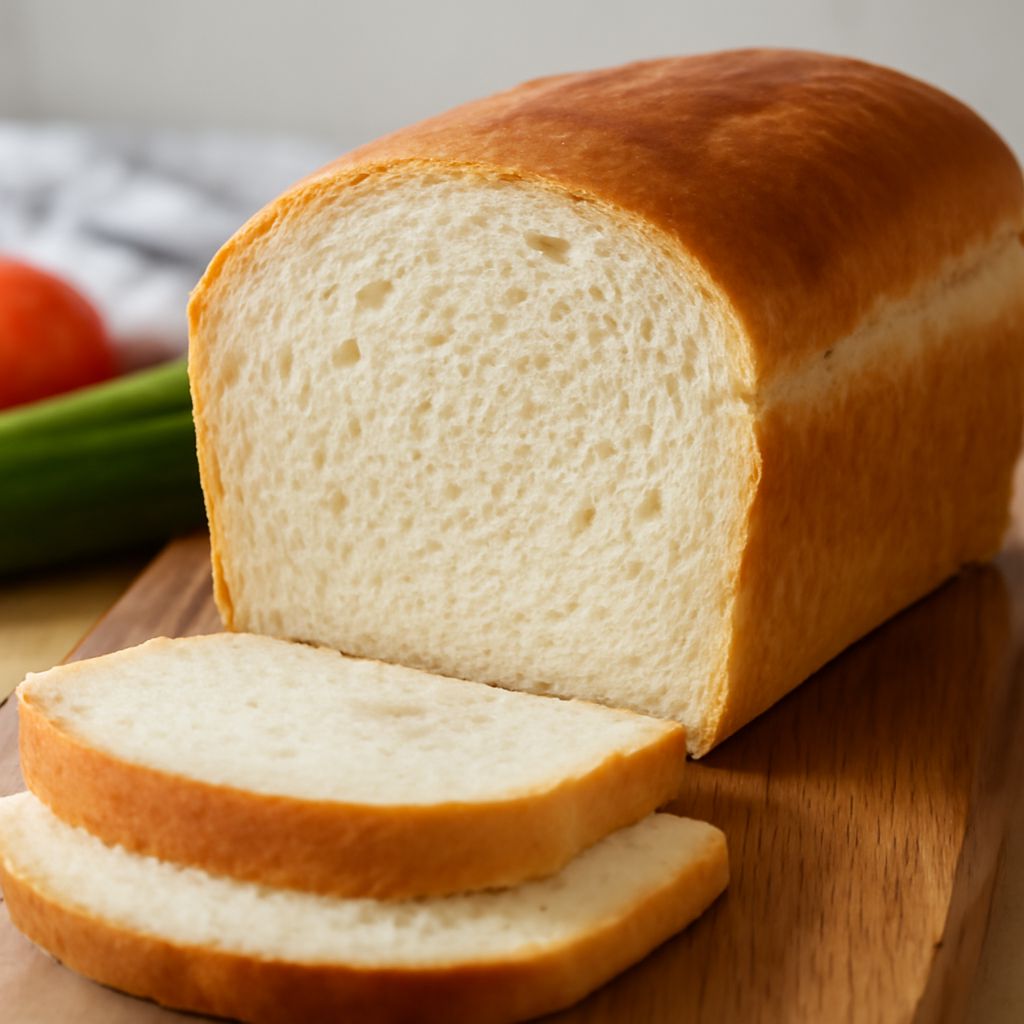
How do you make a soft loaf at home that slices neatly for lunch? Use a lightly enriched yeast dough, let it rise until visibly puffy, and bake it in a loaf pan. This home-baked bread for sandwiches uses instant yeast and a straightforward mixing method, with enough time for the dough to develop its tender crumb.
You can make the dough in a stand mixer or by hand. Much of the time is spent waiting for it to rise.
Homemade Sandwich Bread: Ingredients and Timing
This white sandwich bread recipe makes one loaf, about 12–16 slices, in an 8 1/2-by-4 1/2-inch loaf pan. Allow approximately 3 1/2 to 5 hours from mixing through cooling: about 20 minutes of hands-on work, 1–2 hours for the first rise, 45–75 minutes for the second, 30–35 minutes to bake, and at least an hour to cool. A cool room may lengthen the rises.
Gather:
- 3 cups (360 g) all-purpose flour, plus a little for the work surface
- 2 teaspoons instant yeast
- 2 tablespoons (25 g) granulated sugar
- 1 1/4 teaspoons (8 g) fine table salt
- 1/2 cup (120 ml) milk
- 2/3 cup (160 ml) water
- 4 tablespoons (57 g) unsalted butter, melted and cooled until warm
- A little oil or softened butter for the bowl and pan
Weigh the flour for the most consistent result. If using cups, fluff the flour, spoon it gently into the cup, and level it without packing. Warm the milk and water until lukewarm, about 100–110°F. They should feel warm, not hot. Instant yeast can be mixed directly into the flour, so there is no separate proofing step before mixing.
Mix and Knead
In a large bowl, whisk the flour, yeast, sugar, and salt together. Pour in the warm milk, water, and melted butter. Stir until no dry flour remains. Rest the rough dough for 5 minutes so the flour can absorb the liquid.
Knead on a lightly floured surface for 8–10 minutes, folding the dough over itself and pushing it away with the heel of your hand. Alternatively, use a dough hook on low speed for about 6–8 minutes. The finished dough should be smooth, elastic, and slightly tacky, stretching a little before tearing.
If it clings heavily, dust the surface with a teaspoon of flour and continue kneading. Add only as much as needed to handle it. A soft dough gives the loaf room to rise; too much extra flour can make the slices dry and dense.
Let It Rise, Then Shape
Place the dough in a lightly greased bowl and turn it once to coat. Cover and leave it in a comfortably warm, draft-free place until roughly doubled, usually 1–2 hours. Press a fingertip gently into the dough: an indentation should remain. If it springs back immediately and the dough still looks compact, give it more time.
Grease the loaf pan. Gently press the risen dough down and turn it onto a lightly floured surface. Pat it into a rectangle about 8 inches wide. Roll it up from a short end into a snug log. Pinch the seam closed and tuck the ends under. Place it seam-side down in the pan.
Cover loosely with greased plastic wrap or a clean cover. Let it rise for 45–75 minutes, until the dough is domed about 1 inch above the rim. A gentle fingertip press should leave a shallow dent that slowly springs partway back. If it rebounds quickly, wait a little longer; if it collapses, it has risen too far and should be baked promptly. Begin heating the oven to 350°F near the end of this rise.
Bake, Cool, and Slice
Uncover and bake on the center rack for 30–35 minutes, until the top is golden brown. If it darkens too quickly, lay a loose piece of foil over the top for the final part of baking. The center should reach 190°F on an instant-read thermometer; King Arthur Baking uses that temperature for soft pan loaves.
Let the loaf stand in the pan for 5 minutes, then turn it out onto a rack. Cool completely, at least 1 hour, before slicing with a serrated knife. The interior continues to set as it cools; cut too soon and the warm crumb can compress under the blade.
Homemade sandwich bread is especially good the day it is baked, with a little butter or a favorite filling. Once completely cool, wrap it well and keep it at room temperature for several days. For longer storage, freeze slices in a sealed bag and take out only what you need; they can go straight into the toaster.
Why the Shorter Method Works
This quick sandwich bread saves a separate yeast-activation step by using instant yeast, while the two rises still build volume and a fine crumb. Milk and butter make the interior tender; the pan supports its shape. A recipe for a homemade white loaf like this one gives you a useful rhythm: mix, knead, rise, shape, rise again, and bake.
If the loaf is dense and low, look first at the rises. Dough that stayed small in a cool kitchen may simply have needed more time; next time, wait for the volume and finger-test cues rather than the clock alone. If it barely rose at all, check that the yeast is in date and that the liquid was lukewarm, then try again with fresh yeast.