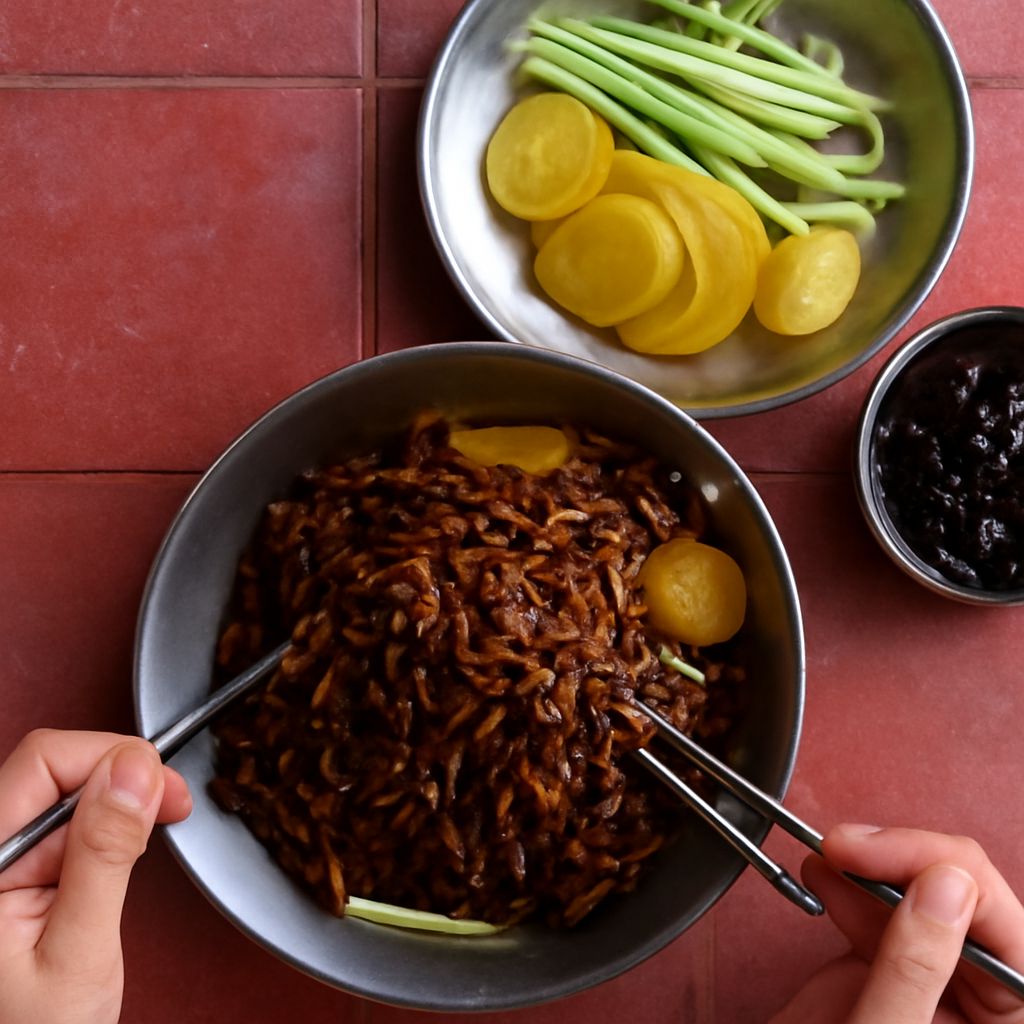
If you’re a fan of Korean cuisine or simply exploring new culinary adventures, jjajangmyeon, also known as Korean black noodles, should be on your list. This savory dish, known for its rich and bold flavors, offers a delightful experience for your taste buds. Let’s dive into the world of jjajangmyeon, exploring its history, ingredients, preparation methods, and where you can find or make this iconic dish.
What is Jjajangmyeon?
Jjajangmyeon is a popular Korean dish that features thick wheat noodles topped with a savory black bean paste sauce. The sauce, known as jjajang, is made from chunjang (a fermented black soybean paste), diced pork or beef, and vegetables like onions, potatoes, and zucchini. This combination creates a hearty and flavorful meal that’s both satisfying and comforting. Jjajangmyeon is often garnished with julienned cucumber or boiled eggs, adding freshness and contrasting textures to the dish.
The Origins and Cultural Significance
Jjajangmyeon has its roots in Chinese cuisine, specifically in a dish called zhajiangmian. It was introduced to Korea by Chinese immigrants in the late 19th to early 20th century. Over time, the dish evolved to suit Korean palates, eventually becoming a staple in Korean Chinese cuisine. Jjajangmyeon has since become an iconic comfort food in Korea, often associated with special occasions and gatherings.
In Korea, jjajangmyeon is also a popular dish on Black Day, celebrated on April 14th by single individuals who didn’t receive gifts on Valentine’s Day or White Day. On this day, singles gather to enjoy a bowl of jjajangmyeon together, symbolizing their singleness with the dish’s dark hue.
Ingredients and Preparation
The key to a delicious jjajangmyeon lies in its ingredients. Here’s what you’ll need:
- Noodles: Thick wheat noodles are preferred for their chewy texture, perfect for absorbing the rich jjajang sauce.
- Black Bean Paste: Chunjang is the essential ingredient for the sauce, offering a deep, umami flavor.
- Meat: Diced pork belly is commonly used, but you can also opt for beef or a vegetarian version with mushrooms.
- Vegetables: Onions, potatoes, zucchini, and sometimes cabbage add sweetness and depth to the sauce.
- Garnishes: Fresh cucumber strips or hard-boiled eggs provide a refreshing balance to the robust sauce.
To prepare jjajangmyeon, you’ll first stir-fry the meat and vegetables before adding the black bean paste. This mixture simmers to allow the flavors to meld, creating a thick and luscious sauce that coats the noodles beautifully.
How to Make Jjajangmyeon at Home
Creating jjajangmyeon at home is a rewarding process that allows you to enjoy this comforting dish anytime. Here’s a simple guide to making it:
- Prepare the Ingredients: Dice the pork belly or beef into small cubes. Chop onions, potatoes, and zucchini into bite-sized pieces.
- Cook the Noodles: Boil the wheat noodles according to package instructions until they’re al dente. Drain and set aside.
- Create the Sauce: In a pan, heat oil and add the diced meat, cooking until browned. Add the chopped vegetables and stir-fry until they begin to soften.
- Add the Black Bean Paste: Mix in the chunjang and stir well to combine, allowing it to coat the meat and vegetables thoroughly.
- Simmer: Add a bit of water or broth to thin the sauce slightly, then let it simmer until the vegetables are tender, and the flavors have melded together.
- Assemble the Dish: Place the cooked noodles in a bowl, top with the jjajang sauce, and garnish with cucumber strips or a boiled egg.
The success of jjajangmyeon lies in balancing the savory and sweet flavors of the sauce with the chewy noodles. Look for a glossy, thick sauce that clings well to the noodles, ensuring every bite is packed with flavor.
Where to Find Authentic Jjajangmyeon
While making jjajangmyeon at home can be a fun culinary project, experiencing it at an authentic Korean restaurant can offer a different level of satisfaction. Many Korean-Chinese eateries in urban areas, especially in Koreatowns, specialize in this dish. You can look for restaurants where jjajangmyeon is a popular offering, ensuring an authentic taste experience.
If you find yourself in Korea, don’t miss the chance to try jjajangmyeon from local favorites such as “Andong Jjajangmyeon” or “Myeongdong Jjajangmyeon.” These establishments are renowned for their dedication to preserving the traditional flavors of this much-loved dish.
Whether you decide to try making jjajangmyeon at home or seek it out at a restaurant, the rich and savory taste of Korean black noodles is sure to make an impression. Enjoy the unique blend of flavors and the cultural history that each bowl of jjajangmyeon brings to the table.