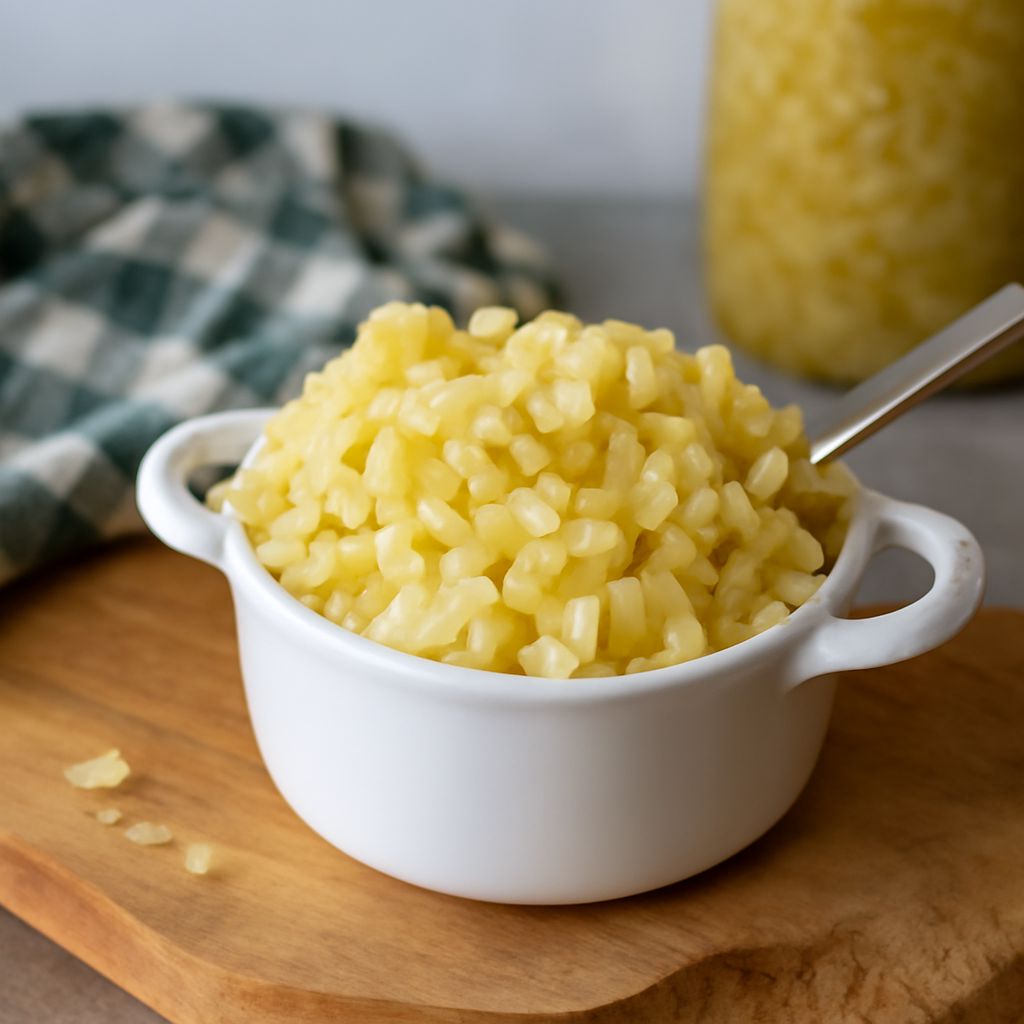
Making sauerkraut at home is a rewarding and simple process. This guide will teach you how to make sauerkraut, ensuring you can enjoy this tangy, probiotic-rich food with just a few ingredients and some patience. Follow these steps to craft your own kraut recipe and explore different flavor variations.
What You Need to Make Sauerkraut
- Cabbage: One medium head of green or red cabbage (about 2 pounds).
- Salt: Use 1 ½ tablespoons of kosher or sea salt.
- Optional Flavorings: Caraway seeds, juniper berries, or garlic for added taste.
- Equipment: A large mixing bowl, a cutting board, a knife, a clean glass jar, and a weight or smaller jar for pressing.
Step-by-Step Guide to Making Sauerkraut
- Prepare the Cabbage: Remove any damaged outer leaves from the cabbage. Rinse under cold water and pat dry.
- Slice the Cabbage: Cut the cabbage into quarters and remove the core. Slice each quarter into thin ribbons.
- Mix with Salt: In a large bowl, combine the sliced cabbage and salt. Massage the salt into the cabbage until it starts to release liquid.
- Pack the Jar: Transfer the cabbage into a clean glass jar, pressing down firmly to eliminate air pockets. Pour any extracted liquid from the bowl over the cabbage.
- Weigh Down the Cabbage: Place a weight or smaller jar inside the main jar to keep the cabbage submerged.
- Cover and Store: Cover the jar with a cloth or a lid and store it at room temperature away from direct sunlight.
- Fermentation: Allow the cabbage to ferment for 1 to 4 weeks. Check daily to ensure the cabbage remains submerged and to taste for desired tanginess.
Fermentation Tips and Tricks
- Temperature: Keep the jar in a cool, dark place for optimal fermentation.
- Submersion: Ensure the cabbage remains submerged in its liquid to prevent mold.
- Check Regularly: Taste the sauerkraut every few days to monitor flavor development.
- Adjusting Time: Fermentation time varies. Stop when the kraut reaches your preferred taste.
Flavor Variations for Sauerkraut
- Caraway Sauerkraut: Add 1 tablespoon of caraway seeds while massaging the cabbage with salt.
- Garlic and Dill: Include a few cloves of sliced garlic and a handful of fresh dill for a savory twist.
- Spicy Kraut: Mix in red pepper flakes or sliced jalapeños for some heat.
Common Mistakes and How to Avoid Them
- Not Enough Salt: Using too little salt can inhibit proper fermentation. Stick to the recommended amount.
- Improper Submersion: If cabbage is exposed to air, it can spoil. Always keep it submerged.
- Inconsistent Temperature: Fluctuating temperatures can affect flavor. Maintain a steady environment.
- Ignoring Mold: If mold appears, remove it promptly and ensure proper submersion.