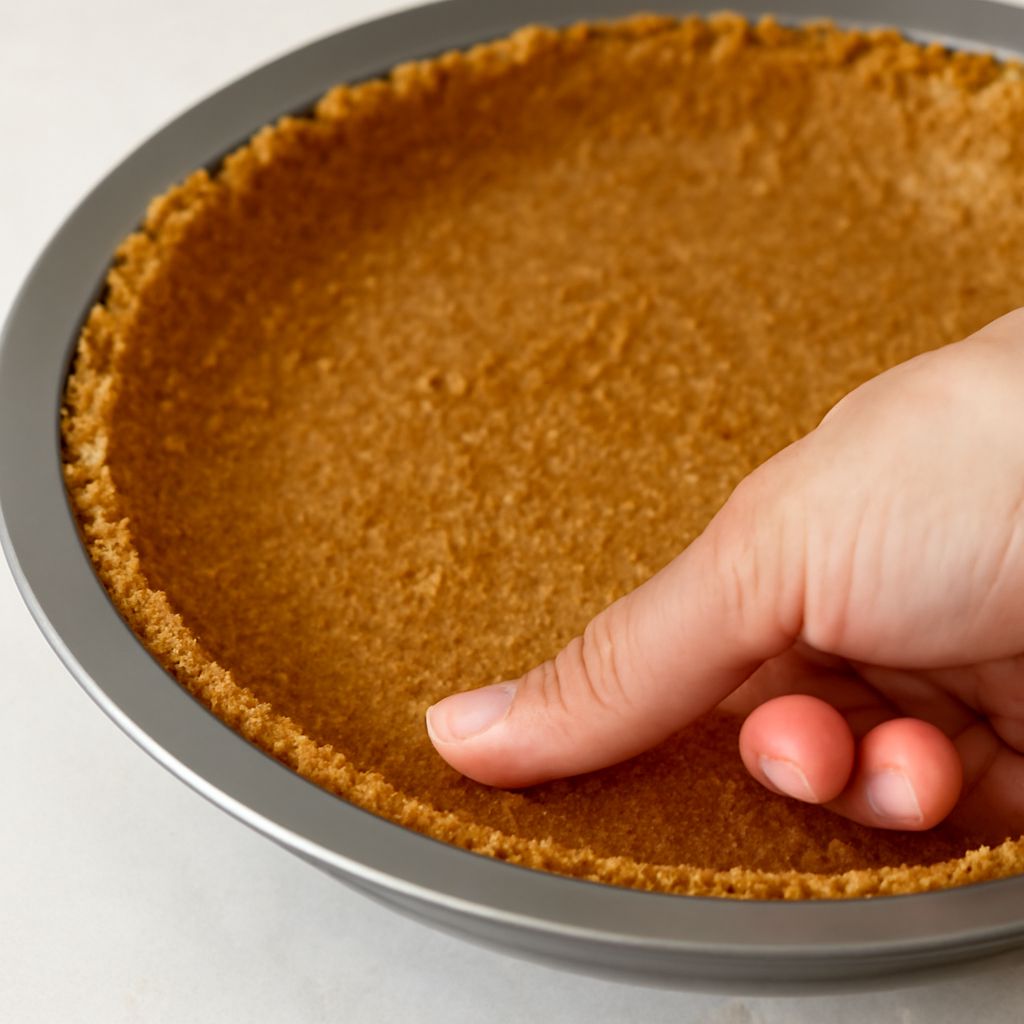
What makes a graham cracker crust hold together when you cut a slice? Fine crumbs, enough melted butter to bind them, and a little time to set. To make a crust from graham crackers, mix the crumbs with butter and press them evenly into a pan; then bake or chill the shell according to your filling.
A homemade graham cracker pie crust can be crisp and toasty under a baked cheesecake or cool and tender beneath a chocolate cream filling. The same mixture works for both: the difference is what you do after pressing it into the pan.
How to Make a Graham Cracker Crust: The Basic Mix
For one 9-inch deep-dish pie pan or springform pan, gather:
- 1 3/4 cups fine graham cracker crumbs, about 10 to 11 whole cracker sheets
- 1/4 cup powdered sugar
- 6 tablespoons unsalted butter, melted
- A small pinch of salt, optional
Once you know how to make a graham cracker crust, you can pair it with many fillings. This ratio follows the King Arthur Baking crust recipe. If your pie pan is shallow, you may have some mixture left over; save it to sprinkle over a finished dessert. Measure the crumbs after crushing, since cracker sizes vary. For the best graham cracker crust, aim for fine, even crumbs: large pieces leave gaps that make a slice more likely to break.
To make your graham cracker crust with even crumbs, break the crackers into a food processor and pulse until fine. Or put them in a sturdy zip-top bag, press out the air, seal it, and roll over the bag with a rolling pin. Pay attention to the corners, where larger pieces tend to hide. A few slightly coarse crumbs are fine, but crush any obvious chunks.
Stir the crumbs, sugar, and salt together in a bowl. Pour in the melted butter and mix thoroughly, scraping the bottom so no dry pocket remains. Squeeze a spoonful in your hand: it should hold together briefly, like damp sand. If it falls apart, stir in a teaspoon of melted butter and test again. If it looks greasy, add a spoonful of crumbs.
Press an Even Shell
Tip the mixture into the pan and spread it loosely across the bottom. Push some crumbs toward the edges, then use your fingers to build the sides. A straight-sided measuring cup helps press the bottom flat and tuck crumbs into the angle where the bottom meets the wall. Work around the pan to keep the sides roughly even.
Press firmly enough to make the graham cracker crust hold its shape, but avoid packing it down with all your strength. An overly compact layer can be difficult to cut. Check the edge for thin patches and move a little mixture there before the shell is set. A uniform layer gives each slice a base and a rim that support the filling.
For a springform pan, decide whether you want a bottom-only base or sides as well. A bottom-only layer is straightforward to slice; bringing crumbs partway up the sides gives a cheesecake a more defined border. For a pie plate, press the crumbs up the sloping sides, stopping just below the rim so they do not tumble over it.
Bake or Chill for Your Filling
To prebake, heat the oven to 375°F and bake the empty shell for 10 to 12 minutes, until set and fragrant. Set the pan on a rack and let the crust cool completely before adding a cold filling. Baking brings out a toasted flavor and helps the shell hold its shape.
For a baked cheesecake or another filling that goes into the oven, follow the filling recipe’s directions for prebaking and subsequent baking. Some recipes ask for a prebaked shell; others bake the filling and base together. Use the temperature and timing specified for the assembled dessert rather than guessing from the empty-shell timing.
When making a graham cracker crust for an icebox pie or another no-bake filling, you can chill the pressed shell until firm, at least an hour, then add the filling and refrigerate the assembled dessert as directed. You can also prebake and cool the shell first if you prefer a toasted flavor. Letting either shell set before filling gives the butter time to firm up and helps keep the crumbs in place.
Slice and Troubleshoot
Once the dessert has set, cut with a sharp knife, wiping the blade between slices for tidy edges. Slide a thin pie server beneath each piece, reaching all the way to the center before lifting. With a springform pan, release the ring only after the cheesecake has chilled as directed in its recipe.
The most likely setback is a crumbly crust. If the mixture will not hold together when squeezed before pressing, it needs a little more butter: mix in a teaspoon at a time. If a finished chilled slice falls apart, return the dessert to the refrigerator to firm up, then serve the loose crumbs alongside the filling. They will still taste delicious.