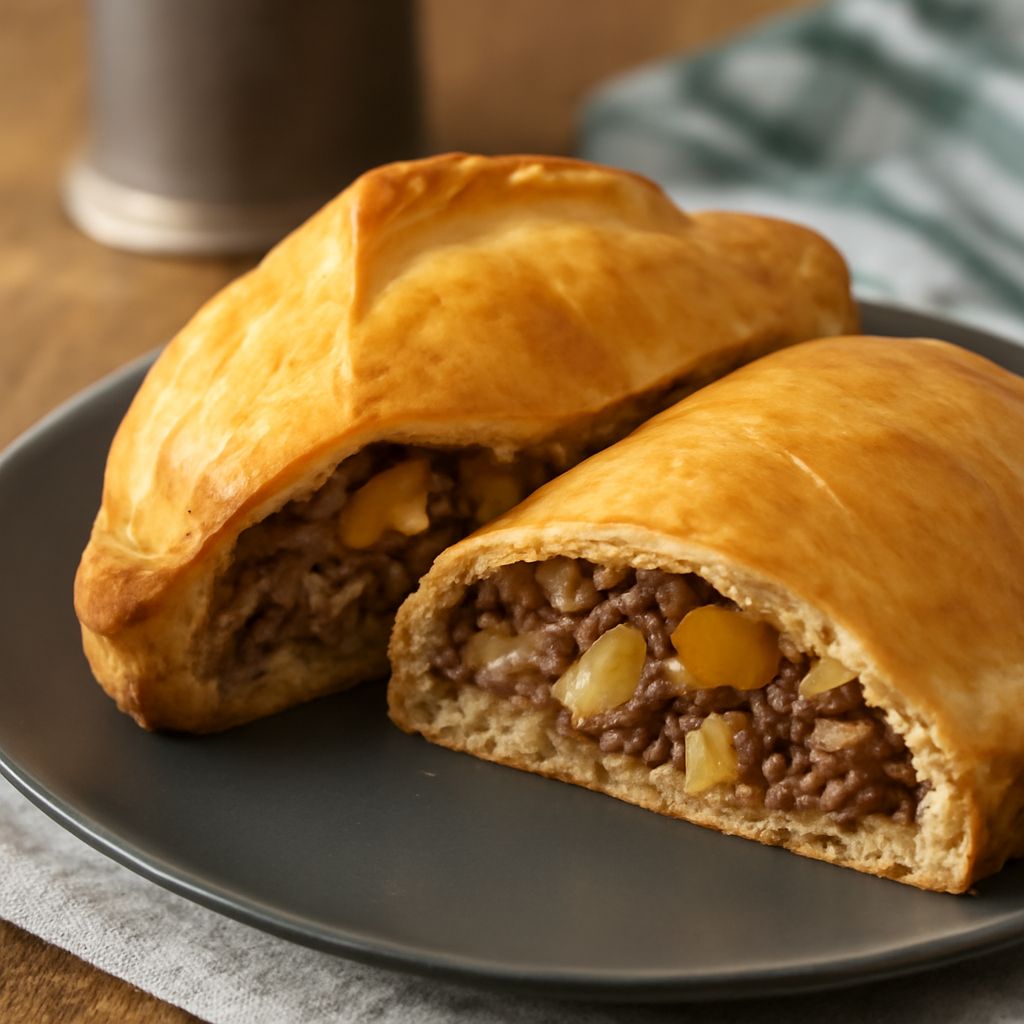
How do you bake a savory hand pie with a crisp shell and a tender, juicy center? Keep the pastry cool, cut the filling small, and seal the edge firmly before baking. These Cornish-style pasties fold beef, potato, rutabaga, and onion into a sturdy half-moon that is just as welcome at a table as it is packed for a picnic.
This recipe for pasties takes its cues from Cornwall, where beef and root vegetables are enclosed in pastry and crimped along one side. Other regions and households have their own fillings and ways of shaping the pastry; this version gives you a clear place to begin.
Pastie recipe: ingredients and timing
This pastie recipe makes four generous hand pies. Allow about 35 minutes of active work, 30 minutes to chill the dough, and 50 to 60 minutes for baking. A rolling pin, a plate about 8 inches across, and a large baking sheet are useful.
For the pastry:
- 2 1/2 cups all-purpose flour, plus a little for rolling
- 1 teaspoon fine salt
- 10 tablespoons cold unsalted butter, cut into small cubes
- 7 to 9 tablespoons ice water
- 1 egg, beaten, for glazing
For the filling:
- 3/4 pound beef skirt steak, cut into 1/4-inch pieces
- 1 medium waxy potato, about 8 ounces, peeled and cut into 1/4-inch dice
- 4 ounces rutabaga, peeled and cut into 1/4-inch dice
- 1 small onion, finely chopped
- 3/4 teaspoon fine salt
- 1/2 teaspoon freshly ground black pepper
- 1 tablespoon cold butter, cut into four pieces
Rutabaga is called swede in much of Britain and sometimes turnip in Cornwall. Its earthy sweetness is part of the character of this filling. A waxy potato holds its shape, giving the finished pie distinct pieces of vegetable rather than a mashed interior.
Make and chill the pastry
Mix the flour and salt in a large bowl. Rub the cold butter into the flour with your fingertips until the mixture resembles coarse crumbs, with a few small pieces of butter still visible. Add 7 tablespoons of ice water and stir with a fork. Squeeze a little dough in your hand: if it falls apart, add more water a teaspoon at a time until it holds together.
Gather the dough into a disk without kneading it smooth. Wrap and chill for 30 minutes. The rest gives the flour time to absorb the water and makes the dough easier to roll; cold butter also helps keep the pastry tender. If the dough becomes very firm in the refrigerator, leave it on the counter for a few minutes before rolling.
Prepare the filling
Combine the beef, potato, rutabaga, and onion in a bowl. Add the salt and pepper and toss well. Keep the filling chilled while you roll the dough. The small pieces are important: they fit neatly inside each parcel and have time to become tender as the crust bakes.
For pasties, recipes differ in their choice of meat and vegetables. Here the filling goes into the pastry raw, so its juices mingle as it cooks. Wash your hands after handling the beef and keep the raw mixture away from food ready to eat.
Fill, fold, and crimp
Heat the oven to 375°F and line a baking sheet with parchment. Divide the chilled dough into four equal pieces. On a lightly floured surface, roll each piece into a circle about 8 inches across and roughly 1/8 inch thick. Use a plate as a guide and trim any uneven edges.
Divide the filling among the circles, placing it on one half of each and leaving a 3/4-inch border. Put a small piece of butter on each portion. Brush the border lightly with water, fold the empty half over the filling, and press the edges together, pushing out excess air.
To make the side crimp, fold a small section of the sealed edge over itself, then continue along the curve, overlapping each fold. Press the final end firmly against the pastry. A fork can also press the seam shut if you prefer. Transfer the parcels to the baking sheet, leaving space between them, and brush with beaten egg. Cut a small slit in the top of each to let steam escape.
Bake and serve
Bake for 50 to 60 minutes, until the pastry is deep golden and the vegetables are tender. Check through a slit with the tip of a knife; it should slide easily into a piece of potato and rutabaga. Insert a food thermometer into the center of the filling: use 165°F for the mixed filling. If the pastry browns before the center is ready, cover loosely with foil and continue baking.
Let each meat pasty rest for at least 10 minutes before serving: the filling will be very hot, and the juices will settle. Serve warm with a crisp green salad or peas. These beef pasties also make a satisfying lunch once cooled enough to handle; refrigerate leftovers promptly and reheat until piping hot.
If the seam opens
The most likely mishap is a seam that parts and lets juices escape onto the baking sheet. You may see a gap along the curve or liquid bubbling out. If the parcels are still unbaked, press the edges together again and crimp firmly; if they are already baking, leave them to finish and spoon any collected juices over the filling when serving. Next time, leave a clear border and keep stray filling away from the seal.