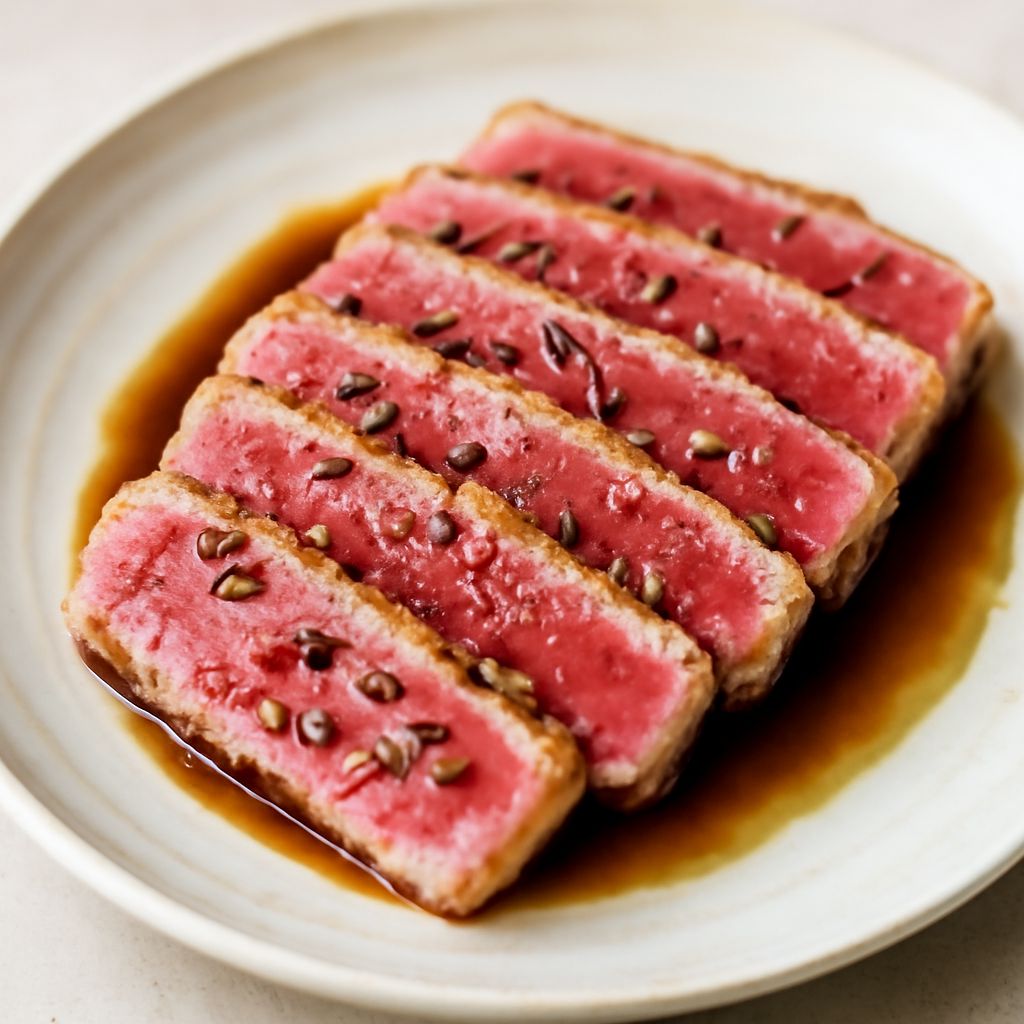
You have two ahi steaks and want a quick dinner with a browned exterior and a bright sauce. A hot skillet gives tuna a savory surface; a thermometer tells you when the center has reached the recommended temperature.
This recipe for pan-seared ahi tuna serves two with a simple soy-lime finish. Start with properly chilled fish, keep the sauce separate from the raw steaks, and cook the tuna through before slicing.
Seared ahi tuna recipe for two
Gather the following ingredients and a heavy skillet. Ahi is a name used for yellowfin and bigeye tuna; choose steaks of similar thickness so they cook at a similar pace.
- 2 ahi tuna steaks, about 6 to 8 ounces each and 1 inch thick
- 1 tablespoon neutral cooking oil
- 1/4 teaspoon salt, or to taste
- 1/4 teaspoon freshly ground black pepper
- 1 tablespoon low-sodium soy sauce
- 1 tablespoon fresh lime juice
- 1 teaspoon toasted sesame oil
- 1 teaspoon sesame seeds, optional
- Cooked rice and sliced cucumber, for serving
This seared ahi tuna recipe uses a short ingredient list so the tuna remains the main attraction. The soy, lime, and sesame oil form a finishing sauce rather than a marinade. Mix them in a clean bowl and keep the bowl and its spoon away from the uncooked fish.
Choose and store the fish
Buy from a seller that keeps seafood refrigerated or displayed on a thick bed of fresh ice. The FDA’s seafood guidance recommends choosing fish with a fresh, mild smell, not a sour, fishy, or ammonia-like odor. Firm flesh is useful to look for, but appearance and smell alone cannot establish that fish is free of harmful microorganisms.
Keep raw tuna refrigerated at 40°F or below and cook it within one to two days of purchase, or freeze it if you will not use it within that time. Thaw frozen fish overnight in the refrigerator. If you need to thaw it quickly, seal it in a plastic bag and immerse it in cold water. Follow any package instructions for handling and thawing.
Keep the fish and its juices away from ready-to-eat food. Wash hands, utensils, and surfaces after handling it, and place the cooked steaks on a clean plate. Prepare the cucumber and sauce with clean equipment before working with the raw tuna.
Sear and cook through
- Stir the soy sauce, lime juice, and toasted sesame oil together in a small clean bowl. Set aside for serving, away from the raw fish.
- Pat the tuna steaks dry with paper towels and season both sides with salt and pepper. Dry surfaces brown more readily than wet ones.
- Heat a heavy skillet over medium-high heat. Add the neutral oil and let it become hot and shimmering. Place the steaks in the pan carefully, leaving space between them.
- Sear until the first side is browned, about 2 minutes, then turn with clean tongs. Brown the second side and reduce the heat if the exterior darkens too quickly.
- Continue cooking, turning as needed, until a food thermometer inserted into the thickest part of each steak reads 145°F. The total time depends on thickness and pan heat; a browned surface is not a reliable measure of the center.
- Transfer the fish to a clean plate. Sprinkle with sesame seeds if using and serve with rice, cucumber, and the reserved sauce.
A quick sear provides the exterior color, while the thermometer determines when the fish is cooked through. If the steaks are thick, lowering the heat after browning gives the center more time to cook without burning the outside. Insert the thermometer from the side toward the center if that helps reach the thickest part; clean the probe between checks.
Understand the degrees of doneness
Some seared tuna recipes deliberately leave the center rare or raw. That produces a softer interior, but it also leaves a food safety risk: a browned outside does not make an uncooked center safe. The FDA recommends cooking most seafood, including finfish, to 145°F. The method above follows that recommendation.
A package labeled “sushi-grade” is not a guarantee that fish is free of pathogens. Freezing can kill some parasites, but it does not eliminate all harmful germs. Pregnant people, young children, older adults, and people with weakened immune systems should be especially careful to avoid raw or undercooked seafood, as the FDA advises.
For the lowest-risk option at home, cook the center to the recommended temperature and verify it with a thermometer rather than relying on color or a fixed number of minutes.
Make the plate your own
Other recipes for tuna seared in a skillet might use a sesame crust, ginger, or a citrus dressing. Here, sesame seeds are a finishing touch, so they do not burn while the center cooks. For another batch, try finely grated ginger in the clean serving sauce or serve the fish over a salad instead of rice.
Many seared ahi recipes depend on a very hot pan for color. Heat the skillet before adding the fish, but lower the burner if the surface is browning faster than the middle cooks. The goal is an appetizing exterior and an accurately checked center.
Use a clean knife and board to cut the cooked steaks across the grain into slices. Arrange over rice with cucumber, then spoon the reserved soy-lime sauce over the top and serve promptly.