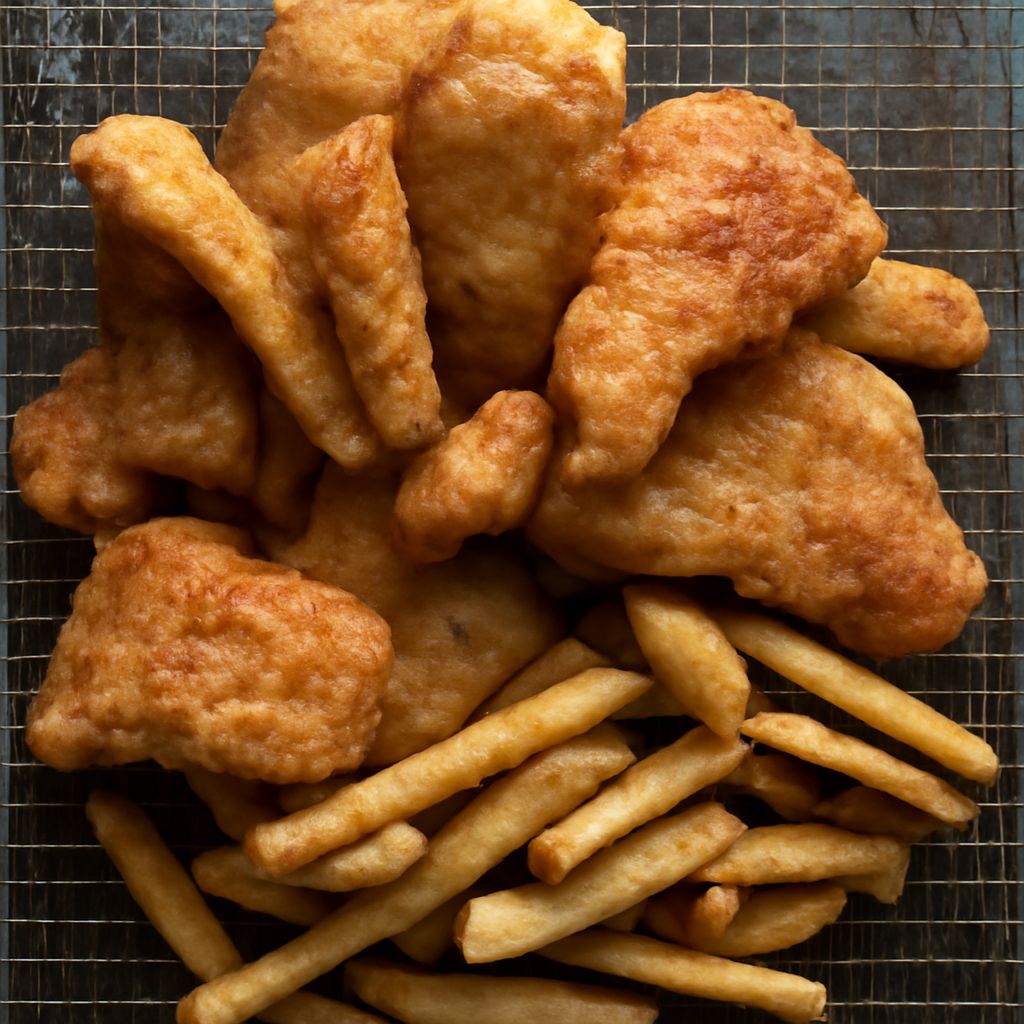
This best fish and chips recipe serves four and gives you the contrast you want: crisp, airy batter around moist fish and fluffy potatoes with a crunchy exterior. You will fry the chips twice, keep the batter cold, and use separate oil temperatures so each component cooks properly.
Choose thick cod or haddock fillets, cut russet potatoes into even batons, and organize the fry schedule before you start. The chips need a resting period between fries, while the fish should go from batter to hot oil immediately.
Best fish and chips recipe: ingredients, yield, and setup
Yield: 4 servings
- 4 boneless, skinless cod or haddock fillets, 5 to 6 ounces each and about 1 inch thick
- 2 1/2 pounds russet potatoes
- 1/2 cup all-purpose flour, for coating the fish
- 1 1/2 cups all-purpose flour, for the batter
- 1/4 cup cornstarch
- 1 1/2 teaspoons baking powder
- 1 teaspoon fine salt, plus more for seasoning
- 1 1/2 cups cold lager or sparkling water
- 2 quarts neutral frying oil, such as peanut, canola, or vegetable oil
- Malt vinegar, lemon wedges, tartar sauce, or mushy peas, for serving
Use a deep, heavy pot filled no more than halfway with oil, a clip-on thermometer, and a wire rack set over a baking sheet. Pat the fish dry and refrigerate it while you prepare the potatoes. Cod gives you large, mild flakes; haddock has a slightly firmer texture and more savory flavor.
Prepare potatoes for traditional fish and chips
- Peel the potatoes, or leave some skin on, and cut them into even 1/2-inch batons. Place them in a large bowl of cold water. Rinse and change the water until it looks mostly clear, then soak the potatoes for at least 30 minutes and up to 2 hours. This removes surface starch, which helps the chips crisp instead of sticking together.
- Drain the potatoes and dry them thoroughly with clean towels. Excess water can cause dangerous oil splattering and will slow browning.
- Heat the oil to 300°F. Fry the potatoes in two or three batches for 6 to 8 minutes per batch. Keep the oil near 300°F, allowing it to recover between batches. The chips should look pale and feel tender when pressed, but they should not be golden yet.
- Transfer the chips to the rack and let them rest for at least 10 minutes. This pause allows steam to escape and gives the potato center time to set, creating a fluffy interior during the second fry.
- Raise the oil to 375°F. Fry the potatoes again in batches for 2 to 4 minutes, turning them once, until they are deep golden and crisp. Drain on the rack and season lightly with salt. Keep them uncovered in a 200°F oven while you fry the fish, or serve them as soon as the fish is ready.
The staged frying creates the characteristic texture of traditional fish and chips. The lower-temperature fry cooks the inside without toughening it; the hotter second fry drives off surface moisture and forms the crisp shell.
English fish and chips recipe: batter, temperatures, and fry schedule
- After the chips finish, lower the oil temperature to 350°F. Wait until the thermometer stabilizes before frying the fish. If the oil drops below 325°F when you add a fillet, remove the fish after it has set and let the oil recover before continuing.
- Whisk the 1 1/2 cups flour, cornstarch, baking powder, and salt in a bowl. Pour in the cold lager or sparkling water and whisk just until combined. A few small lumps are fine. Cold liquid slows gluten development and helps the batter puff when it hits the oil.
- Keep the fish, flour, batter, and oil beside the pot. Coat one fillet lightly in the 1/2 cup flour, then dip it into the batter. Let only the excess batter drip away and lower the fillet into the oil immediately. Do not batter all the fish and let it sit; the coating absorbs moisture and becomes heavy instead of crisp.
- Fry two fillets at a time for 4 to 6 minutes, turning once halfway through. Keep the oil between 340°F and 350°F and avoid crowding the pot. Adjust the heat as needed so the batter fries steadily rather than darkening too quickly.
- Move each cooked fillet to the wire rack. The batter should be puffed, deep golden, and crisp, with bubbling that has noticeably subsided. The thickest part of the fish should be opaque and flake easily, or reach 145°F on an instant-read thermometer.
If the batter browns before the fish cooks, your oil is too hot or the fillets are too thick for the current timing. If the coating looks pale, greasy, or soft, the oil is too cool, the pot is crowded, or the fish was not dried before coating. Fry in batches and wait for the oil to return to temperature each time.
For the most coordinated schedule, finish the chips first, keep them briefly on the rack in the warm oven, and fry the battered fish last. Mix the batter only when the oil is ready, then serve the fish within a few minutes of frying.
Season and serve fish and chips
Season the fish and chips with fine salt while they are still hot so it adheres to the surfaces. Serve immediately with malt vinegar, lemon wedges, and tartar sauce. Mushy peas or a small dish of curry sauce also work well alongside the crisp fish and fluffy chips.
For a crisp finish, keep everything on a wire rack rather than a flat plate, which traps steam underneath. Add vinegar just before eating, since pouring it over the chips too early softens their crust.