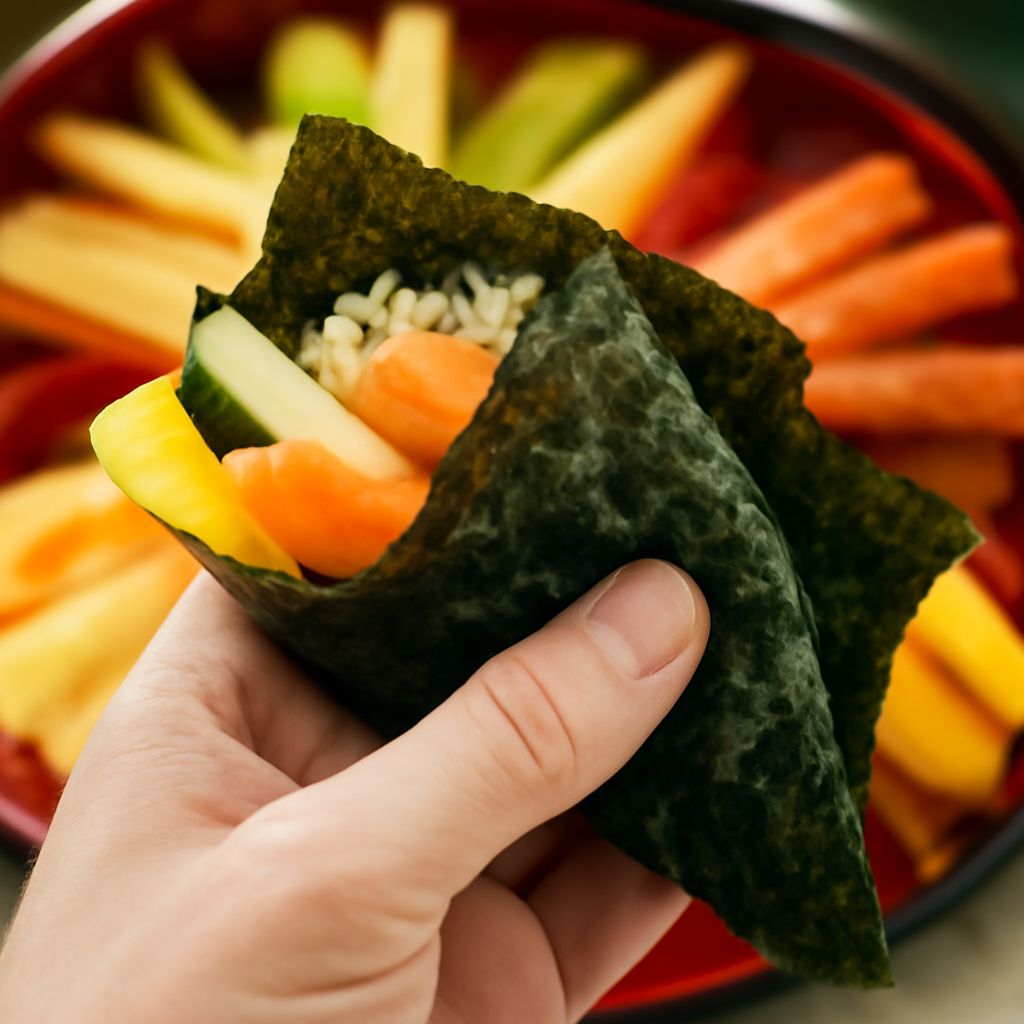
Different sushi rolls are easiest to recognize in two steps: identify the formal structure, then check the filling and restaurant-specific name. Hosomaki, futomaki, uramaki, and temaki describe a roll’s shape, size, and wrapper placement, while names such as California, dragon, and rainbow usually describe a popular ingredient combination rather than a fixed Japanese category.
Use the guide below to understand what you are likely to receive, while remembering that restaurants can change ingredients, sauces, toppings, and portion sizes.
Different Sushi Rolls by Format: Hosomaki, Futomaki, Uramaki, and Temaki
The main sushi roll structures tell you how the rice, nori, and fillings are arranged. These formats are more reliable than creative menu names.
- Hosomaki: A thin cylindrical roll made with one sheet of nori on the outside, a small amount of sushi rice, and usually one main filling. Cucumber, tuna, and pickled daikon are common choices. Because the roll is narrow, you get a concentrated bite with a clear seaweed flavor.
- Futomaki: A thick, generously filled roll wrapped in nori. It may contain several ingredients, such as cooked egg, cucumber, shiitake mushrooms, kanpyo, crab-style seafood, or pickles. Futomaki often gives you contrasting colors, textures, and flavors in one slice.
- Uramaki: An inside-out roll with rice on the outside and nori surrounding the fillings. Sesame seeds, tobiko, or another topping may cover the rice. Many American-style rolls use this format because the rice softens the seaweed flavor and creates space for sauces or toppings.
- Temaki: A hand roll shaped like a cone. Nori wraps around rice and fillings, leaving one open end. You normally eat temaki by hand soon after it is made, while the seaweed is still crisp. Fish, cucumber, avocado, and spicy sauces are frequent fillings.
Some menus also use maki as a broad term for rolled sushi. The word does not by itself tell you whether the roll is thin, thick, inside-out, or hand-rolled, so look for additional wording.
Sushi Roll Types: How Shape and Wrapper Signal What You’re Ordering
The wrapper gives you an immediate clue about texture. Nori on the outside contributes a roasted, savory layer in every bite. In uramaki, the rice sits outside the nori, so the roll usually tastes softer and may have a richer topping or sauce. A temaki gives you a higher ratio of crisp nori to rice because the wrapper forms the entire cone.
Roll width also predicts the number of fillings. A narrow hosomaki usually highlights one ingredient, such as tuna or cucumber. A futomaki can combine seafood, vegetables, egg, and pickles. If you prefer a simple flavor, choose a thin roll. If you want multiple textures, choose a thick roll or a specialty uramaki.
Menu wording can mix formal terms with informal descriptions. “Spicy tuna maki” identifies a filling, but it does not necessarily specify whether the roll is hosomaki or uramaki. “Inside-out spicy tuna” does indicate the wrapper arrangement. “Hand roll” indicates temaki, even if the menu gives it a creative name.
Rice quantity matters, too. Sushi rice is seasoned with vinegar, sugar, and salt, so it adds both sweetness and acidity. A larger roll may taste milder because more rice balances the filling. A small roll can make tuna, pickles, or nori seem more prominent.
A List of Sushi Rolls: Kappamaki, Tekkamaki, and Other Japanese Classics
This list of sushi rolls includes traditional Japanese names you may see at sushi restaurants. Their recipes are generally more recognizable than modern specialty-roll names, although individual chefs can still make adjustments.
- Kappamaki: A thin cucumber roll, traditionally made with nori on the outside. It is crisp, clean, and refreshing, making it a common choice when you want a vegetable roll.
- Tekkamaki: A thin tuna roll. Raw tuna provides a soft texture and mild savory flavor, while the nori and seasoned rice keep the bite balanced.
- Negitoromaki: A roll filled with minced or finely chopped fatty tuna and scallion. It is rich, creamy, and savory, with sharp freshness from the scallion.
- Kanpyomaki: A roll containing kanpyo, or dried gourd strips simmered in a sweet-savory sauce. The filling is chewy and lightly sweet rather than seafood-forward.
- Oshinkomaki: A roll made with Japanese pickles, often yellow daikon known as takuan. It has a firm crunch, salty-sour flavor, and vivid color.
- Futomaki: In addition to describing a format, this name can refer to a traditional mixed roll containing several ingredients. Recipes may include egg omelet, cucumber, shiitake, kanpyo, and seafood or fish cake.
Japanese roll names often describe the central ingredient or preparation. “Kappa” refers to cucumber in this context, while “tekka” is associated with tuna. Ask the restaurant if a classic roll contains raw fish, cooked ingredients, or a particular pickle when that distinction matters to you.
Sushi Roll Names: California, Spicy Tuna, Dragon, and Rainbow Variations
Many familiar sushi roll names come from restaurant-created combinations, especially in American-style sushi. They are useful menu shorthand, but they are not all standardized Japanese categories.
- California roll: Usually an uramaki filled with imitation crab or crab, avocado, and cucumber. Sesame seeds or tobiko may cover the rice. The flavor is mild, creamy, and slightly sweet, with a fresh crunch from cucumber.
- Spicy tuna roll: Usually chopped or minced tuna mixed with a spicy sauce, often mayonnaise and chili. Scallion, cucumber, or sesame may be added. It can be a thin roll or an inside-out roll, so check the menu description.
- Spicy salmon roll: Similar to spicy tuna, but made with salmon and a chili-based sauce. Salmon gives the roll a softer, richer flavor, while cucumber can add contrast.
- Dragon roll: Often an inside-out roll with eel, shrimp tempura, or another cooked filling, topped with sliced avocado. Eel sauce is common, creating a sweet, savory, glossy finish.
- Rainbow roll: Usually a California-style base topped with several slices of raw fish, such as tuna, salmon, and white fish. The topping creates a colorful appearance and a broader seafood flavor.
- Philadelphia roll: Commonly made with smoked salmon, cream cheese, and cucumber. It is rich, salty, and creamy, rather than a traditional Japanese combination.
- Tempura roll: A broad menu label for a roll containing battered and fried seafood or vegetables, or sometimes a roll that has been fried. Shrimp, crab-style seafood, sweet potato, and avocado are frequent choices.
These sushi roll names can vary substantially. One restaurant’s dragon roll may contain eel, while another’s may use shrimp tempura. Read the listed ingredients instead of relying on the name alone, particularly when choosing between raw and cooked seafood.
Sushi Fillings: Seafood, Cooked, Vegetable, and Sauce Components
Sushi fillings usually fall into four groups: raw seafood, cooked ingredients, vegetables and pickles, and sauces or toppings. Understanding each group helps you predict a roll’s flavor and texture.
- Raw seafood: Tuna, salmon, yellowtail, white fish, scallop, and fatty tuna are common. Raw fish tends to be soft and delicate, with flavor ranging from mild and buttery to clean and meaty.
- Cooked seafood: Shrimp, eel, crab-style seafood, octopus, and tempura fillings are common cooked options. Shrimp is firm and mild, eel is tender and rich, and tempura adds a crisp, fried texture.
- Egg and other cooked fillings: Tamago is a sweet Japanese omelet often served in or on sushi. Tofu skin, fish cake, simmered shiitake mushrooms, and seasoned gourd can add sweetness and chew without raw fish.
- Vegetables and pickles: Cucumber, avocado, asparagus, sweet potato, scallion, pickled daikon, and pickled plum provide crunch, creaminess, sweetness, acidity, or heat.
- Sauces and toppings: Spicy mayonnaise adds creamy heat, eel sauce adds sweetness and umami, ponzu contributes citrus acidity, and sesame or tobiko adds texture. Avocado, sliced fish, scallions, and fried onions may sit on top rather than inside the roll.
When you read a menu, combine the format with the filling: “uramaki with salmon and avocado” tells you the structure and core ingredients, while “spicy tuna roll” tells you the combination but may leave the structure unspecified. That distinction makes unfamiliar sushi roll types and creative restaurant names much easier to interpret.