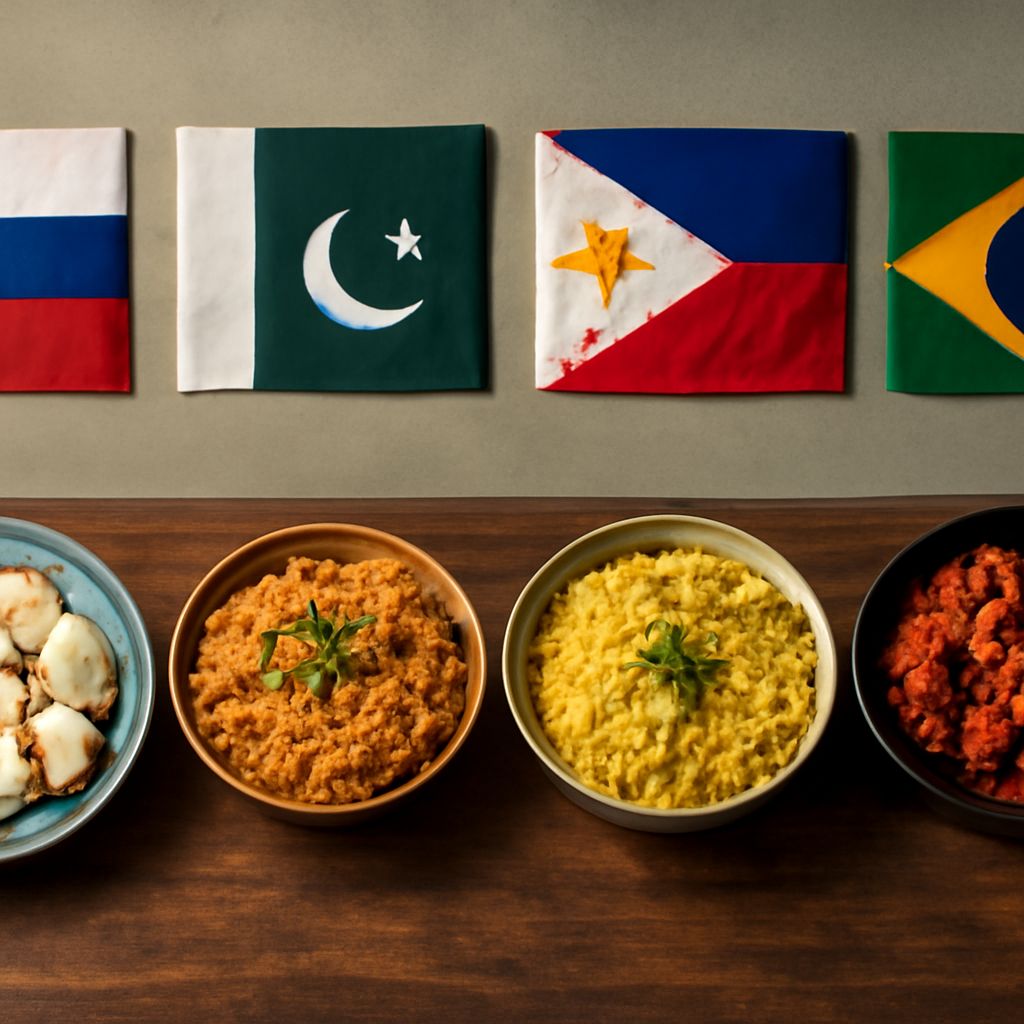
Food from different countries reflects local crops, climate, migration, faith, and family traditions. This guide gives you concrete examples of national and widely representative dishes, focusing on the ingredients, cooking methods, and occasions that make each one meaningful.
No country’s cuisine fits into one plate. The dishes below offer useful entry points into broader food traditions rather than definitive summaries of what an entire nation eats.
Food From Different Countries: A Regional Guide to Signature Dishes
Signature dishes often combine an everyday staple with a distinctive technique or serving tradition. Rice, wheat, corn, beans, vegetables, seafood, and meat appear across borders, but local seasonings and preparation methods give them different identities.
- Paella, Spain: Short-grain rice cooks in a wide pan with saffron, stock, vegetables, and seafood or meat. It is strongly associated with Valencia and communal meals.
- Moussaka, Greece: Layers of eggplant, spiced meat, and creamy béchamel bake together until rich and tender. Greek versions are part of a wider Eastern Mediterranean family of layered dishes.
- Pho, Vietnam: Rice noodles sit in a clear, aromatic broth traditionally made with beef or chicken, herbs, ginger, and spices. You commonly eat it as a breakfast or casual street meal.
- Feijoada, Brazil: Black beans simmer with pork and are served with rice, greens, and farofa, a toasted cassava flour mixture. Long, slow cooking makes it suited to relaxed weekend gatherings.
National Dishes: What Makes Them Informal, Shared, or Contested?
A national dish may be officially promoted, widely recognized, or simply repeated in family kitchens and restaurants. Many countries have no legal national dish, so status usually develops through history, tourism, cultural storytelling, and everyday popularity.
Some dishes belong to several countries or communities. Jollof rice, for example, is central to food traditions in Nigeria, Ghana, Senegal, and other West African countries, with different rice, tomato, spice, and cooking methods. Its “best” national version is a friendly but persistent cultural debate. Couscous similarly crosses North African borders, while biryani has many regional forms across South Asia.
Political history can also shape a dish’s identity. A recipe may originate in one region, spread through migration, and later become associated with another country. You can therefore treat national dishes as cultural symbols, not exclusive ownership claims.
Different Types of Cuisine: Shared Staples, Methods, and Traditions
Comparing different types of cuisine becomes easier when you look at what each food tradition does with its staple ingredients.
- Rice-based cuisines use steaming, stir-frying, boiling, and layered cooking. Pho, biryani, paella, and jollof rice all show how one grain can absorb broth, spices, or savory sauces.
- Flatbread and wheat traditions include pita, naan, tortillas, pasta, and dumpling wrappers. They often turn grains into portable foods for sharing or dipping.
- Slow-cooked dishes such as Moroccan tagine, Brazilian feijoada, and French cassoulet build flavor through low heat, tough cuts, legumes, or preserved ingredients.
- Fresh and raw preparations depend on acidity, salt, herbs, or careful slicing. Peruvian ceviche uses citrus and chili to complement seafood rather than relying on prolonged cooking.
Eating context matters as much as technique. A dish may be prepared for a religious festival, a national holiday, a market breakfast, a family Sunday meal, or a communal celebration.
Food from Other Countries: Europe and the Mediterranean—Paella, Moussaka, and Ratatouille
European and Mediterranean food traditions often emphasize seasonal produce, olive oil, grains, seafood, legumes, and long-established preservation methods.
- Ratatouille, France: Eggplant, zucchini, tomatoes, peppers, onions, garlic, and herbs are sautéed or braised until soft. The dish highlights the vegetable-rich cooking of Provence and can be served as a side or main course.
- Pizza napoletana, Italy: A thin, fermented dough is topped simply with tomato, mozzarella, and basil before baking at very high heat. Its strength comes from dough texture and ingredient balance, not a long list of toppings.
- Bacalhau, Portugal: Salt-cured cod appears in many preparations, including bacalhau à brás with potatoes, onions, and eggs. Curing made fish practical to store and helped shape Portugal’s enduring seafood culture.
- Köfte, Türkiye: Ground meat combines with onion, herbs, and spices, then gets grilled, baked, or simmered. Regional versions show how one preparation can move between home cooking, street food, and festive meals.
These examples represent only part of Europe’s food landscape, which also includes rye breads, fermented vegetables, sausages, stews, pastries, and distinctive island and regional cuisines.
Famous Food of Different Countries: Asia, Africa, and the Middle East—Pho, Biryani, and Jollof Rice
- Biryani, India: Fragrant basmati rice layers with marinated meat or vegetables, yogurt, saffron, and spices before steaming in a sealed pot. Hyderabadi, Kolkata, Lucknowi, and other versions reflect India’s regional and historical diversity.
- Sushi, Japan: Vinegared rice pairs with raw or cooked seafood, egg, vegetables, or tofu. The dish values seasonality, precise knife work, and careful presentation; sushi is not limited to one filling or format.
- Peking duck, China: A duck roasts until its skin becomes crisp, then gets sliced and wrapped in thin pancakes with cucumber, scallions, and sweet bean sauce. It is commonly associated with restaurant dining and formal sharing.
- Jollof rice, West Africa: Rice cooks in a seasoned tomato and pepper base, often with onion, stock, and spices. Chicken, fish, or vegetables may accompany it, and recipes vary significantly between countries and households.
- Tagine, Morocco: Meat, poultry, or vegetables braise slowly with spices, preserved lemon, olives, dried fruit, or nuts in a cone-shaped cooking vessel. The method produces tender food and a concentrated sauce for bread or couscous.
- Injera with doro wat, Ethiopia: Sour, spongy teff flatbread serves as both plate and utensil for a berbere-spiced chicken stew with eggs. Diners tear pieces of injera to scoop up shared food.
- Kibbeh, Lebanon and the Levant: Bulgur combines with minced meat, onion, and spices, then may be served raw, baked, or shaped and fried. Its variations demonstrate the breadth of Levantine home and celebratory cooking.
Across these regions, meals frequently emphasize shared serving plates, aromatic spice blends, fermented ingredients, and rice or bread as a foundation. Religious observances, weddings, holidays, and hospitality often determine when particular dishes appear.
Foods from the Americas and Oceania: Ceviche, Feijoada, and Hāngi
- Ceviche, Peru: Fresh fish marinates briefly in lime juice with red onion, chili, and cilantro, then is served with ingredients such as sweet potato, corn, or cancha. The acidity firms the fish while preserving its fresh flavor.
- Mole poblano, Mexico: Chiles, spices, nuts, seeds, aromatics, and sometimes chocolate form a complex sauce traditionally served with turkey or chicken. Mole varies by region and often appears at weddings, festivals, and major family gatherings.
- Poutine, Canada: Crisp fries receive cheese curds and hot gravy. Originally associated with Quebec, it has become a widely recognized Canadian comfort food with many modern variations.
- Hāngi, New Zealand: Māori communities traditionally cook meat, kūmara, potatoes, and vegetables in an earth oven using heated stones. The preparation is labor-intensive and strongly connected with communal events and hospitality.
- Lamington, Australia: A square of sponge cake gets coated in chocolate icing and coconut. It is commonly served at cafés, fundraisers, and afternoon gatherings, alongside Australia’s broader traditions of meat pies, seafood, and Indigenous foods.