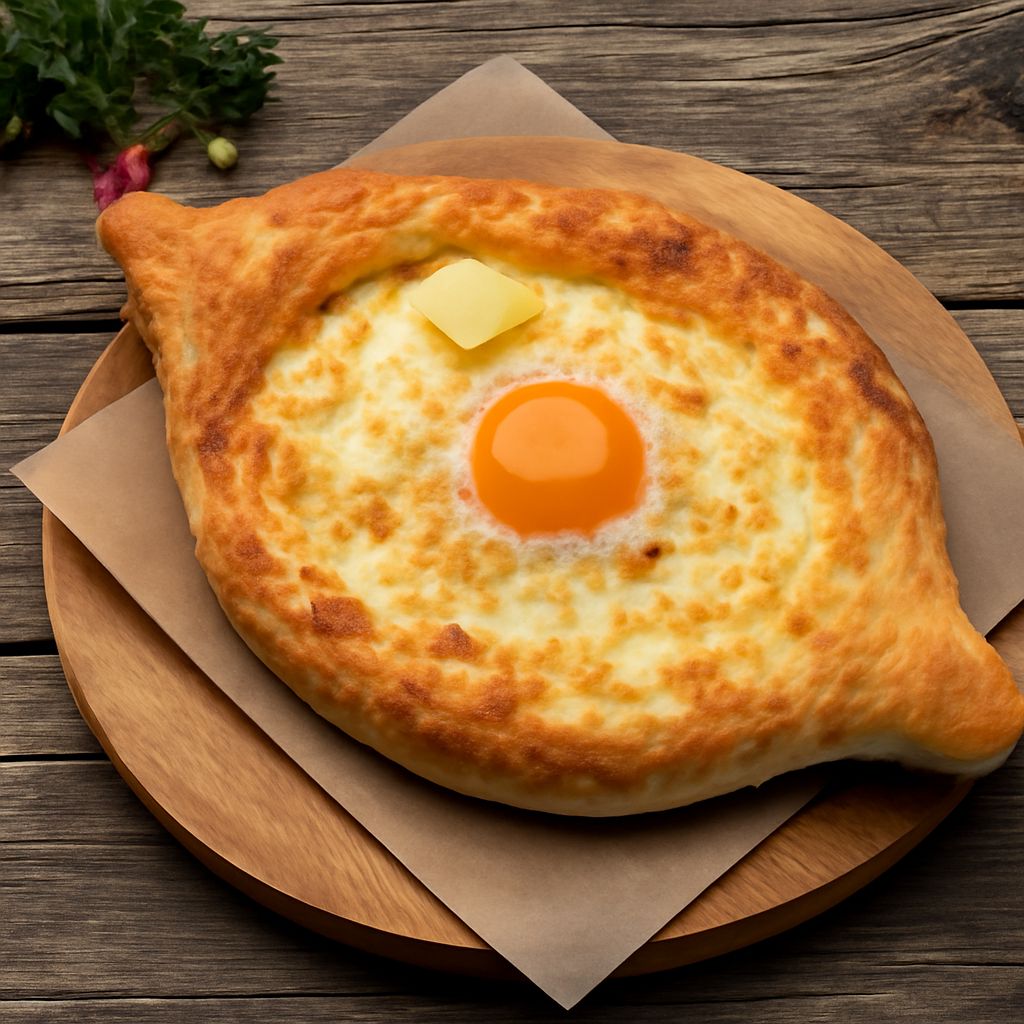
Georgian food comes from the country of Georgia, where bread, cheese, walnuts, herbs, sour fruit, beans, and grilled meat shape the everyday table. You will find dishes that feel rustic and generous but rely on carefully balanced flavors: rich cheese meets tangy plum sauce, walnuts soften vegetables, and fresh herbs brighten meat and dough.
Georgian cuisine is also defined by how people eat. At a supra, or traditional feast, dishes arrive for sharing, guests are honored with food and wine, and a toast leader called a tamada guides the celebration. The result is a cuisine built for abundance, conversation, and variety rather than a single main course.
Georgian Food: Walnuts, Herbs, Sour Fruit, and Core Staples
Several ingredients appear across Georgian dishes. Walnuts provide body in sauces, vegetable spreads, and poultry dishes. You may taste them ground with garlic, coriander, vinegar, or spices, creating a creamy sauce without dairy. Fresh cilantro, parsley, dill, tarragon, and mint add a green, fragrant contrast to beans, meat, and cheese.
Sour flavors keep rich foods lively. Tart plums become tkemali, a sauce served with potatoes, grilled meat, and fried foods. Pomegranate, barberries, sour grapes, and vinegar also contribute acidity. Garlic, coriander seed, blue fenugreek, marigold, and hot pepper build savory depth, although the cuisine is generally aromatic rather than aggressively spicy.
Georgian bread is both a staple and a serving tool. Bakers cook regional loaves in deep clay ovens called tone. Crisp-edged shotis puri is long and canoe-shaped, while tonis puri is rounder and thicker. You can tear either bread to scoop up beans, stews, sauces, and salads.
Cheese is equally central. Georgian cheeses range from mild and elastic to salty and crumbly. Sulguni melts well and often appears in baked dishes; Imeretian cheese brings a softer, lightly salty flavor. Cheese may fill bread, accompany vegetables, or arrive as part of a larger spread.
Georgian Cuisine: Khachapuri, Khinkali, Breads, and Cheese
Khachapuri is the best-known Georgian bread-and-cheese dish. The basic idea is simple—yeasted dough filled or topped with cheese—but each region gives it a distinct shape. Imeretian khachapuri is round, with cheese enclosed inside the dough. Megruli khachapuri adds another layer of cheese on top.
Adjaruli khachapuri is shaped like a boat and filled with melted cheese, butter, and a soft egg. To eat it, break off the crust and mix the egg and butter into the hot cheese before dipping the bread. This version is especially rich, while the enclosed Imeretian style is easier to share as slices.
Khinkali are pleated Georgian dumplings, traditionally filled with seasoned meat and broth. Pork and beef are common, though mushroom, potato, and cheese versions also appear. Hold a dumpling by its twisted top, bite a small opening, and sip the broth before eating the filling. The top knot is usually left on the plate because it is thicker and serves as a handle.
Other breads and cheese dishes expand the same family of flavors. Lobiani fills bread with seasoned beans, making a satisfying meat-free meal. Achma, associated especially with western Georgia, layers thin sheets of dough with butter and cheese in a style closer to a savory pastry. These dishes show how Georgian cooks turn staple ingredients into food for breakfast, travel, everyday meals, or a feast.
Georgian Dishes: Mtsvadi, Lobio, Pkhali, and Sauces
Mtsvadi is Georgian skewered meat, usually pork, grilled over charcoal. The meat is often seasoned simply so the smoke and its natural flavor remain prominent. Raw onion, herbs, bread, and a tart sauce such as tkemali may accompany it. In Kakheti, mtsvadi is closely associated with countryside cooking and wine-country gatherings.
Lobio means a family of bean dishes rather than one fixed recipe. Red kidney beans are simmered until tender, then combined with onion, garlic, coriander, walnuts, and sometimes vinegar or pomegranate. Some versions are thick enough to serve in a bowl with bread; others are mashed or baked in a clay pot. Pickled vegetables and fresh herbs often sharpen the dish.
Pkhali is a group of vegetable-and-walnut preparations. Spinach, beet greens, cabbage, eggplant, and beans can be cooked, chopped, and mixed with ground walnuts, garlic, herbs, vinegar, and spices. Cooks often shape pkhali into small rounds and garnish them with pomegranate seeds. The result is cool, savory, tangy, and ideal for a shared table.
Walnut sauces create some of the cuisine’s most distinctive dishes. Satsivi is poultry, commonly chicken or turkey, served in a spiced walnut sauce that is traditionally cooled before serving. Bazhe is another walnut sauce, often thinner and sharper, served with fish, vegetables, or meat. Ajika, a hot pepper paste with herbs and garlic, adds heat and fragrance, while tkemali supplies its characteristic sour-plum bite.
Regional Variation in the Cuisine of Georgia: Adjara to Kakheti
Western and eastern regions use the same foundations in different ways. Adjara, on the Black Sea coast, is known for boat-shaped Adjaruli khachapuri and dishes influenced by a humid, subtropical climate. Guria and Samegrelo favor bold seasoning, abundant herbs, and spicy preparations. Megruli khachapuri, with its extra cheese topping, comes from Samegrelo.
Imereti is associated with round khachapuri, fresh cheeses, vegetables, and balanced home cooking. In mountain areas such as Khevsureti and Tusheti, dumplings, meat, dairy, and hearty breads suit colder conditions. Regional cheeses and herbs can change the character of a familiar dish even when the basic recipe remains recognizable.
Kakheti in eastern Georgia is a major wine region and is strongly linked with grilled meat, bread, beans, and long meals. Its food often feels direct and substantial, with mtsvadi and local wines appearing at rural gatherings. Kartli and other eastern areas also contribute stews, poultry dishes, and walnut-based preparations. These differences make Georgian dishes useful clues to landscape, climate, and local history.
The Georgian Supra: How Hospitality Shapes the Feast
The supra is more than a large meal. It is a formal expression of hospitality in which food is shared, guests are welcomed generously, and a tamada proposes toasts. The exact menu changes by region, season, and occasion, but the table commonly includes many dishes at once rather than courses served in a strict sequence.
You might see khachapuri, khinkali, pkhali, lobio, fresh herbs, pickled vegetables, sliced tomatoes and cucumbers, walnuts, bread, grilled mtsvadi, and chicken in walnut sauce. Tkemali or another sharp condiment cuts through rich foods. Wine, chacha, or other drinks accompany the toasts, while the meal may continue for several hours.
Supra etiquette centers on participation. Follow the tamada’s toast rhythm when you are a guest, accept shared dishes, and expect repeated offers of food. A smaller family meal may not follow every formal custom, but the same values remain: variety, generosity, regional ingredients, and the belief that feeding guests is a serious form of welcome.