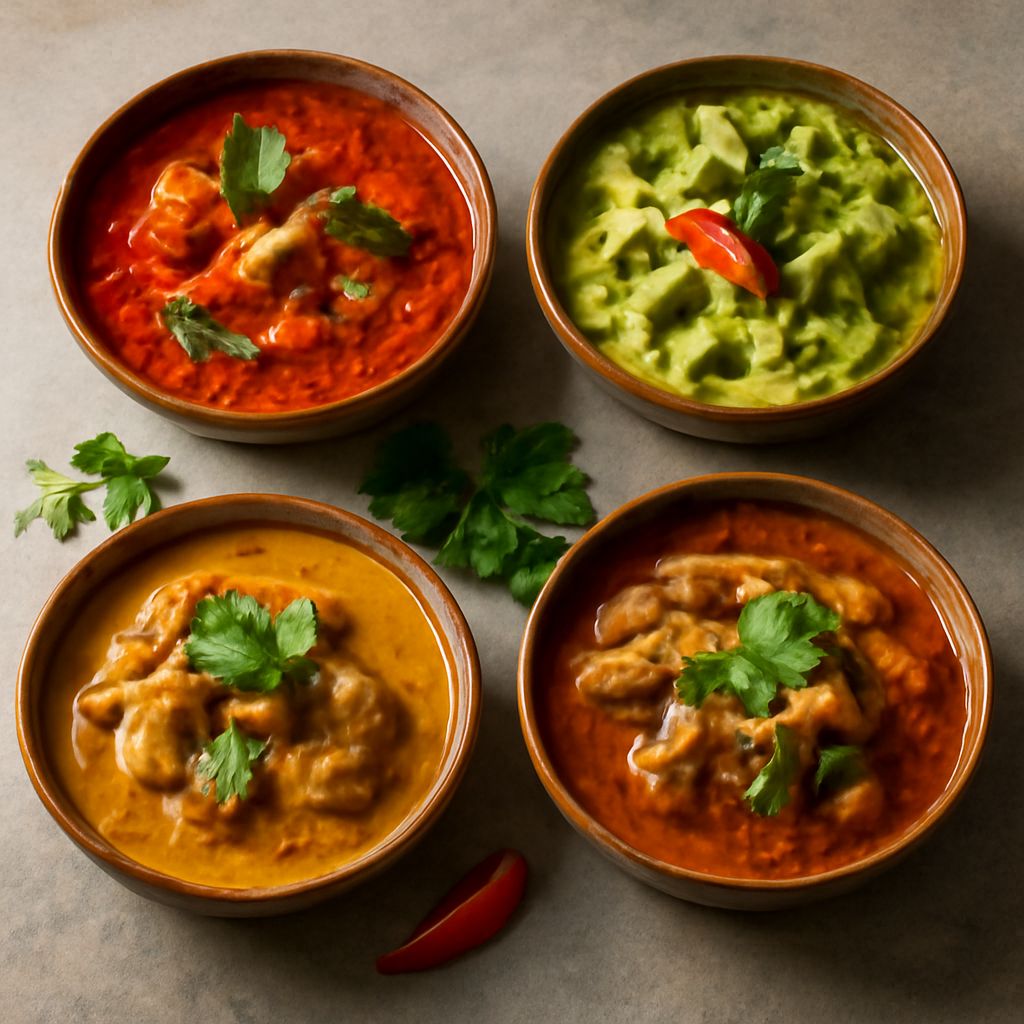
The short answer to “is yellow curry spicy?” is usually no: Thai yellow curry is often milder than red or green curry, with a warm, earthy flavor instead of immediate chile heat. However, it can still be spicy when the paste contains more chiles or you request a hotter preparation.
For this comparison, yellow, red, and green curry refer primarily to Thai-style curries. Their colors offer useful clues, but they do not guarantee a fixed heat ranking. The type and quantity of chiles, the curry paste recipe, coconut milk, sugar, and your restaurant’s spice level all affect the finished dish.
Is Yellow Curry Spicy? Usually Milder, but Not Always
Yellow curry commonly tastes mellow because its paste emphasizes turmeric, cumin, coriander, garlic, shallot, lemongrass, and galangal along with chiles. Turmeric gives the sauce its golden color and earthy bitterness; it does not create chile heat. Some versions also use curry powder, which adds a rounded, savory spice profile.
Many Thai yellow curries use dried red chiles, but often in smaller amounts than a hot red curry paste. Coconut milk further softens the impression of heat, while palm sugar may add gentle sweetness. Potatoes and onions are typical pairings, and chicken is a common protein, although you may also see beef, tofu, or seafood.
Southern Thai yellow curry can be considerably hotter than a mild restaurant version. A curry made with a large proportion of dried chiles will taste spicy even when it contains plenty of coconut milk. If you prefer low heat, ask for mild spice and confirm whether the kitchen adds fresh chiles at the end. If you want more heat, ask for medium or hot rather than assuming yellow curry will be mild.
Is Red Curry Spicy? Compare Its Heat and Flavor
Red curry is often spicy, but the answer to “is red curry spicy?” still depends on the recipe. Thai red curry paste typically uses dried red chiles, which contribute both color and a deeper, rounded chile flavor. The paste may also include garlic, shallot, lemongrass, galangal, makrut lime zest, coriander root, and shrimp paste.
Compared with yellow curry, red curry usually tastes more savory, fragrant, and chile-forward. Coconut milk gives it a rich texture and can moderate the heat, while palm sugar balances the paste’s saltiness and bitterness. Thai basil, bamboo shoots, bell peppers, pineapple, duck, beef, chicken, and tofu are common additions.
A red curry can be mild if the cook uses fewer chiles, removes some seeds, adds more coconut milk, or adjusts the paste with sugar and stock. Conversely, a restaurant can make yellow curry hotter than red curry by adding more chile paste. Color suggests the dominant ingredients; it does not settle the heat question by itself.
Yellow vs Red Curry: Paste, Chiles, Coconut, and Pairings
When you compare yellow vs red curry, focus on the balance of ingredients rather than the color alone:
- Chile profile: Yellow curry often uses dried red chiles in a more restrained blend, while red curry usually makes those chiles more prominent. Neither paste has a guaranteed heat level.
- Aromatics: Both may contain garlic, shallot, lemongrass, galangal, and makrut lime. Yellow paste commonly adds turmeric, cumin, and coriander, creating a warmer, earthier aroma. Red paste tends to taste more intensely herbal and savory.
- Coconut: Coconut milk is common in both styles. It adds richness and rounds off chile sharpness, but it does not remove capsaicin or make a hot paste mild.
- Sweetness: Both can include palm sugar. Yellow curry may taste especially soft when sugar, coconut milk, and potatoes are used together; red curry often balances sweetness against a stronger chile and savory base.
- Typical pairings: Yellow curry works well with chicken, potatoes, onions, and mild vegetables. Red curry suits duck, beef, bamboo shoots, bell peppers, pineapple, seafood, and tofu.
Choose yellow curry when you want a creamy, earthy sauce with gentle warmth. Choose red curry when you want a deeper chile flavor and a more assertive savory profile. Ask about the restaurant’s spice scale for either one, especially if the menu uses a house-made paste.
The Difference Between Red, Green, and Yellow Curry
The difference between red, green, and yellow curry becomes clearer when you compare all three by the same criteria:
- Red curry: Dried red chiles give the paste its color and a deep, warm chile flavor. Garlic, shallot, lemongrass, galangal, lime zest, and shrimp paste create a savory, aromatic base. It is often medium-hot, but a mild red curry is common.
- Green curry: Fresh green chiles usually provide a brighter, sharper heat. The paste may include Thai basil, coriander, makrut lime, garlic, shallot, lemongrass, and shrimp paste. Green curry often tastes fresh, herbal, and slightly sweet, with chicken, eggplant, bamboo shoots, or seafood.
- Yellow curry: Dried chiles combine with turmeric, cumin, coriander, garlic, shallot, and lemongrass. The result is usually earthy, gently sweet, and creamy, especially with potatoes and onions. It is often the mildest option, but hot regional versions exist.
All three can contain coconut milk, though recipes vary by region and restaurant. Green curry is not automatically the hottest, and red curry is not always hotter than yellow. Fresh green chiles can create intense heat in one kitchen, while a heavily chile-loaded yellow paste can surpass both. The paste formula and requested spice level matter more than the label.
Choosing by Flavor and Heat: The Difference Between Curries
Use the following guide when you are deciding among Thai curry styles:
- For the gentlest starting point: Try yellow curry, particularly with coconut milk, potatoes, and chicken. Request mild spice because the kitchen may use a hotter southern-style paste.
- For rich, savory chile flavor: Choose red curry. It pairs well with robust proteins such as duck or beef, but you can order it mild if you want the dried-chile flavor without strong heat.
- For bright herbal flavor: Choose green curry. Fresh chiles, basil, coriander, and lime make it taste lively, while eggplant and bamboo shoots add vegetal notes. Ask about the chile level before ordering.
- For a creamy, sweet-leaning dish: Yellow curry often provides the softest combination of coconut, turmeric, and sugar.
- For a clearer chile comparison: Order the same spice level across two styles. That lets you compare the paste’s aromatics and sweetness instead of confusing a restaurant’s heat adjustment with the difference between curries.