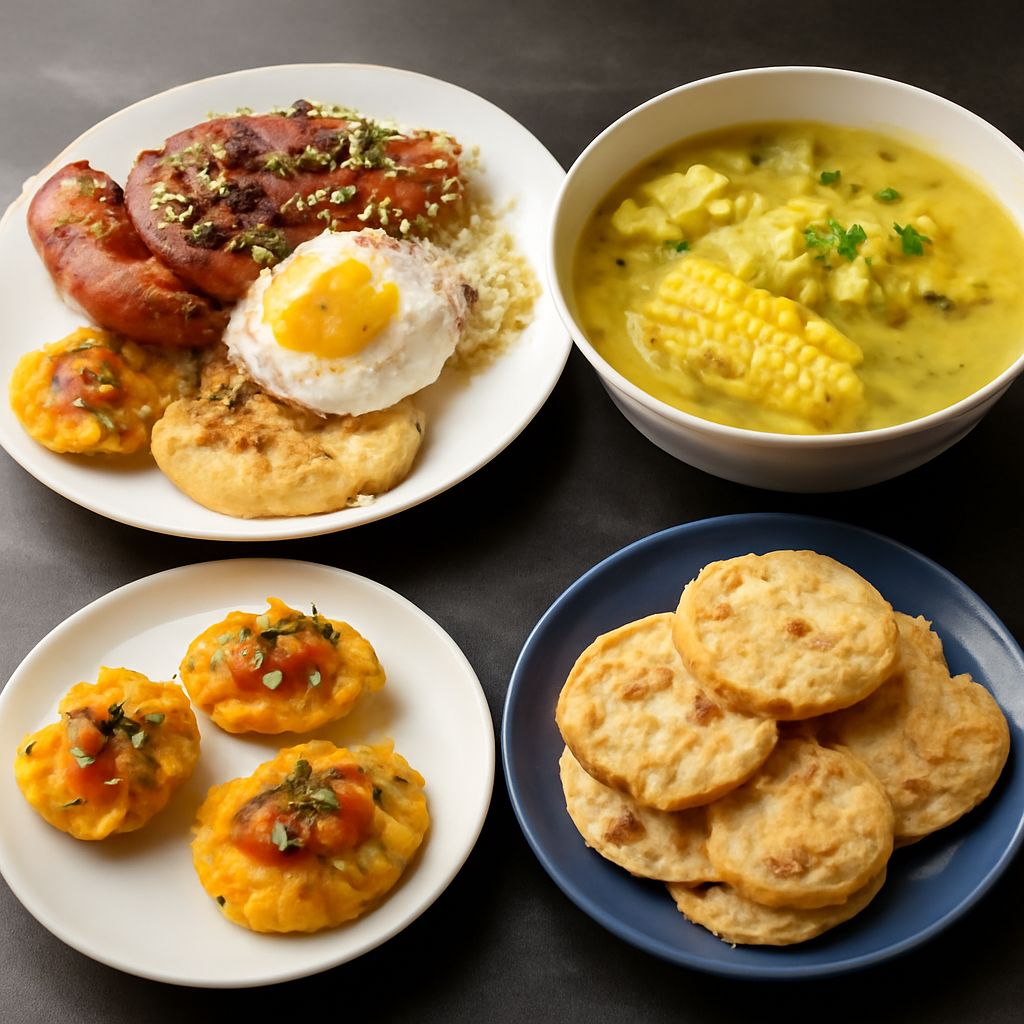
Popular Colombian food reflects the country’s mountains, coasts, rivers, plains, and tropical growing regions. You’ll find corn-based arepas, rice, beans, plantains, potatoes, meat, seafood, and abundant fruit across the country, but each region combines them differently. A typical meal is often simpler than a famous restaurant platter: soup or a main dish, a starch, a vegetable or salad, and a fresh drink or fruit.
To understand typical Colombian food, start with the everyday ingredients that build breakfast, lunch, and dinner. Then compare signature dishes such as ajiaco, bandeja paisa, sancocho, coastal seafood, and Pacific preparations with the meals people eat routinely at home.
Staples of Colombian Food Culture: Arepas, Rice, Beans, Plantains, and Fruit
Arepas are one of the country’s most familiar staples. Made from ground cornmeal, they may be thin and crisp, thick and cheesy, or split and filled with egg, meat, or chicken. You might eat a plain arepa with butter and cheese at breakfast, or serve it alongside beans, soup, or grilled meat. Regional styles vary widely, so an arepa from Antioquia differs from a coastal arepa de huevo, which contains a fried egg.
Rice appears on many Colombian plates, particularly at lunch. Plain white rice accompanies beans, stews, fried fish, and meat, while coconut rice is a defining coastal preparation. Beans are especially important in the Andean region, where cooks simmer red beans with vegetables and often serve them with rice, plantain, avocado, and meat.
Plantains provide sweetness, starch, and texture. Green plantains become fried patacones, which you can eat with seafood, meat, beans, or sauces. Ripe plantains are fried until caramelized and often paired with salty cheese or a hearty main dish. Potatoes, cassava, corn, and yuca add more substance to soups and stews.
Common accompaniments include hogao, a cooked sauce of tomato, onion, and seasoning; fresh avocado; lime; and simple salads. Colombian meals also make generous use of tropical fruit. Mango, papaya, guava, passion fruit, lulo, pineapple, and watermelon may appear as dessert, juice, or a refreshing snack. Street foods such as empanadas, buñuelos, and pan de bono add quick corn, cheese, and fried-dough options between meals.
Popular Colombian Food to Know: Ajiaco, Bandeja Paisa, Sancocho, and More
Ajiaco is a thick chicken and potato soup associated with Bogotá and the surrounding highlands. The classic version combines chicken, several varieties of potato, corn on the cob, and guascas, an herb that gives the broth its distinctive flavor. Restaurants commonly serve it with capers, cream, avocado, and rice on the side. It is warming, filling, and especially suited to the cooler Andean climate.
Bandeja paisa comes from Antioquia and is one of the most recognizable examples of popular Colombian food. A full platter may include red beans, white rice, ground beef, chicharrón, fried egg, ripe plantain, avocado, sausage, and an arepa. The combination showcases the region’s preference for substantial, energy-rich meals. Because the serving is large, you are more likely to encounter it as a specialty lunch than as an ordinary weeknight Colombian dinner.
Sancocho is a family of brothy stews found throughout Colombia. Depending on the region, it may contain chicken, beef, pork, fish, or several meats, along with yuca, plantain, corn, potato, and herbs. Coastal fish sancocho tastes different from a chicken version in the mountains, but both are communal dishes suited to weekends, gatherings, and long meals.
Other notable dishes include lechona, roasted stuffed pork with rice and peas from Tolima; tamal, a cornmeal mixture filled with meat and vegetables, wrapped in a plantain leaf, and steamed; and mute santandereano, a hearty soup made with hominy, beans, meat, and vegetables. On the Caribbean coast, try arepa de huevo, fried corn dough filled with egg, and fried fish with coconut rice and patacones.
Breakfast, Lunch, and a Colombian Dinner: Everyday Meal Patterns
Breakfast is often warm, savory, and practical. You may receive an arepa with cheese, eggs, hot chocolate, coffee, or fruit. In the highlands, calentado turns leftover rice and beans into a fried breakfast, often topped with an egg and served with arepa. Some households eat bread, cheese, or tamales in the morning, while coastal breakfasts may include eggs, cassava, fried plantain, or arepas filled with egg.
Lunch is usually the day’s largest meal. A home-style lunch may begin with soup, followed by rice, beans or lentils, meat, chicken, fish, plantain, potato, and a small salad. Fruit juice or fresh fruit often follows. In a restaurant, you might order a corrientazo, an economical set lunch with soup, a main protein, starches, salad, and a drink. This everyday format gives you a better sense of household food than an oversized specialty platter.
Dinner is commonly lighter than lunch, although the pattern depends on the family and region. A Colombian dinner might include soup, arepas with eggs or cheese, a smaller portion of rice and meat, leftovers from lunch, or bread with a hot drink. In some homes, people eat a full plate similar to lunch, especially after a demanding workday. There is no single national dinner: ajiaco, bandeja paisa, and sancocho are important dishes, but they do not define every evening meal.
Typical Colombian Food by Region: Andean, Caribbean, Pacific, and Inland Traditions
Andean cooking adapts to cooler mountain climates and relies heavily on potatoes, corn, beans, dairy, and soups. Bogotá is known for ajiaco, while Antioquia is associated with bandeja paisa, beans, arepas, chicharrón, and hearty portions. In the central highlands, tamales, potato dishes, and hot chocolate with cheese also fit the climate and agricultural traditions.
Caribbean cooking uses seafood, coconut, cassava, plantains, rice, and bright seasonings. A coastal plate might pair fried red snapper or another fish with coconut rice, patacones, and salad. Barranquilla and Cartagena also showcase arepa de huevo, carimañolas filled with meat or cheese, and rice dishes influenced by Indigenous, African, and Caribbean traditions.
Pacific cooking centers on fresh seafood, coconut milk, plantains, herbs, and ingredients from the rainforest and river systems. Encocados simmer fish, shrimp, crab, or other seafood in a fragrant coconut-based sauce. You may also find seafood stews, coconut rice, fried plantains, and preparations of river fish. These dishes often taste more aromatic and coastal than the dairy- and potato-heavy meals of the Andes.
Inland plains and southern regions add their own meat, grain, and river traditions. The Llanos is known for mamona, young beef roasted over an open fire, often served with yuca, plantain, and potatoes. Tolima contributes lechona and tamales, while Santander is known for mute soup and grilled meats. Across all these areas, geography determines what reaches the plate: mountain potatoes, coastal coconut, Pacific seafood, or plains-raised beef.