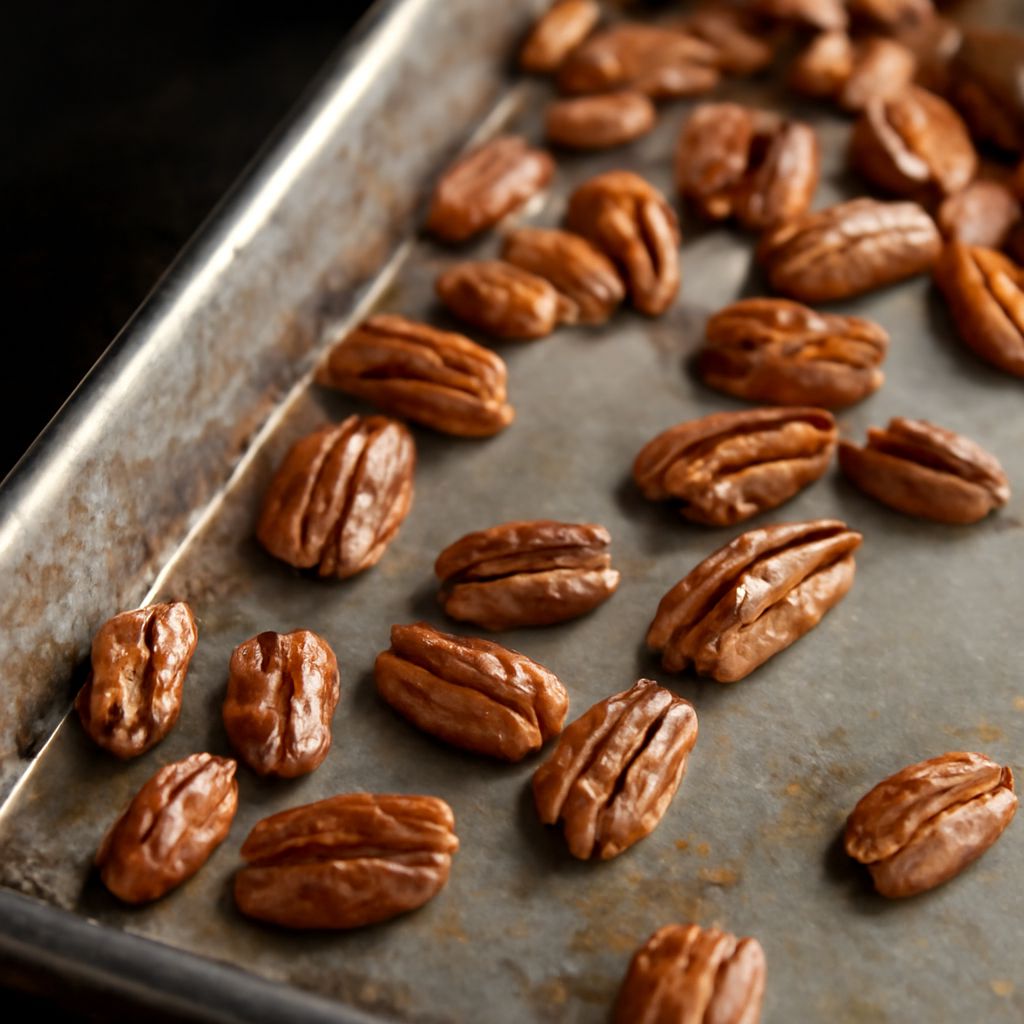
Set your oven to 350°F and spread the walnuts in one layer on a baking sheet. Toast walnut pieces for about 6–10 minutes and halves for 8–12 minutes, stirring once halfway through. Remove them when they smell nutty and look lightly golden, then transfer them immediately to a cool plate or baking sheet so they stop browning.
This moderate heat gives roasted walnuts an even, crisp texture without burning their naturally oil-rich centers. You do not need to add oil before baking.
Roasted walnuts: 350°F timing—6–10 minutes for pieces, 8–12 for halves
Use shelled walnut halves or pieces and preheat the oven fully to 350°F. The timing depends on size:
- Small pieces: Begin checking at 6 minutes; most finish in 6–10 minutes.
- Larger pieces: Expect about 8–10 minutes.
- Halves: Begin checking at 8 minutes; most finish in 8–12 minutes.
These are approximate ranges for walnuts at room temperature on a standard baking sheet. Cold walnuts may need another minute or two. If you are working with different sizes, separate them or remove the smaller pieces first so they do not overbrown while the halves finish.
For the most even result, use the center oven rack and avoid a crowded pan. If the walnuts overlap, trapped steam can soften them and the pieces will toast at different rates. Use a second baking sheet rather than piling them up.
Prepare and roast walnuts evenly in a single layer
- Heat the oven to 350°F.
- Spread 1–2 cups of walnuts over a light-colored, rimmed baking sheet. Leave a little space between pieces, but do not worry about separating every walnut.
- Place the sheet on the center rack.
- Set a timer for the short end of the size-based range: 6 minutes for pieces or 8 minutes for halves.
- Stir or turn the walnuts halfway through, then return the pan to the oven.
Parchment is optional. A bare metal pan encourages quick browning, so check the walnuts promptly near the end of the range. A dark pan may brown them faster; start checking a minute early. To roast walnuts evenly, keep the layer shallow and use pieces that are reasonably similar in size.
Do not rely on a fixed timer alone. Oven temperatures vary, and walnuts can move from fragrant to bitter quickly because their high oil content conducts heat efficiently. Stay nearby during the final few minutes.
How to toast walnuts in the oven: stir halfway and follow the aroma
Stirring halfway exposes the surfaces that touch the pan and redistributes the hot spots. Use a spatula to turn the halves or sweep the pieces toward the center, then spread them back into one layer. If your pan has hot edges, move the edge walnuts inward and the center walnuts outward.
The first reliable cue is aroma. Raw walnuts smell mild; toasted walnuts develop a warm, nutty fragrance that becomes noticeable before they are fully browned. Start checking as soon as that aroma fills the area around the oven. Do not wait for a dark color, since the walnuts continue cooking on the hot pan.
Look for a light golden-brown surface and slightly deeper color in the creases. The thin skin may darken, but black spots or a sharp, burnt smell indicate overbrowning. If the aroma is strong and the color looks nearly ready, pull the pan even if the timer has a minute left. A brief rest will finish the texture.
Check a toasted walnut for golden color and a crisp bite
Remove one piece and let it cool for a few seconds before tasting. A toasted walnut should taste rich and nutty rather than raw, grassy, or bitter. Its center should feel crisp and firm, not soft or damp. Halves may retain a little tenderness while hot, so judge the final crunch after cooling.
If the walnuts still taste bland or have a pale center, return them to the oven for 1–2 minutes. Watch closely and stir again if needed. If they taste bitter, smell acrid, or show very dark edges, they have gone too far; shortening the next batch’s time is more effective than lowering the temperature dramatically.
Color can be uneven when walnut skins are dark, so combine visual checks with smell and taste. Pieces also toast faster because more cut surfaces are exposed. Start checking them before the halves, even when they share the same baking sheet.
Cool, season, and store toasted walnuts immediately
As soon as the walnuts reach the right color and aroma, move them off the hot baking sheet. Spread them in a single layer on a cool plate, another baking sheet, or a large dish. This immediate transfer stops carryover browning from the metal pan and prevents the hot underside from turning bitter.
Let them cool completely, usually 15–20 minutes, before sealing them. The texture becomes crisper as the internal heat leaves. For a simple savory finish, toss 2 cups of warm walnuts with about 1/4 teaspoon of fine salt. Cinnamon, smoked paprika, cayenne, or a small amount of sugar also works; add dry seasonings while the nuts are still warm so they adhere.
Store fully cooled walnuts in an airtight container. Keep them at room temperature for about 5–7 days, refrigerate them for up to a month, or freeze them for up to 3 months. A refrigerator or freezer best protects the toasted flavor because walnut oils can turn stale when exposed to heat, light, and air.