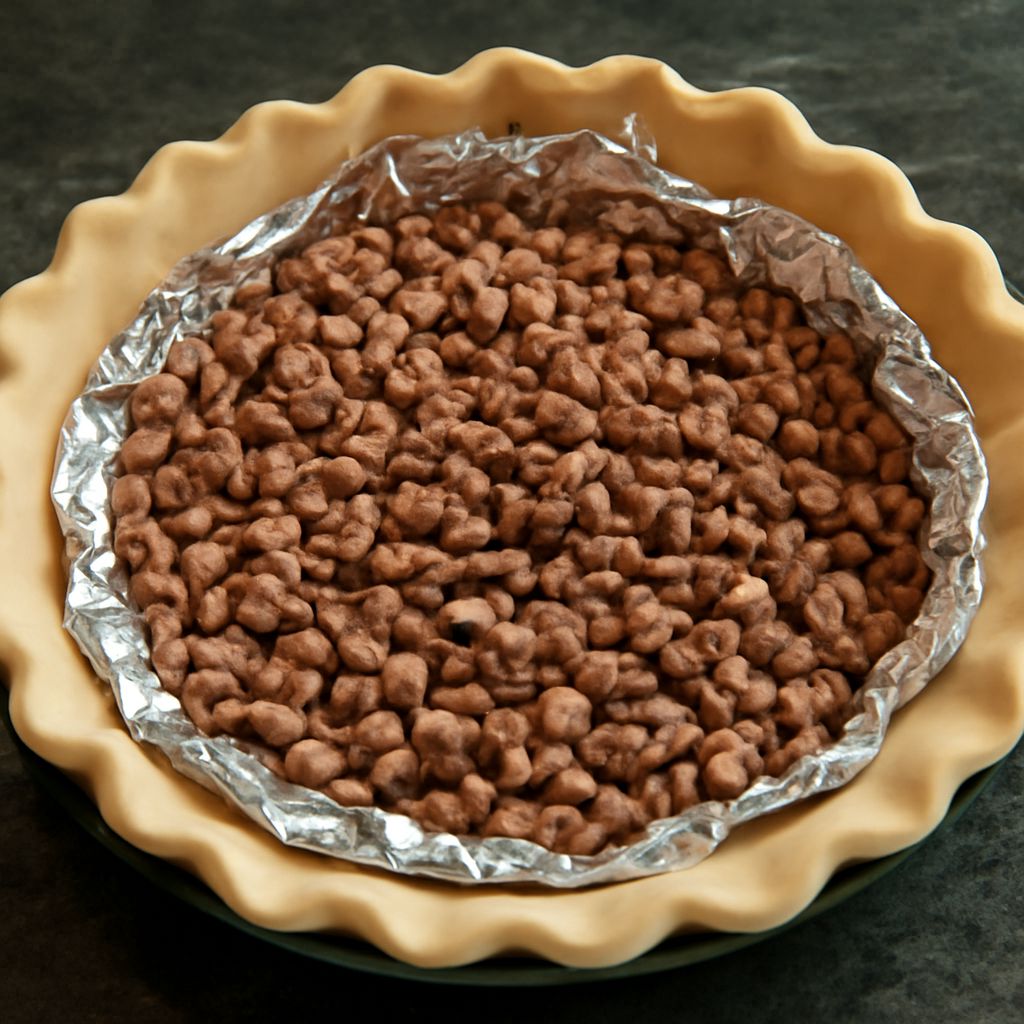
Blind baking pie crust means baking the crust before the filling goes in. You do it when the filling will not need the raw dough to bake through, or when the filling would leave the bottom soggy. A reliable method is to chill the crust well, line it with parchment, fill it with weights, then bake in stages so the sides set before the center finishes.
Use blind baking crust for custard pies, cream pies, pudding pies, no-bake fillings, and any pie with a wet filling that can soak the shell. Use a blind baked pie crust as a partial bake when the filling will return to the oven, or a full bake when the filling is already cooked or will not bake again.
When to Blind Bake a Pie Crust
You should blind bake when the filling cooks faster than the crust or never gets hot enough to finish the bottom. That includes pumpkin pie, quiche, lemon meringue, banana cream, coconut cream, and fresh fruit pies that use a pastry cream or thickened filling on a pre-baked shell.
Choose partial baking if the pie will bake again after filling, such as pumpkin or quiche. Choose full baking if the crust will hold a cooked filling or a chilled filling, such as banana cream or chocolate pudding. As a rule, bake at 425°F for the first stage so the dough sets quickly, then lower the heat to finish the crust evenly.
Dock the crust with a fork only when you are not relying on weights to protect the bottom from bubbling. For most blind baking pie crust jobs, a fully lined and weighted shell gives you better shape control than docking alone.
Prepare the Crust and Add Weights
Start with a well-chilled pie shell in the pan. If the dough is warm, it will slump before it sets. Trim and crimp the edge, then chill the shaped crust for at least 30 minutes, or freeze it for 15 minutes if your kitchen is warm.
Heat the oven to 425°F. Line the chilled shell with parchment paper, letting the edges overhang so you can lift the weights out easily. Fill the parchment all the way to the top edge with pie weights, dried beans, or uncooked rice. The weights should press the dough firmly against the pan and up the sides; that is what prevents shrinking and slumping.
Bake for 15 minutes, then lift out the parchment and weights carefully. If the sides are sliding down, gently push them back into place with a spoon while the dough is still soft. Return the shell to the oven.
- Shape control cue: the rim should look set and lightly matte, not glossy and loose.
- Failure cue: if the sides have collapsed, your crust was too warm or underweighted.
- Bubbling cue: any blistering on the bottom means the weights were not heavy enough or did not reach the center.
Partially Bake or Fully Bake the Crust
For a partially blind baked pie crust, bake the shell 5 to 7 minutes more after removing the weights, until the bottom looks dry and pale golden. You want a crust that is set but not deeply browned, because it still needs time in the oven with the filling. The total bake is usually about 20 to 25 minutes.
For a fully blind baked pie crust, return the shell to the oven for 8 to 12 minutes after removing the weights, until the bottom and edges are evenly golden brown. If the rim browns too fast, cover it loosely with foil or a pie shield during the second stage. A fully baked shell should feel dry, smell toasted, and release cleanly from the parchment without a damp spot in the center.
If the center puffs during baking, prick it lightly with a fork and bake 1 to 2 minutes longer. If the bottom still looks underdone, slide the crust to a lower oven rack for the last few minutes to encourage browning.
Cool, Fill, and Check the Shape
Let the crust cool in the pan for at least 15 to 20 minutes before filling. A warm shell can steam the filling and soften the bottom. For cream or custard pies, cool it completely; for pies that return to the oven, you can fill it once it is no longer hot to the touch.
Check the finished shape before filling. The sides should be set, the rim should hold its crimp, and the bottom should look dry and evenly baked. If you see a small crack, seal it with a dab of egg wash or use a little melted chocolate for dessert pies before adding the filling.
Fill the shell only when it matches the job: use a partially baked crust for fillings that will bake again, and use a fully baked crust for fillings that are already cooked or chilled. That keeps the bottom crisp and gives you a pie crust that holds its shape from first slice to last.