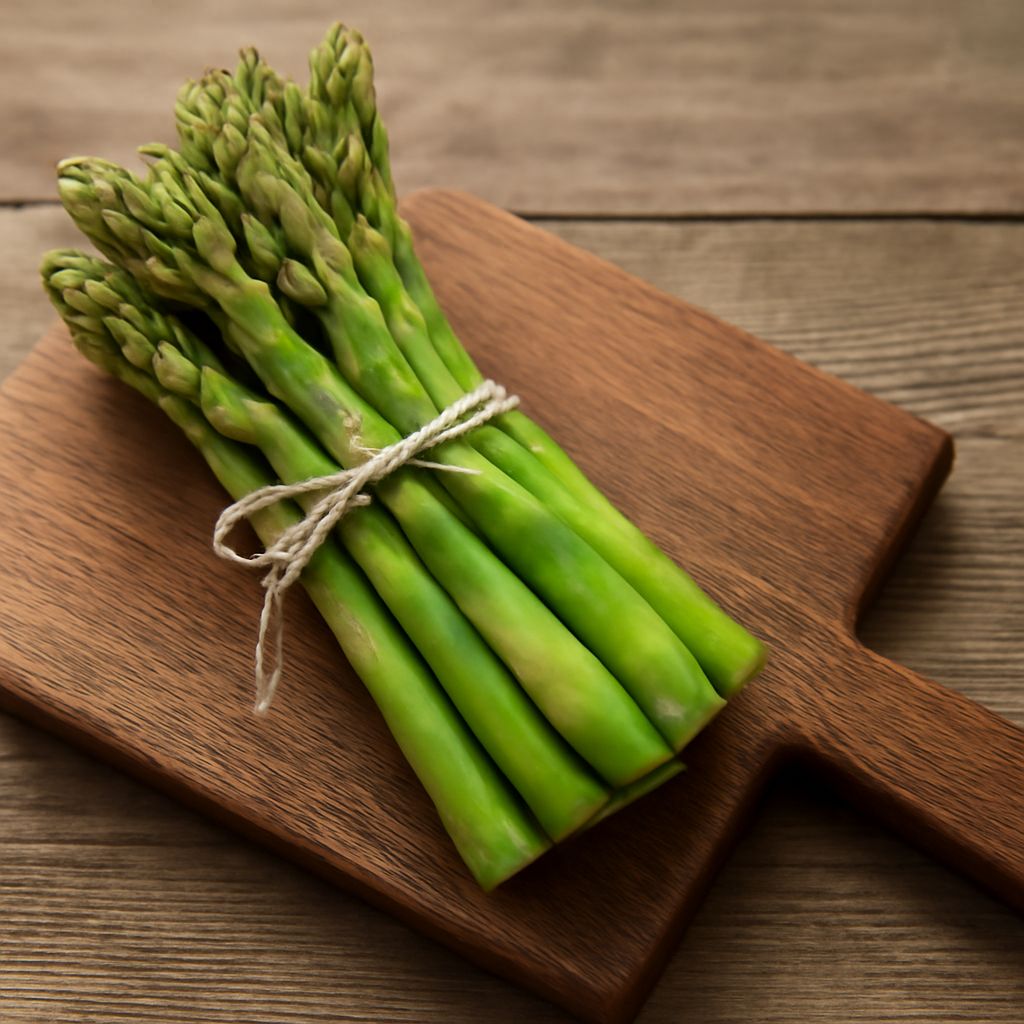
To learn how to cut asparagus, first find the point where each spear changes from tender to woody. The right amount to remove depends on the stalk, not a fixed one-inch rule. Thin, fresh spears may need only a small trim, while thick or dry stalks may need peeling as well.
Once the tough ends are gone, choose the cut that matches your cooking method. Keep spears whole for roasting, slice them on the bias for sautéing, and use short, even pieces for pasta or salad.
Find the Woody End Before You Trim
Rinse the asparagus under cool water and pat it dry. Check the bottom inch or two of each spear for signs of toughness:
- Woody ends look pale, gray, shriveled, or cracked.
- Tender stalks look moist and green, with a smooth surface.
- Thick stalks may be tender inside but have a fibrous outer layer.
Use one spear as a guide. Bend it gently near the lower third. It should break where the tender section meets the woody base, although the snap can remove more edible asparagus than necessary. If the stalk resists bending or feels stringy, plan to trim farther up or peel it.
For a knife test, slice a thin piece from the bottom and chew it. If it is easy to bite, the remaining stalk is likely tender. If it is tough or pulls into strings, move the cut higher. This test is especially useful when the stalks vary in thickness or freshness.
How to Trim Asparagus: Snap or Use a Knife
Snapping is quick and requires no tools. Hold a spear with both hands and bend it until the base breaks naturally. Repeat with the remaining spears. This method follows each stalk’s natural tender point, but it can create uneven lengths and discard more of the edible portion than needed.
Knife trimming gives you cleaner, more consistent results:
- Line up several spears on a cutting board, with the tips facing the same direction.
- Compare the bottoms and identify the highest point where the stalks look fresh and green.
- Cut straight across just above the dry, pale section.
- Trim any individual spear that still has a hard or discolored base.
A sharp chef’s knife works better than a dull one, which can crush the stalks. If you are preparing asparagus for a composed dish, knife trimming keeps the spears uniform. If you are cooking a casual side dish and the stalks are uneven, snapping is perfectly practical. Either way, the finished trimmed asparagus should have moist, smooth cut ends without a fibrous strip running up the stalk.
Peel Thick Stalks for Tender Trimmed Asparagus
Thick asparagus stalks benefit from peeling when the skin feels tough, ridged, or stringy. Thin pencil-size spears usually do not need it. Peeling removes the fibrous outer layer while preserving the tender center, so the stalk cooks evenly instead of having a soft interior and chewy exterior.
After trimming the dry base, place a thick spear flat on the cutting board or hold it near the tip. Use a vegetable peeler to remove the outer skin from just below the tip to the base. Rotate the spear as you work, taking off only the tough surface. Leave the tip intact because it is naturally tender.
Peel more heavily near the bottom, where the skin is thickest, and lightly near the middle. If the stalk still bends stiffly or shows visible strings after peeling, remove another thin layer or trim the base slightly higher. Do not keep peeling thin spears; they can become limp and too narrow to hold their shape.
How to Cut Asparagus for Roasting, Sautéing, Pasta, and Salad
Match the cut to the cooking method so the stalks finish tender at the same time:
- Roasting or grilling: Keep small and medium spears whole after trimming. For very thick stalks, cut them in half lengthwise so the centers cook before the tips darken. Arrange them in a single layer; crowded spears steam instead of browning.
- Sautéing: Cut the stalks into 1- to 2-inch pieces on a diagonal. Bias cuts create broad surfaces that brown quickly. Add the thicker lower pieces first, then add the tips during the final few minutes so they stay intact.
- Pasta, risotto, or soup: Use short pieces, about ½ to 1 inch long, for easy forkfuls and even cooking. Separate the tips from the stalk pieces and add the tips later because they cook faster.
- Salad: Slice tender raw asparagus very thinly on the bias, or shave it lengthwise into ribbons with a peeler. For a cooked salad, use bite-size pieces and blanch them briefly until bright green and just tender, then cool them immediately.
Keep cut pieces as similar in size as possible. If some stalks are much thicker than others, halve or quarter the largest ones rather than letting the small pieces overcook while the thick pieces remain firm.