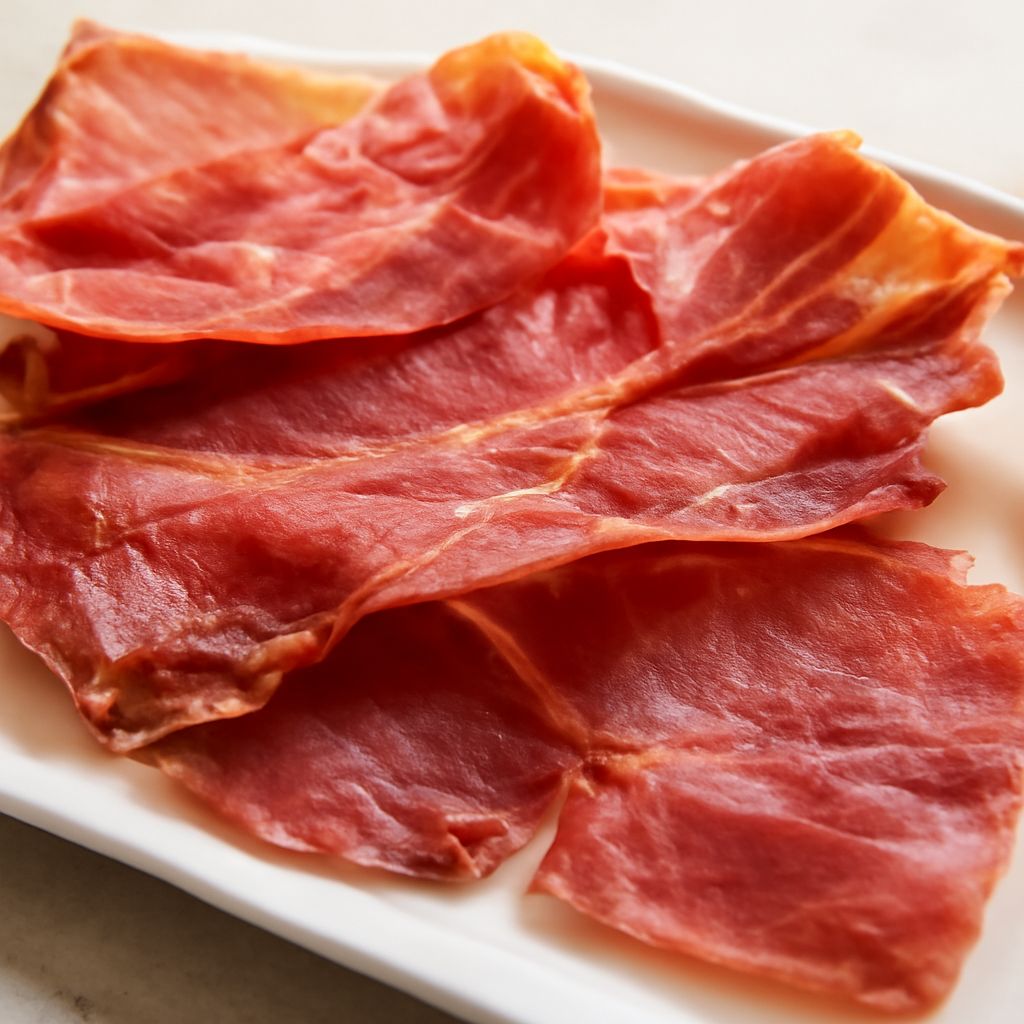
How to make prosciutto at home starts with a whole, bone-in pork leg and a controlled cure lasting many months. You will trim the leg, calculate salt from its weight, press and turn it during salting, then dry and age it while monitoring temperature, humidity, airflow, weight, aroma, and texture.
This is not a quick cured tenderloin or an uncontrolled room-temperature project. For homemade prosciutto, you need a calibrated scale, a curing chamber or other dependable temperature- and humidity-controlled space, and a tested whole-leg curing formula that uses curing salt correctly.
Choose and Trim a Whole Pork Leg for Curing
Start with a fresh, bone-in pork leg weighing roughly 8 to 12 kilograms. Keep the skin and a protective layer of fat, but remove loose flaps, bruised meat, blood spots, glands, and ragged edges. Trim the fat cap evenly, leaving about 1 centimeter over the lean portions. Do not cut deeply into the meat or expose unnecessary areas around the bone.
- Weigh the leg after trimming; this is your starting or “green” weight.
- Use a nonreactive tray, clean towels, food-safe gloves, and a refrigerator that holds 2–4°C during salting.
- Prepare a curing chamber capable of maintaining approximately 10–13°C, 65–75% relative humidity, and gentle, steady airflow during aging.
Inspect the leg before curing. It should smell clean and meaty, not sour, sulfurous, or sweetly spoiled. Pat it completely dry before applying the cure.
Making Prosciutto: Weigh the Salt, Turn, and Press
Use a tested recipe for a whole leg, and calculate the cure from the trimmed weight. As a practical reference, many dry cures use approximately 2.5–3.5% non-iodized salt by weight—250–350 grams per 10-kilogram leg. If the recipe includes cure #2, measure it precisely according to the product label or validated formula. Do not substitute table salt, Himalayan pink salt, or cure #1.
- Massage the weighed salt mixture over every surface, concentrating around the exposed bone, joints, and thickest areas.
- Place the leg skin-side down in a clean tray or curing bag, refrigerate it at 2–4°C, and collect liquid as it leaves the meat.
- Turn the leg every 2–3 days. Redistribute the cure and rub any pooled salt back over the surface.
- Continue salting for about 2–3 weeks for a typical 8–12-kilogram leg, unless your tested formula specifies a different schedule.
- Brush or lightly rinse away excess surface salt, then dry the leg thoroughly.
- Press it between clean boards or in a suitable ham mold for roughly 3–7 days, increasing pressure gradually. Turn it daily so the leg forms evenly without crushing the meat.
At the end of salting, the leg should feel firmer and weigh less, with no persistent wet pockets. If it develops a foul odor, sticky slime, or unusual gas buildup, stop rather than attempting to rescue it.
Dry and Age for Months with Controlled Temperature, Humidity, and Airflow
Hang the pressed leg in the curing chamber at about 10–13°C and 65–75% humidity. Keep air moving gently, but do not aim a strong fan directly at the meat. Excessive airflow creates a hard outer shell while the center remains soft; excessive humidity encourages slime and unwanted mold.
Allow at least 9–12 months for a smaller leg and commonly 12–18 months for a 10–12-kilogram leg. The calendar is only a guide. Weigh the leg weekly or every two weeks and record the results. Your main target is approximately 30–35% loss from the starting weight.
During the first few weeks, the surface should gradually become dry and firm. A thin, dry, white surface mold can occur in a suitable chamber. Once the exterior has firmed, you can cover exposed lean areas with a thin lard-based paste to slow drying, following your curing formula. Correct humidity prevents both excessive cracking and a damp center.
Check Weight Loss, Aroma, Texture, and Surface Before Slicing
Consider the prosciutto ready when it has reached the target weight loss and passes all sensory checks:
- Weight: Calculate loss as (starting weight − current weight) ÷ starting weight × 100. Aim for about 30–35%.
- Aroma: A finished leg smells clean, savory, cured, and slightly nutty. Sour, rotten, sulfurous, or strong ammonia-like odors indicate failure.
- Texture: The leg should feel firm throughout, including near the bone, without soft centers, wet pockets, or jelly-like areas.
- Surface: The rind should be dry and intact. Reject meat with spreading green or black mold, fuzzy growth, slime, or persistent cracking that exposes damp meat.
For a final internal check, insert a clean curing probe or thin knife near the bone and smell it immediately. If the aroma is clean and the center feels firm, remove the skin and slice the meat paper-thin. If the center is soft or smells wrong, do not slice or serve it.