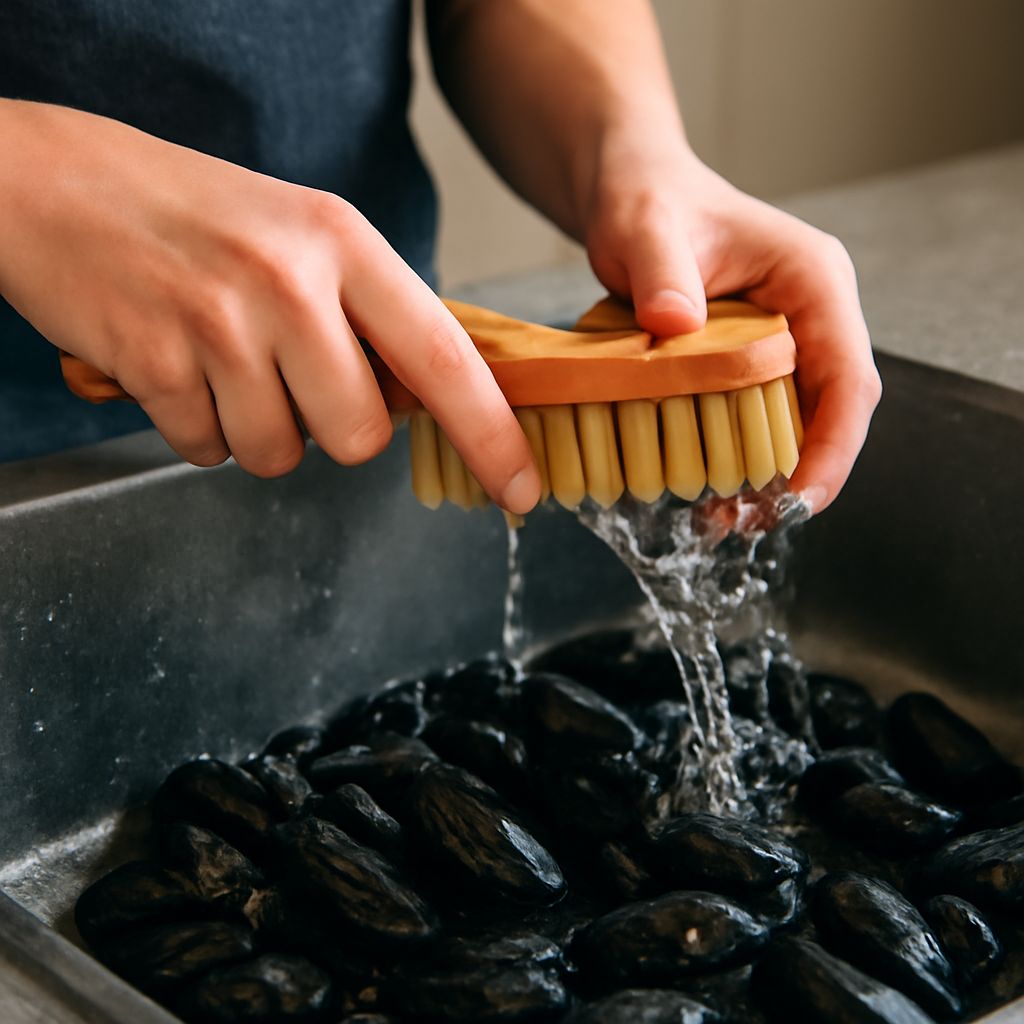
To learn how to prepare mussels, sort them first, then scrub away grit, remove the beard, and rinse them briefly under cold running water. Clean mussels just before cooking so they stay alive and the preparation does not damage the meat.
Preparing mussels takes only a few minutes when your cooking pot and ingredients are ready. Do not soak mussels in fresh water for a prolonged period; freshwater can kill them and dilute their natural briny flavor.
How to Prepare Mussels: Sort and Inspect
Spread the mussels in a single layer and inspect each shell. Live mussels should be closed, or they should close when you tap the shell firmly against the counter or the side of a bowl.
- Discard any mussel with a cracked, broken, or badly damaged shell.
- Tap an open mussel and wait a few seconds. If it closes, it is responsive and you can keep it.
- Discard an open mussel that does not move or close after tapping.
- Remove shells that feel unusually light, leak, or smell sour or unpleasant rather than clean and briny.
Keep the mussels chilled while you sort them. Do not pry open a closed shell; a tightly closed shell is a useful sign that the mussel is still alive.
Scrub Mussels and Remove Surface Grit
Rinse the sorted mussels under cold running water, working with a few at a time. Hold each shell under the stream and scrub it with a stiff vegetable brush. Concentrate on the ridges, hinge, and any areas coated with mud, sand, barnacles, or other surface growth.
Use only water and friction—never soap or detergent. Turn each mussel as you scrub so grit does not remain in the shell seams. Rinsing under running water carries loosened grit away more effectively than leaving the mussels submerged in a bowl.
Farmed mussels are often fairly clean, but they still need a careful scrub. A clean shell should feel smooth or naturally textured, without loose mud or visible sand clinging to it.
Debearding Mussels: Pull Toward the Hinge
Debearding mussels means removing the tough fibers, or byssal threads, that extend from the shell. Some mussels have little or no visible beard, but check each one before cooking.
- Find the fibrous tuft protruding from the shell, usually near the opening.
- Grip the beard with a dry kitchen towel, your fingers, or small kitchen pliers.
- Pull firmly toward the hinge—the narrow, pointed end where the two shell halves join.
Pulling toward the hinge helps remove the threads without tearing the mussel’s flesh. Do not yank the beard straight out toward the shell opening, because that direction can damage the meat. If the beard is slippery, grip it close to the shell with a towel and use a short, steady tug. Discard any mussel whose shell cracks during this step.
Preparing Mussels for the Final Rinse
After scrubbing and debearding, rinse each mussel once more under cold running water. Rub the shell lightly with your fingers and flush water through the hinge and seams to remove remaining grit or loose beard fibers.
Keep this rinse brief. Do not place cleaned mussels in a bowl of fresh water while you continue preparing other ingredients. Let them drain in a colander, or set them in a bowl just long enough to transfer them to the cooking pot.
Inspect them again as you rinse. Discard any shell that is cracked or any mussel that remains open and unresponsive when tapped.
Stage Clean Mussels for Immediate Cooking
Prepare your pan, pot, cooking liquid, and aromatics before the final rinse. Once the mussels are scrubbed, debearded, and drained, add them to the prepared dish within minutes rather than leaving them cleaned for hours.
If there is a short delay, keep them cold and loosely covered with a damp towel—not sealed in fresh water. Your mussels are ready when the shells are intact, the surfaces are free of visible grit, and no beard remains.