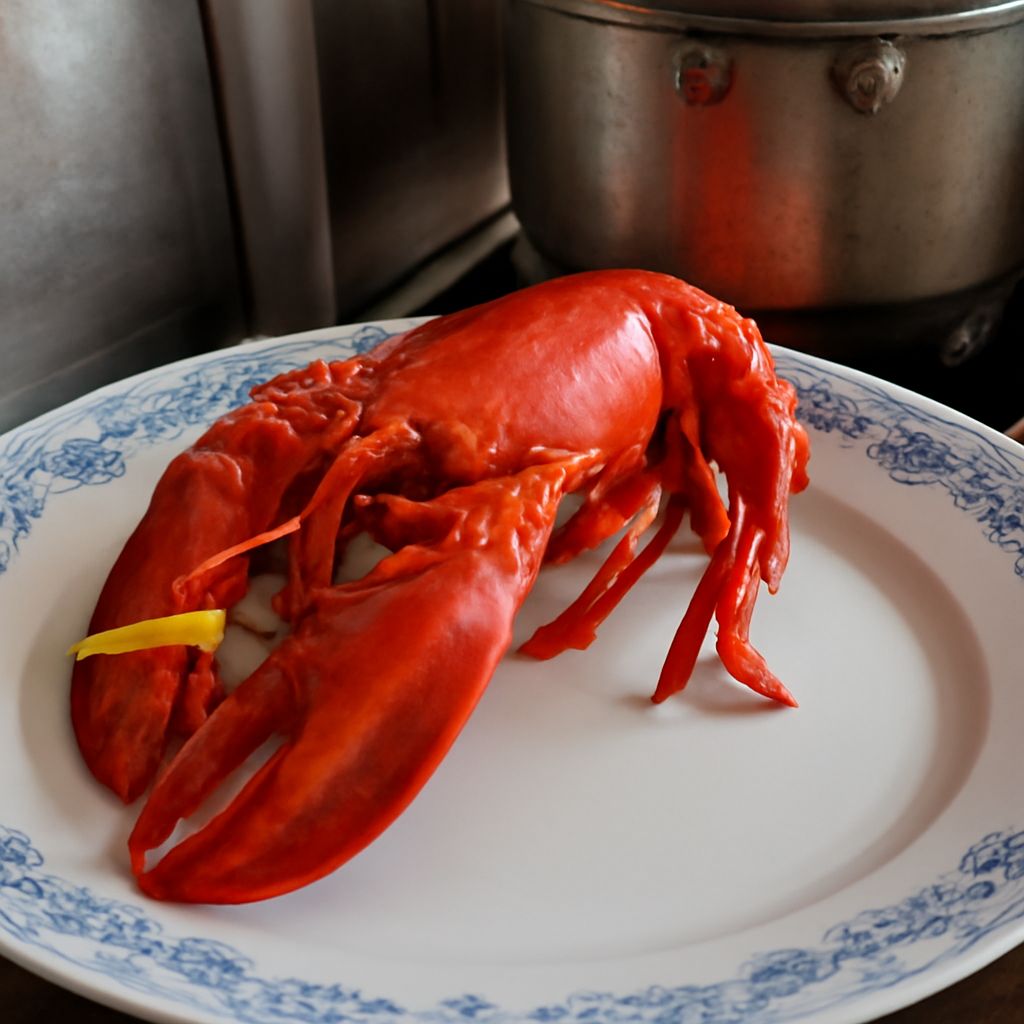
To learn how to steam lobster whole, use a shallow layer of boiling liquid, a raised rack, and a tightly covered pot. The lobster should sit above the liquid, not in it. For most 1- to 1½-pound lobsters, steaming takes 10 to 16 minutes, followed by a five-minute rest.
This method gives you even cooking without diluting the meat. Use the lobster’s individual weight for timing, then confirm doneness with its shell, meat, and internal temperature.
How to Steam Lobster: Set Up a Shallow Steamer
- Choose a tall, heavy pot with a tight-fitting lid. It must hold the lobster or lobsters without forcing the lid open.
- Set a steaming rack, trivet, or heatproof basket inside the pot. The rack should raise the lobster at least 1 inch above the bottom.
- Add 1 to 2 inches of water to the pot, keeping the liquid below the rack. You can add a generous pinch of salt, but the lobster does not need to be submerged or covered with water.
- Bring the liquid to a vigorous boil over high heat. Keep the lid nearby so you can cover the pot immediately after loading it.
- Using tongs, place the whole lobsters on the rack. Arrange them in a single layer when possible, with space around each one for steam to circulate. If you must stack them, place the largest lobster closest to the bottom.
- Cover the pot tightly and keep the heat high enough to maintain strong steam. If steam escapes around the lid, use a heavier lid or reduce the heat only slightly.
Keep the claws banded while you handle live lobsters. The bands prevent injuries, and you can remove them after cooking. Check the water occasionally during a long batch, adding a little boiling water if the level drops, but keep the rack above the liquid.
How to Steam a Lobster by Weight
For consistent results, weigh each lobster separately rather than combining their weights. The timing below begins when vigorous steam returns after you cover the pot. Start with the shorter time, then check a large lobster before serving.
- 1-pound lobster: 10 to 12 minutes
- 1¼-pound lobster: 12 to 14 minutes
- 1½-pound lobster: 14 to 16 minutes
- 1¾-pound lobster: 16 to 18 minutes
- 2-pound lobster: 18 to 20 minutes
- 2½-pound lobster: 20 to 22 minutes
- 3-pound lobster: 22 to 25 minutes
For a lobster larger than 3 pounds, add roughly 3 minutes for each additional ½ pound, then verify the thickest meat before removing it. Extra-large lobsters can vary in shell thickness, so the doneness checks matter more than the clock alone.
If you are deciding how to steam a lobster for a recipe, use its raw weight, not the weight after cooking. A chilled lobster may also take a minute or two longer than one that has been at room temperature, so use the temperature and meat cues as your final guide.
Steaming Lobsters: Adjust Timing for Batches
The key to steaming lobsters evenly is maintaining strong steam after you load the pot. Do not double the cooking time when cooking two lobsters; use the timing for each lobster’s individual weight.
- For two to four similarly sized lobsters in a roomy pot, use the listed time for one lobster.
- If loading the batch causes steam to stop for more than 3 minutes, add 2 to 3 minutes to the listed time after steam returns.
- If the lobsters are different sizes, time for the largest one and check the smaller ones early.
- A crowded or stacked pot may need 2 to 4 extra minutes because steam circulates less efficiently.
- Keep the lid closed during cooking. Each lift releases heat and can extend the cooking time unpredictably.
If the pot cannot hold the lobsters without crushing tails or leaving the lid ajar, cook them in separate batches. Bring the liquid back to a full boil before each batch and replenish the water as needed.
Check Doneness, Rest, and Serve
A fully cooked lobster has a bright red shell, but shell color alone is not enough because some shells redden before the meat is done. Use several cues together:
- Meat: The tail and claw meat should be opaque white with no translucent, gray, or glassy center. It should feel firm but still moist.
- Shell and joints: The tail should curl slightly, and the legs and claws should feel firm rather than loose or floppy.
- Temperature: Insert an instant-read thermometer into the thickest part of the tail meat from the underside, avoiding the shell. Look for 145°F for fully cooked seafood.
When the lobster reaches the target temperature, transfer it to a rimmed plate with tongs and let it rest for 5 minutes. Resting allows carryover heat to finish the center and gives the juices time to settle. Drain any liquid from the tail, remove the claw bands, and crack the claws and shell with lobster crackers or the back of a sturdy knife.
Serve the lobster whole with melted butter, lemon wedges, and a small fork or pick for the tail and claw meat.