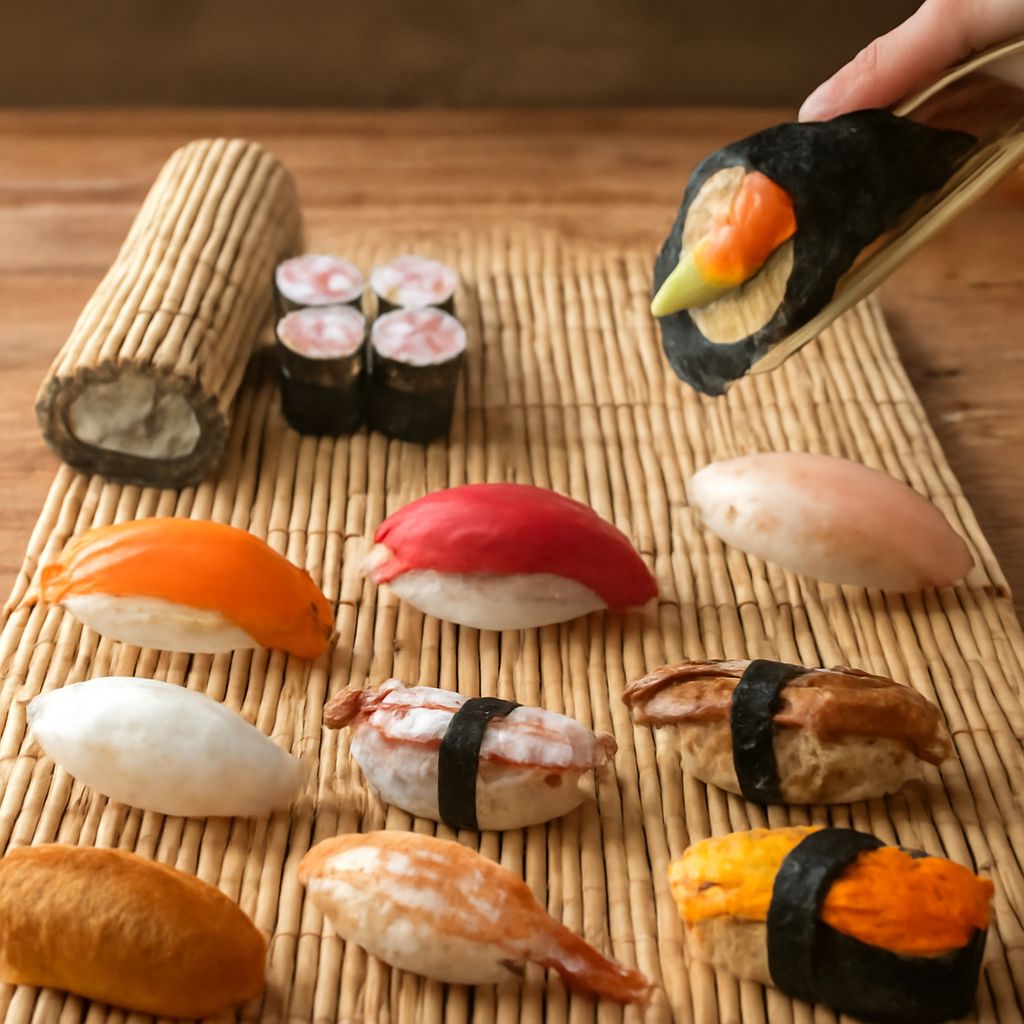
Use this guide to kinds of sushi to read a menu with confidence. The key distinction is simple: sushi includes seasoned rice, while sashimi is sliced seafood served without sushi rice. Maki is one sushi type, defined by its rolled assembly.
Rice, wrapper, shape, topping, and preparation separate the main formats. Sushi does not have to contain raw fish, either. You can order cooked seafood, egg, tofu, or vegetables in several traditional sushi forms.
Kinds of sushi by rice, wrapper, shape, and assembly
Sushi is built around short-grain rice seasoned with a mixture commonly made from rice vinegar, sugar, and salt. The rice may appear as a hand-shaped base, a layer inside a roll, a filling for tofu, or the foundation of a bowl. The other ingredients and the way they are assembled identify the format.
- Rice: Seasoned sushi rice is the defining ingredient. It should hold together without becoming wet or heavily compressed.
- Wrapper: Nori, a dried sheet of seaweed, surrounds many rolls and hand rolls. Nigiri and some bowl-style forms have no wrapper.
- Shape: Sushi may be oval, cylindrical, cone-shaped, pressed into a block, or scattered over rice.
- Topping: Fish, shellfish, cooked seafood, egg, tofu, pickles, and vegetables can all top or fill sushi.
- Assembly: A chef may hand-form, roll, press, stuff, or arrange the components. This step often determines the menu name.
Raw fish is common, but it is not a requirement. Grilled eel, cooked shrimp, crab, tamago omelet, avocado, cucumber, and pickled radish can all be part of sushi. What matters is the seasoned rice and the format built around it.
Sushi types list: nigiri, maki, temaki, and other formats
This sushi types list covers the formats you are most likely to see on a restaurant menu.
- Nigiri: A chef shapes a small oval of seasoned rice by hand and places one topping over it. Salmon, tuna, yellowtail, cooked shrimp, grilled eel, and tamago are common choices. A narrow strip of nori may hold a topping in place, but nigiri usually has no outer wrapper. Look for a compact rice base with one visible slice or piece on top.
- Maki: Maki is rolled sushi cut into bite-sized rounds. A sheet of nori usually wraps the rice and filling, although an inside-out roll, called uramaki, places the rice on the outside. Hosomaki are thin rolls with one main filling, such as cucumber or tuna. Futomaki are thicker and contain several ingredients. A California roll, often made with imitation crab, avocado, and cucumber, is a familiar uramaki example.
- Temaki: Temaki is hand-rolled sushi shaped like a cone. Nori forms the outside, with rice and fillings tucked inside. You usually eat it with your hands soon after it is made, while the seaweed is still crisp. Salmon, spicy tuna, shrimp, avocado, and cucumber are common fillings.
- Gunkan-maki: Also called battleship sushi, gunkan-maki uses an oval rice base wrapped vertically with a tall strip of nori. The wrapper creates a rim for loose toppings such as fish roe, seaweed salad, chopped seafood, or uni. Its raised, open-top shape makes it easy to identify.
- Inari: Inari sushi puts seasoned rice inside a pouch of fried tofu. The tofu is sweet and tender, while the rice supplies a mild vinegar flavor. Inari is a useful vegetarian option, although some versions include seafood or other fillings.
- Oshi: Oshi sushi is pressed into a compact rectangular block, usually with rice and a topping layered in a mold. The block is cut into neat pieces. Pressed salmon is a familiar example, but chefs may also use mackerel, shrimp, or vegetables.
- Chirashi: Chirashi presents seasoned sushi rice in a bowl with toppings scattered across the surface rather than rolled or placed into individual pieces. Sliced fish, cooked seafood, egg, mushrooms, and vegetables may appear together. It offers several ingredients in one serving without the structure of a roll.
Menus may use regional or chef-specific names, but these visible structures remain useful. A cylinder suggests maki, a cone suggests temaki, an oval rice base with a topping suggests nigiri, and a tofu pouch suggests inari.
Sushi vs sashimi vs maki: where each one fits
Sushi is the broad category of dishes made with seasoned rice. Nigiri, maki, temaki, gunkan-maki, inari, oshi, and chirashi all fit within that category.
Maki is a subset of sushi. It specifically describes a rolled format, usually made with nori, rice, and one or more fillings. Every maki roll is sushi, but not every sushi item is maki. Nigiri has no roll, while temaki is a cone-shaped hand roll and chirashi is arranged in a bowl.
Sashimi is separate from sushi. It consists of carefully sliced raw fish or seafood served on its own, often with soy sauce, wasabi, or garnishes. It is not a roll and does not use seasoned sushi rice. A menu may place sashimi beside sushi, but the two names identify different preparations.
The distinction also explains why a plate can contain both sushi and sashimi. Nigiri or maki supplies seasoned rice; sashimi supplies sliced seafood without it. If you want the fish flavor and texture without rice, choose sashimi. If you want rice, choose a sushi format.
Choose a sushi type by texture, ingredients, and cooked or vegetable fillings
Choose the format according to how much rice, wrapper, filling, and topping you want in each bite.
- For a balanced rice-and-topping bite: Choose nigiri. The topping stays prominent, while the oval rice base adds a soft, lightly tangy counterpoint.
- For combined fillings and varied textures: Choose maki. Nori adds a roasted, crisp note, and the center can combine creamy avocado, crunchy cucumber, cooked crab, pickles, or raw fish.
- For a hand-held, seaweed-forward bite: Choose temaki. Its cone gives you more nori and filling, with a looser texture than a cut roll.
- For loose or delicate toppings: Choose gunkan-maki. Roe pops, seaweed salad feels silky, and chopped seafood stays contained by the nori rim.
- For cooked seafood: Look for ebi nigiri made with cooked shrimp, unagi maki with grilled freshwater eel, or rolls filled with imitation crab, tempura shrimp, or smoked salmon. Tamago sushi provides a sweet, savory omelet option.
- For vegetable fillings: Try cucumber or avocado maki, oshinko rolls with pickled vegetables, asparagus rolls, or inari. Vegetable sushi can be crisp, creamy, sweet, or tangy without relying on seafood.
- For a compact, topping-focused serving: Choose oshi. Pressing produces a firm bite and keeps the topping and rice neatly layered.
- For variety in one bowl: Choose chirashi. It lets you sample several toppings over rice without ordering multiple roll styles.
If you are sensitive to texture, start with nigiri for a simple pairing, maki for layered ingredients, or inari for soft, sweet tofu and rice. For the cleanest seafood texture without rice, sashimi is the separate menu category to look for.