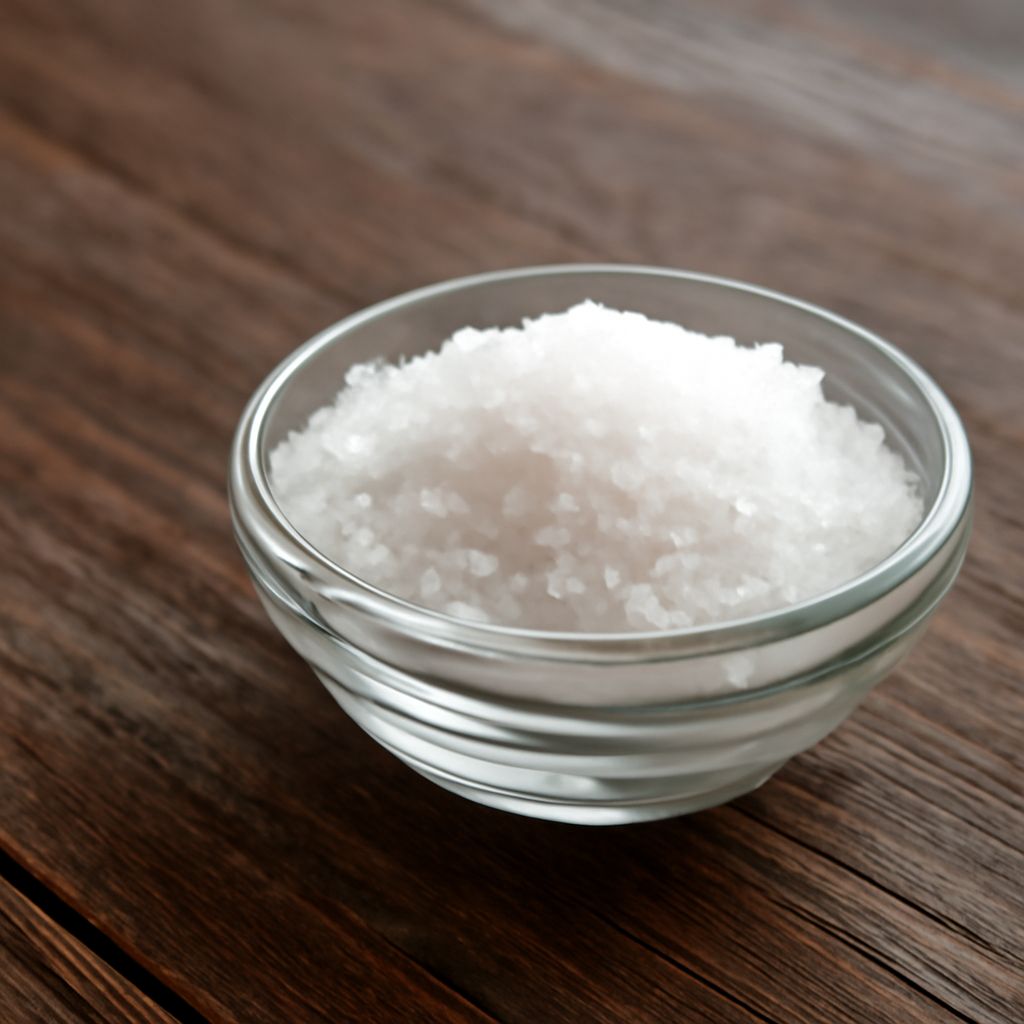
Kosher salt vs sea salt comes down to crystal structure, production method, and how much salt fits into a given volume. Kosher salt usually has larger, more open crystals, while sea salt ranges from fine grains to coarse crystals and delicate flakes. For the most reliable substitution, use the same weight rather than the same number of teaspoons.
Although both salts are primarily sodium chloride, their different shapes and densities can make one volume measure noticeably saltier than another. That matters most in baking, brining, and any recipe that gives salt by volume.
Kosher Salt vs Sea Salt: The Main Difference
The answer to what’s the difference between kosher salt and sea salt starts with source and processing. Kosher salt is generally produced from mined salt deposits and formed into broad, irregular crystals. Its name refers to its traditional use in koshering meat, where the crystals help draw out blood; it does not necessarily mean the salt has a special certification.
Sea salt is made by evaporating seawater. Depending on the evaporation and harvesting process, it may have fine grains, coarse crystals, thin flakes, or specialty shapes. Both types can be used for everyday cooking, but they do not always measure the same by volume.
Crystal Shape, Source, Density, and Flavor
Crystal shape controls how tightly salt packs into a measuring spoon. Kosher salt crystals are often light and flaky, leaving more air between pieces. Some brands use denser, more compact crystals. Diamond Crystal and Morton Kosher Salt, for example, can produce different amounts of salt in the same teaspoon.
Sea salt also varies widely. Fine sea salt packs closely and dissolves quickly; coarse sea salt leaves more space between larger grains. A teaspoon of one product can therefore weigh substantially more or less than a teaspoon of another. This is why a volume-based substitution can make a dish underseasoned or overly salty even when the labels appear interchangeable.
In flavor, the salts are more alike than different. Both deliver mostly sodium chloride, and any trace minerals in sea salt usually have a subtle effect. Perceived flavor often comes from texture and distribution: coarse crystals may dissolve slowly and create occasional salty bursts, while fine salt spreads and dissolves quickly. Neither salt is universally healthier or inherently saltier by weight.
Coarse, Fine, and Finishing Sea Salts
- Coarse sea salt: Use it for grinders, salt crusts, some brines, or recipes where a slower-dissolving texture is useful. Check the crystal size before measuring.
- Fine sea salt: Choose it for baking, sauces, soups, and general seasoning when you want quick, even distribution.
- Finishing sea salt: Flaky products such as Maldon or fleur de sel are sprinkled over finished food. Their shape and crunch are the point, so they are best treated as a garnish rather than a routine baking substitute.
If you are wondering what’s the difference between sea salt and kosher salt, the practical answer is that “sea salt” describes the source, while “kosher salt” usually describes crystal style and culinary use. Either category can include more than one grain size.
Cooking Uses and Weight-Based Substitutions
For a recipe that lists salt in grams, substitute kosher salt and sea salt at the same weight. Ten grams of kosher salt can replace ten grams of fine or coarse sea salt because their sodium chloride content is broadly similar. This approach works especially well for baking, bread, dough, dry rubs, and brines.
For a recipe written in teaspoons or tablespoons, use a brand-specific conversion. Check the package for serving weight, or look up the manufacturer’s measurement guidance. A useful formula is:
Replacement volume = the original salt weight ÷ the replacement salt’s weight per teaspoon.
If you do not have a scale or conversion information, add the replacement gradually while tasting in savory dishes. For baking, weighing the salt is preferable because a volume guess can alter the recipe’s balance. For finishing, substitute based on texture as well as quantity: use flaky sea salt when you want a visible crunch, and use kosher salt when you want a clean, dissolving seasoning.