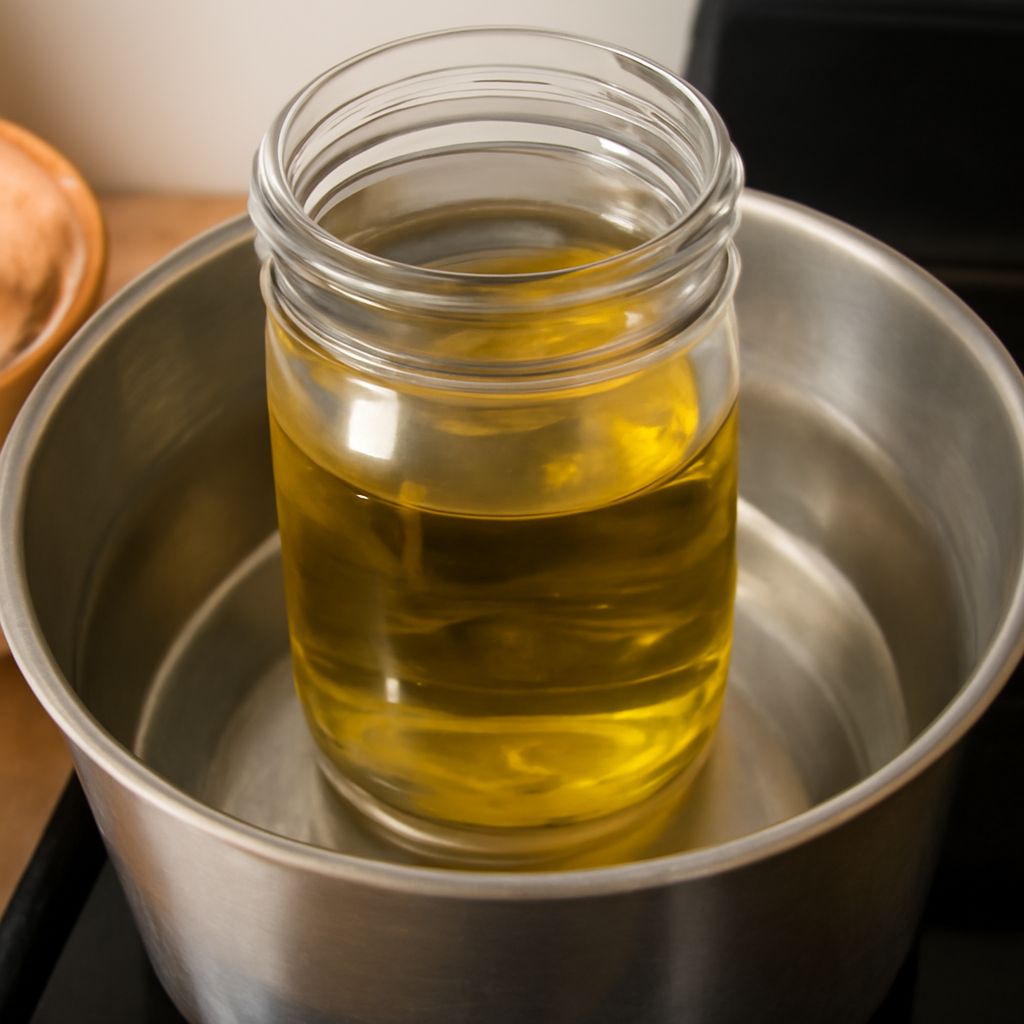
What is a double boiler? It is a two-part cooking setup that uses indirect steam heat to warm food gently. A saucepan holds hot water, while a heatproof bowl sits above it. The bowl warms from the steam without sitting directly on the burner or touching the water.
This method helps you melt chocolate, make custard, warm sauces, and gently heat ingredients that could scorch, split, or curdle over direct heat. You can use a purpose-built double boiler or make one with a saucepan and bowl.
What Is a Double Boiler and How Does It Work?
In a double boiler, the lower pan contains water and the upper bowl holds the food. As the water simmers, it produces steam. That steam transfers heat to the bowl, which then warms the ingredients gradually and evenly.
Because the food does not receive direct burner heat, its temperature rises more slowly than it would in a saucepan. This gives you better control when melting chocolate, thickening egg-based custard, or keeping a sauce warm. The process is gentle, but it still requires attention: vigorously boiling water can overheat the bowl, create excess condensation, or cause the water to evaporate too quickly.
How to Make a Double Boiler at Home
To learn how to make a double boiler, gather:
- A small or medium saucepan
- 1 to 2 inches of water
- A heatproof glass or stainless-steel bowl
- A dry whisk, spoon, or spatula
- Pour the water into the saucepan. Leave enough space so it will not splash into the bowl when it simmers.
- Set the bowl over the saucepan. Its rim should rest securely on the pan, and its base must remain above the water.
- Remove the bowl and bring the water to a gentle simmer over medium heat. You should see small bubbles, not a forceful boil.
- Place the bowl back on the pan and add your ingredients. Reduce the heat to low.
- Stir as needed until the mixture melts, warms, or thickens to the recipe’s required consistency.
For chocolate, use a completely dry bowl and utensils. For custard, stir steadily and remove the bowl as soon as the mixture thickens enough to coat a spoon. When the food reaches the desired result, lift the bowl off the saucepan rather than leaving it over the steam.
Set the Water Level and Bowl Fit
The bowl should fit over the saucepan like a lid without sealing tightly. It must sit securely enough that it cannot tip, but the bottom should stay at least about 1 inch above the water. Do not let the upper bowl touch simmering water. Direct contact turns the setup into a form of direct boiling and can make delicate mixtures too hot.
Choose a bowl with a rim wider than the saucepan, but not so wide that it becomes unstable. If steam escapes around the sides, that is normal. If the bowl wobbles, choose a smaller bowl or a wider pan before heating the ingredients. Check the water occasionally and add more hot water if the level drops significantly; never allow the pan to boil dry.
Control Heat, Steam, and Condensation
Start with medium heat only long enough to create steam, then use low heat to maintain a quiet simmer. The water should stay hot and active without large bubbles striking the bowl. Excessive heat can scorch chocolate, overcook egg mixtures, or make a sauce separate.
Keep the bowl and tools dry, especially when working with chocolate. Water droplets can make melted chocolate seize into a thick, grainy mass. Condensation can also dilute custard or sauces. Avoid covering the double boiler unless the recipe specifically calls for it; a lid traps steam and encourages water to drip back into the bowl.
Stir slowly and regularly so the bowl’s warmer areas do not overheat the food. If the mixture begins to steam heavily, thicken too fast, or cling to the sides, lower the heat or remove the bowl briefly. If it is warming too slowly, raise the burner slightly while keeping the water at a gentle simmer. The finished mixture should be smooth, evenly warmed, and free of scorched edges or excess water.