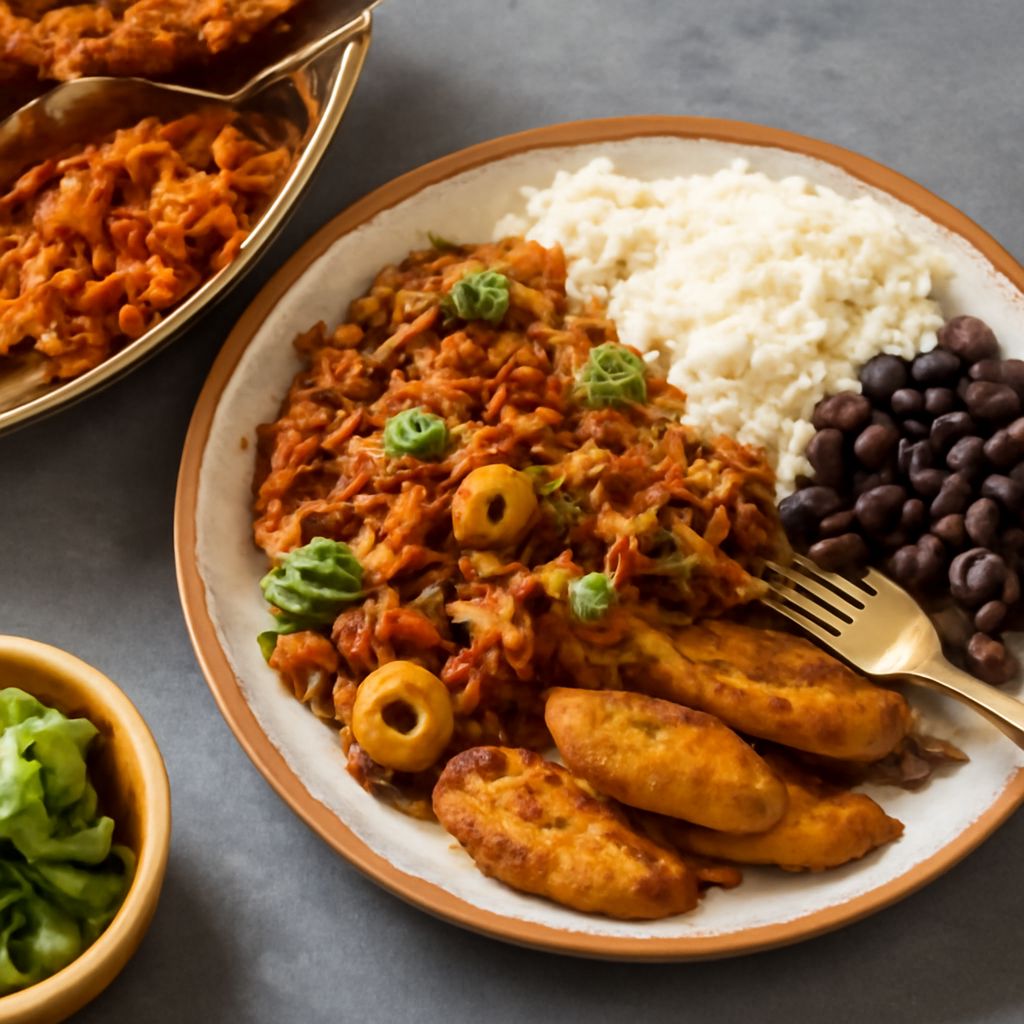
A Cuban dish usually builds big flavor from a few familiar ingredients: rice, beans, pork, beef, plantains, yuca, garlic, and citrus. Slow braising, roasting, frying, and layering aromatics turn these staples into generous meals with contrasting textures.
These famous Cuban dishes give you a practical introduction to Cuban cooking. You will see the same flavor foundations repeated in mains, side dishes, sandwiches, and desserts, making it easy to combine them into a balanced plate.
Cuban Dish Essentials: Ropa Vieja, Lechón, and Picadillo
Ropa vieja features beef, traditionally flank steak, simmered until tender in a tomato-based sauce with onions, bell peppers, garlic, and spices. You shred the meat and serve it over white rice, where the savory sauce can soak into every grain. A long, gentle braise gives the beef its soft texture; boiling it aggressively can make the meat tough.
Lechón is roast pork seasoned with mojo, a citrus-garlic marinade. Sour orange juice provides the traditional tang, while garlic, oregano, cumin, salt, and oil season the meat. Roast the pork slowly until tender, then expose the skin to higher heat for crisp edges. Serve it with rice, beans, or yuca to balance the rich meat.
Picadillo offers a quicker beef main. Ground beef cooks with sofrito, tomato, olives, raisins, and often diced potatoes. The olives bring saltiness, while raisins add a subtle sweet note. Spoon picadillo over rice or use it as a filling for pastries and stuffed vegetables.
Famous Cuban Dishes: Moros y Cristianos and Rice-and-Bean Plates
Moros y cristianos combines black beans and white rice in one dish. You cook the beans with aromatics, then add rice so it absorbs the seasoned cooking liquid. The finished plate should taste savory and earthy, with separate but tender grains rather than a wet porridge. In some homes, rice and beans cook separately, allowing you to ladle black beans over white rice at the table.
Either version turns a small portion of meat into a complete meal. Pair the rice and beans with ropa vieja, roast pork, or picadillo, then add something bright or crisp, such as yuca with mojo or fried plantains.
Cuban Cooking: Mojo, Sofrito, and Citrus-Garlic Flavor Building
Mojo is the recurring citrus-garlic flavor builder in Cuban cooking. Mix sour orange juice, or a combination of orange and lime juice, with crushed garlic, olive oil, oregano, cumin, and salt. Use it as a pork marinade, spoon it over boiled yuca, or drizzle it onto cooked vegetables. Add the oil after mixing the acidic ingredients and taste for a sharp, balanced finish.
Sofrito creates the savory base for many stews, beans, and rice dishes. Sauté onion, green bell pepper, and garlic in oil until soft, then add tomato when the recipe calls for it. Cook the mixture until fragrant before adding beef, beans, or rice. This step prevents the dish from tasting like its ingredients were simply boiled together.
Plantains, Yuca, and the Sides That Complete a Meal
Tostones are green plantains cut into thick pieces, fried until lightly softened, flattened, and fried again until crisp. Salt them while hot and serve them with garlic sauce or a savory main. Their firm texture makes them useful for scooping up beans and stews.
Ripe plantains become maduros. Their natural sugar caramelizes during frying, producing soft centers and browned edges. The sweet flavor works especially well beside salty pork, black beans, or picadillo.
Yuca con mojo starts with peeled yuca boiled until tender. Drain it, remove the fibrous core, and cover it with warm garlic-and-citrus mojo. The starchy yuca absorbs the sauce, making it a substantial side for lechón or roast chicken.
Cuban Sandwiches, Snacks, and Sweets
The Cuban sandwich layers roast pork, ham, Swiss cheese, pickles, and mustard inside Cuban bread. Press it until the bread turns crisp and the cheese melts. The pork connects the sandwich to a traditional roast-pork meal, while pickles and mustard cut through its richness.
A medianoche uses similar fillings on sweet egg bread and is pressed into a smaller, softer sandwich. For snacks, try croquetas filled with seasoned ham or chicken, or pastelitos made with flaky pastry and guava, cheese, or meat.
Flan finishes the meal with a smooth baked custard covered in caramel. Eggs and sweetened milk create its firm, delicate texture; bake it gently in a water bath so the custard stays silky instead of developing a grainy surface.