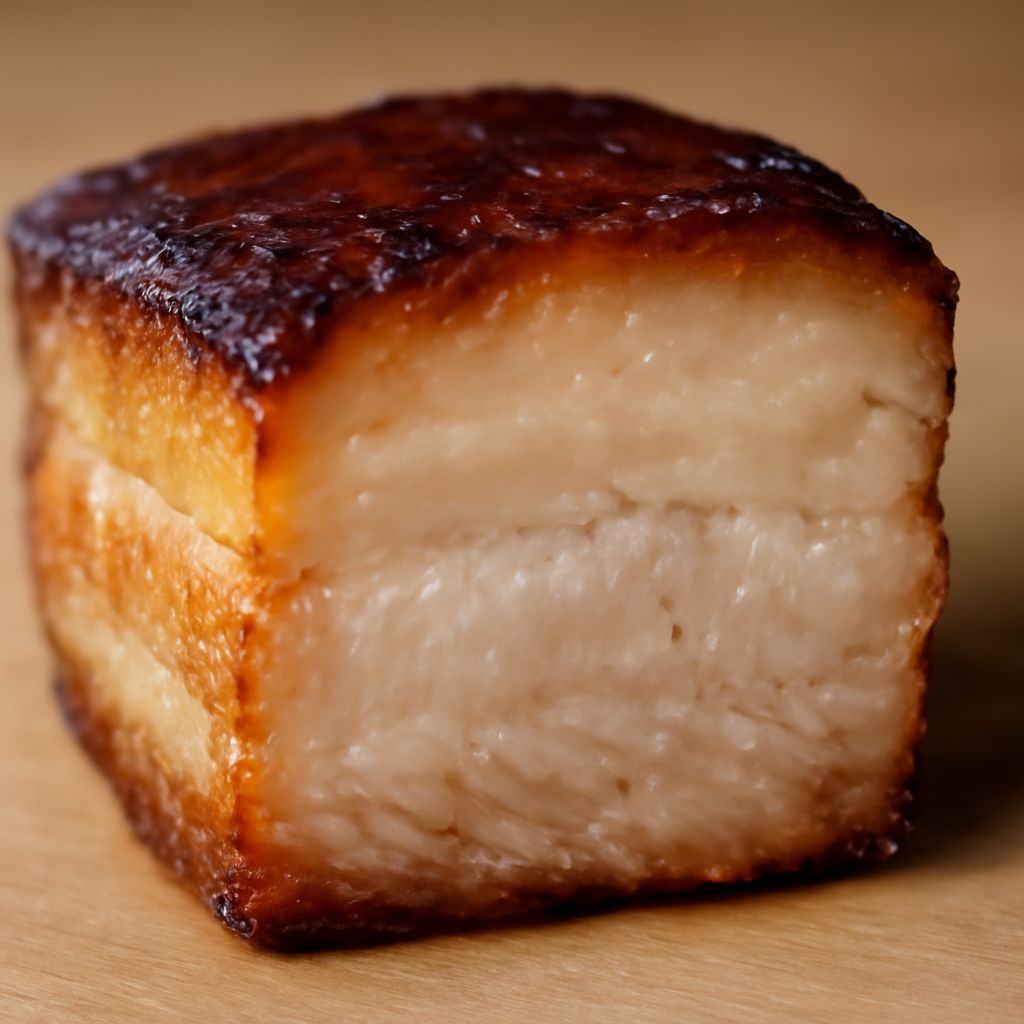
These Korean pork belly recipes are all about contrast: rich, browned pork against chile, acidity, crisp vegetables, and fresh lettuce. This Korean pork belly recipe uses a gochujang marinade, then cooks the meat in a hot pan until the edges caramelize and the fat renders.
Plan on 30 minutes to 2 hours for marinating and about 20 minutes for cooking and assembly. The result is tender, deeply seasoned pork you can serve as lettuce wraps with rice, kimchi, cucumber, and ssamjang.
Korean pork belly recipes: ingredients for this pan-seared version
Yield: 4 servings
- Pork: 1½ lb (680 g) skinless pork belly, cut into ½-inch (1.25 cm) slices
- Marinade: ¼ cup gochujang, 2 tbsp soy sauce, 1 tbsp rice vinegar, 1 tbsp honey, 4 finely grated or minced garlic cloves, 1 tbsp sesame oil, 1 tsp grated fresh ginger, and 1 tsp sesame seeds
- For cooking: 1 tbsp neutral oil, such as canola or avocado oil
- Accompaniments: 12 lettuce leaves, 2 cups cooked rice, ½ cup kimchi, ¼ cup ssamjang, 2 thinly sliced scallions, and 1 cucumber cut into matchsticks
Make the marinade
- Whisk the gochujang, soy sauce, rice vinegar, honey, garlic, sesame oil, ginger, and sesame seeds in a large bowl. The mixture should look smooth and thick enough to coat the pork.
- Add the pork belly and turn the slices until every surface is covered. Cover and refrigerate for 30 minutes to 2 hours. The shorter time gives you a lighter chile flavor; the full 2 hours gives you a more pronounced garlic-and-gochujang taste.
- While the pork marinates, cook the rice and prepare the lettuce, kimchi, cucumber, scallions, and ssamjang. Keep these accompaniments separate so the lettuce stays crisp.
Cook the pork belly in a hot pan
- Heat a large cast-iron or heavy skillet over medium-high heat. Add the neutral oil. Remove the pork from the marinade and gently pat the slices dry with paper towels. This removes excess moisture so the pork browns instead of steaming.
- Place the slices in the pan in a single layer, working in batches if necessary. Leave space between them; an overcrowded pan will not develop a good sear.
- Cook for 3–4 minutes on the first side, then turn and cook for another 3–4 minutes. Look for deeply browned edges, a glossy rendered-fat surface, and a dark red-brown crust from the gochujang.
- Check the thickest slice with an instant-read thermometer. It should reach 145°F (63°C). If it has not reached that temperature, continue cooking in 1-minute increments. If the marinade darkens before the pork is done, lower the heat to medium and turn the slices more often.
- Transfer the cooked pork to a cutting board and let it rest for 3 minutes. Do not pour the leftover raw marinade over the finished meat.
Korean pork belly recipe: slice and serve
Cut the rested pork across the strips into bite-size pieces. Slicing after cooking keeps the meat juicy while making each piece easy to fold into a wrap. If the pieces release a lot of rendered fat, briefly drain them on a paper towel, but leave enough of the browned coating intact for flavor.
To build each lettuce wrap, place a spoonful of rice in a lettuce leaf, then add a piece or two of pork, a little kimchi, cucumber, and scallion. Finish with about 1 tsp ssamjang. Fold the lettuce around the filling and serve immediately. The cool, crisp vegetables and rice balance the pork’s chile, soy, garlic, sesame, acidity, and rendered fat.