Saudi food brings together fragrant rice, tender meat, wheat breads, dates, and lightly roasted coffee. Across the kingdom, you will find hearty inland dishes, Red Sea flavors, and southern recipes shaped by herbs, chiles, corn, and sorghum.
This guide to Saudi Arabian cuisine shows how Saudi cuisine varies by region while keeping hospitality at its center. Many meals are designed for sharing, with food placed in the middle of the table and guests welcomed with coffee and dates.
Saudi Food Staples: Rice, Bread, Dates, Coffee, and Spices
Rice forms the foundation of many celebratory meals. Cooks season it with stock, onions, tomatoes, and warm spices before serving it beneath chicken, lamb, or other meat. The grains absorb the cooking juices, creating a fragrant base that works well on a shared platter.
Wheat remains equally important, especially in everyday foods. Tamees is a soft, chewy bread traditionally baked in a tandoor-style oven. You can eat it with stews, eggs, cheese, or simply use it to scoop up sauces. Other wheat preparations range from cracked grains to pieces of dough simmered in broth.
Dates provide welcome, sweetness, and quick energy. Hosts commonly offer them with Arabic coffee, whose light roast and cardamom aroma balance the fruit’s caramel-like richness. Saffron, cinnamon, cumin, and dried lime add depth to savory dishes; cardamom contributes both warmth and fragrance to food and drink. Together, these ingredients give Saudi cooking a layered flavor without relying on heavy sauces.
Signature Rice, Meat, and Bread Dishes
Kabsa is one of the best-known Saudi dishes: fragrant spiced rice cooked with chicken or lamb, then arranged for sharing. The rice may include tomato, raisins, almonds, or vegetables, depending on the household. Its combination of tender meat and aromatic grains makes it a common choice for family gatherings and celebrations.
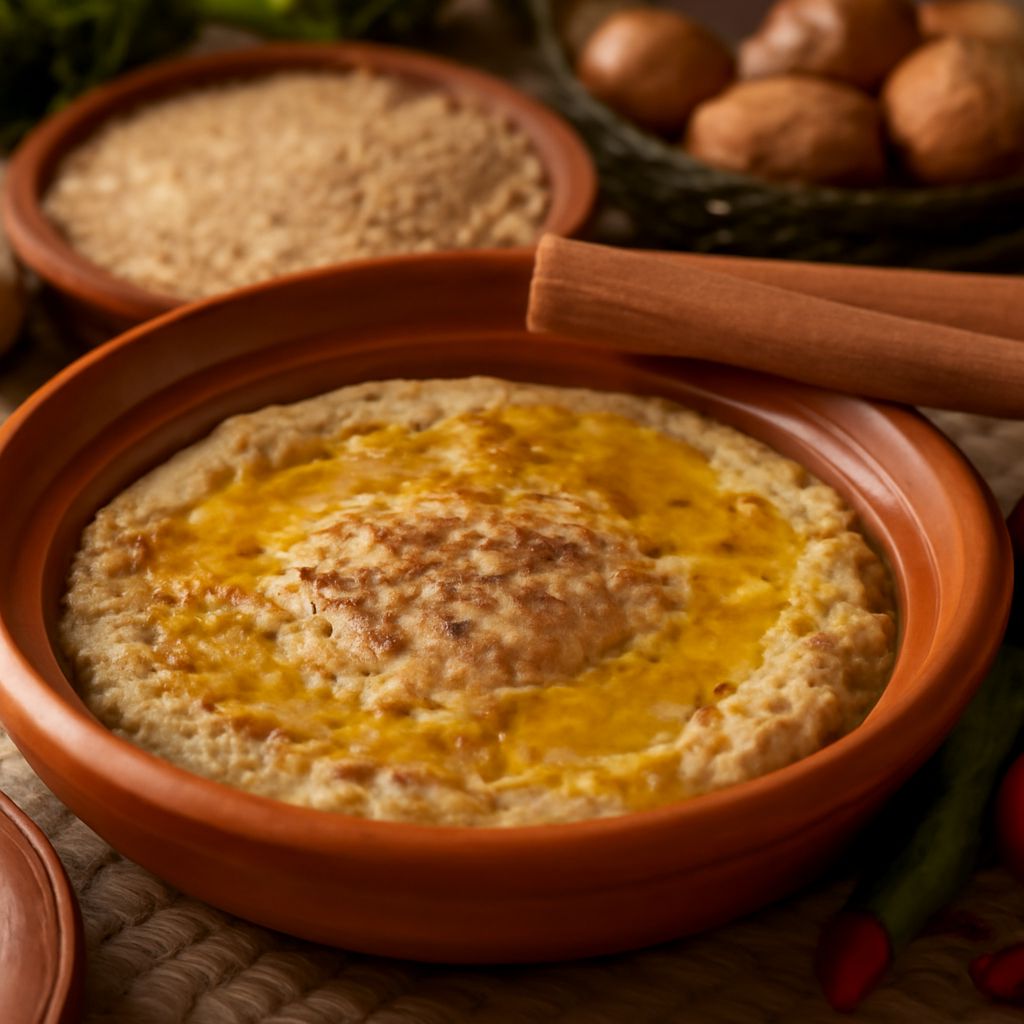
Jareesh uses cracked wheat cooked until soft and savory, often with meat, onions, and spices. Its thick, comforting texture makes it especially associated with central Najdi cooking. Saleeg, by contrast, is a creamy rice dish cooked with milk or stock. It is strongly linked with the Hijaz and is often served with roasted chicken or meat, creating a rich contrast between smooth rice and crisp, browned skin.
Mutabbaq is folded bread or pastry filled with a savory mixture such as minced meat, egg, scallions, and spices, then pan-fried until crisp. Matazeez combines small pieces of wheat dough with meat and vegetables in a seasoned broth; the dough becomes tender while thickening the stew. For something sweet, kleija is a spiced pastry filled with dates, often flavored with cardamom, cinnamon, or cloves.
Regional Saudi Arabian Cuisine: Najdi, Hijazi, Coastal, and Southern
Najdi cooking, from the central plateau, favors wheat, lamb, chicken, and broth-based dishes. Jareesh and matazeez demonstrate its hearty textures, while rice dishes appear prominently at larger gatherings. The flavors tend to be warming and savory, built from grains, onions, meat stock, and spices.
Hijazi cooking reflects the Red Sea region and centuries of trade and travel. Saleeg is a signature example, while mutabbaq shows the popularity of filled, pan-fried breads. You may also encounter bolder seasoning, varied rice preparations, and dishes influenced by the wider Arabian Sea and Indian Ocean exchange.
Along the coast, fish and other seafood take a larger role. Rice dishes such as sayadiyah pair fish with deeply seasoned rice, onions, and a darker, savory sauce. In the southern highlands, herbs, chiles, corn, and sorghum shape foods such as areekah and aseeda. These dishes often have rustic textures and earthier, sharper flavors than central rice-and-meat preparations.
Saudi Cuisine and Shared-Platter Hospitality
A meal often begins with Arabic coffee poured into small cups, followed by dates or another small sweet. The host may refill your cup several times, while you signal that you have finished by gently moving the cup from side to side. This offering expresses welcome and generosity rather than simply serving a beverage.
For the main meal, a large platter of rice and meat may occupy the center of the table. You eat with your right hand or use serving utensils, taking from the portion in front of you and making room for others. Family recipes, local ingredients, and personal spice preferences create variation, but the shared platter keeps the meal social: offering, serving, and eating together matter as much as the dish itself.