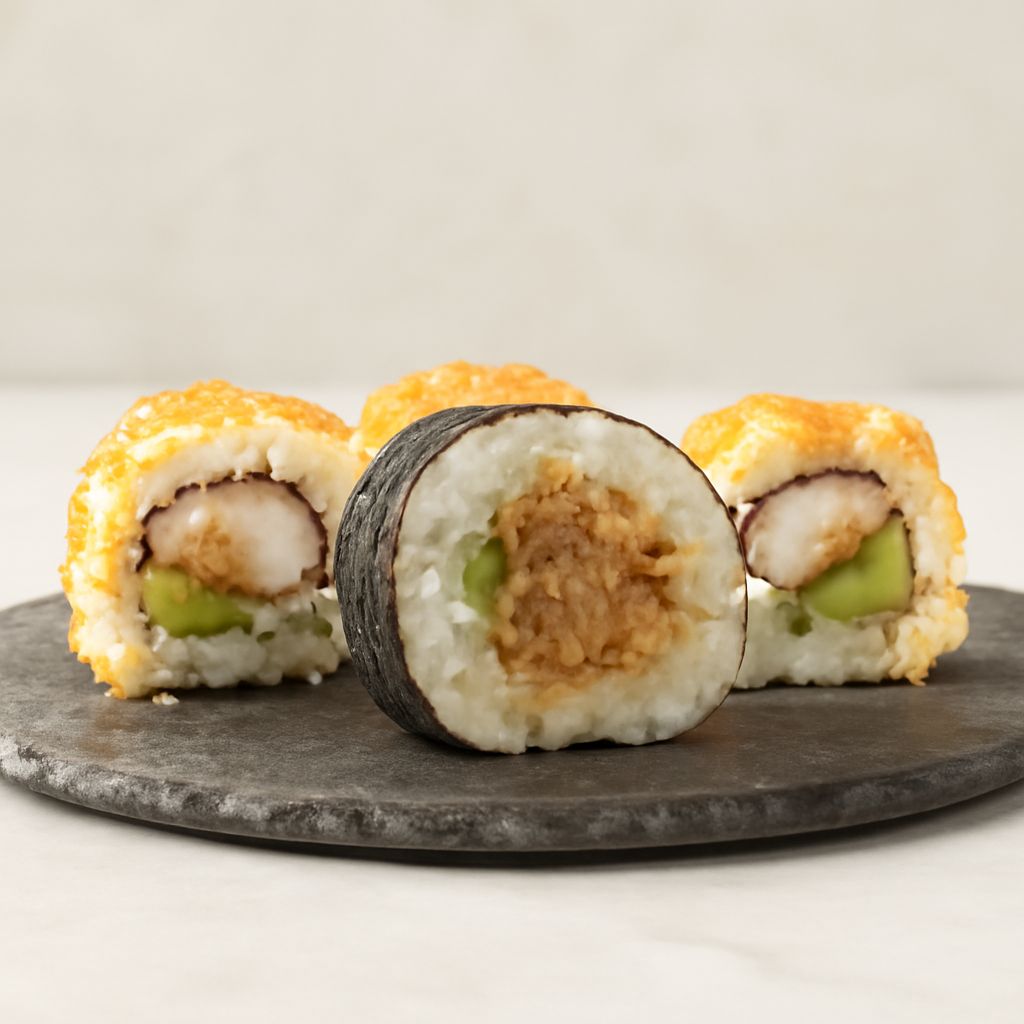
The sushi roll vs hand roll choice is mainly about shape, texture, and how you plan to eat it. A regular sushi roll is usually cut maki: a cylindrical roll sliced into bite-size pieces. A hand roll is temaki, a cone-shaped piece of seaweed filled and shaped by hand.
Choose cut maki when you want neat portions for sharing or a roll that holds its texture longer. Choose temaki when you want a crisp nori wrapper, generous filling, and a roll made to eat immediately.
Sushi Roll vs Hand Roll: Cut Maki and Temaki Shape and Assembly
Cut maki starts with a sheet of nori, sushi rice, and fillings such as salmon, tuna, cucumber, or avocado. The ingredients are arranged in a line, then the nori is rolled into a compact cylinder using a bamboo mat or another rolling method. The finished roll is sliced, often into six or eight pieces.
Temaki uses similar ingredients but a different wrapper shape and assembly. The chef folds a sheet of nori into a cone, adds rice and fillings inside, and serves the open end facing upward. Because the cone is formed by hand rather than sliced into rounds, each hand roll is a single portion with a wider opening at one end.
The wrapper also changes the bite. Cut maki distributes nori around the outside of every piece. Temaki gives you a larger continuous area of nori, with the rice and filling concentrated inside the cone. In sushi, “hand roll” specifically means temaki; it does not mean any sushi roll prepared by hand.
A Regular Sushi Roll Versus a Hand Roll: Rice, Filling, and Texture
A regular sushi roll versus a hand roll offers two different balances of rice, filling, and wrapper. Cut maki usually has a consistent rice-to-filling ratio from piece to piece. Its compact shape makes it easy to portion, pass around the table, and combine with other sushi.
Temaki often feels more filling-forward. The cone can hold a loose bundle of fish, vegetables, and rice, so each bite may contain more topping and less tightly compressed rice. Its larger opening also lets you control which ingredients you taste first.
- Cut maki: uniform pieces, tidy bites, and an even distribution of rice and filling.
- Temaki: one larger portion, a more open filling arrangement, and a direct hand-to-mouth eating style.
Texture is another key difference. Cut maki has a soft rice center and nori that may become tender as it sits. Temaki is designed to preserve the contrast between warm or room-temperature rice, fresh filling, and crisp seaweed. The cone can be messier, but it gives you a more immediate, textural bite.
Why Temaki Hand Rolls Are Served Immediately
Temaki should be eaten as soon as it reaches you because moisture quickly softens the nori. Rice releases steam and moisture, while wet ingredients such as fish, cucumber, and sauces transfer additional moisture into the wrapper. Within minutes, the nori can lose its crisp snap and become chewy or difficult to bite.
That timing affects preparation and service. A sushi chef can prepare cut maki, slice it, and arrange it on a plate while the pieces retain their structure. Temaki is typically assembled to order and handed over immediately, so the wrapper stays firm long enough for you to enjoy its intended texture. Hold the cone near the wide opening and eat from the pointed end upward to keep the filling contained.
Sushi Roll or Hand Roll: Which Should You Choose?
Your choice depends on whether you value sharing, freshness, or convenience more.
- Choose cut maki for sharing. Individual slices are easy to divide among several people, compare with other rolls, and eat with chopsticks.
- Choose temaki for maximum freshness. Order it when you can eat it immediately and want crisp nori with a freshly assembled filling.
- Choose cut maki for a tidy meal. The pieces are compact, consistent, and easier to eat at a desk, during a quick lunch, or alongside sashimi.
- Choose temaki for a hands-on meal. It suits you if you enjoy a larger bite, a stronger nori texture, and a roll customized around your preferred filling.
If you are ordering several items for the table, start with cut maki and eat temaki first when it arrives. That preserves the hand roll’s crisp wrapper while giving everyone easy-to-share pieces from the regular sushi roll.