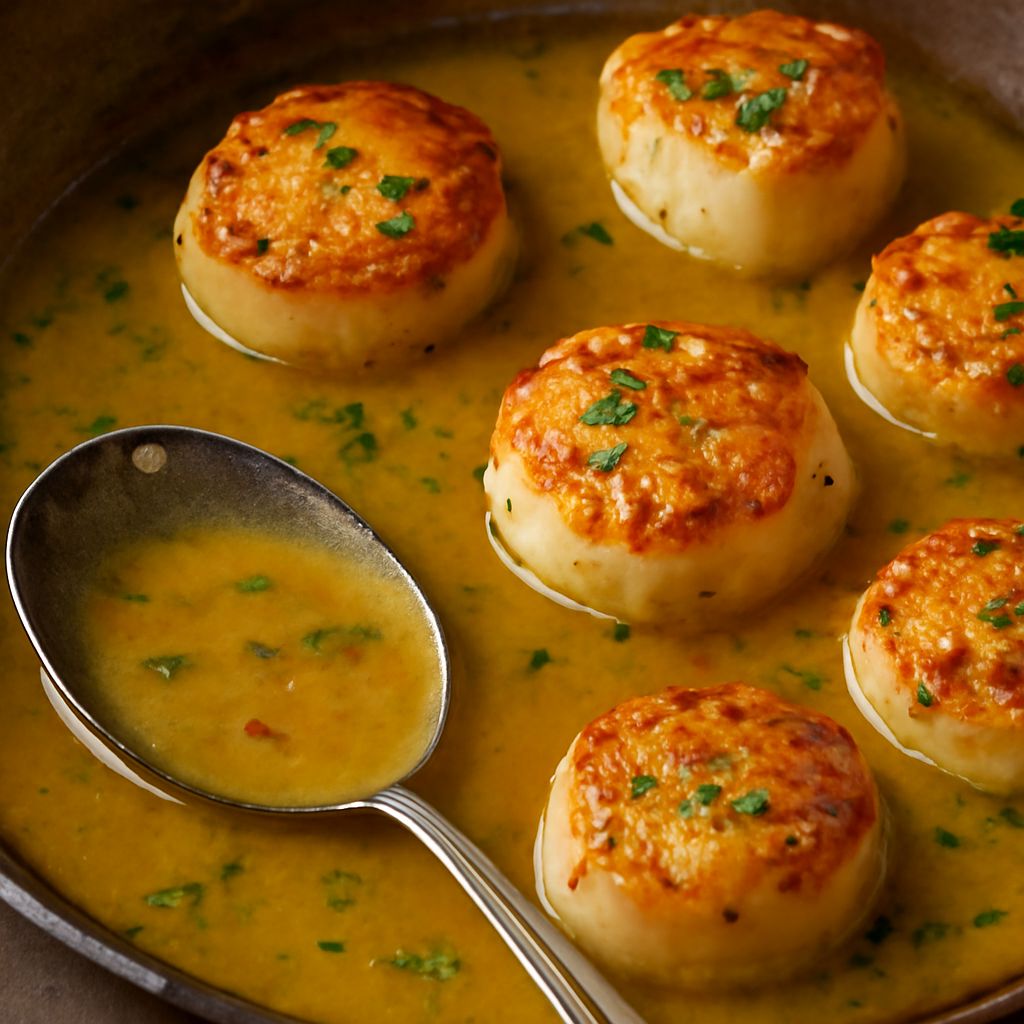
How much time do scallops need in a hot pan? For sea scallops about an inch thick, allow roughly 2 to 3 minutes on the first side and 1 to 3 minutes on the second. Their size, surface moisture and the heat of your pan all affect that estimate, so look at the center as well as the crust.
Serve with rice, a green salad or crusty bread. Have the accompaniments ready before the seafood goes into the pan.
Choosing and preparing sea scallops
Buy fresh sea scallops from a reputable seafood counter, kept refrigerated or displayed on a thick bed of fresh ice. They should smell mild and fresh, not sour or strongly fishy. Ask for dry-packed scallops if available; added liquid can make it harder to achieve a browned surface. Scallops sold by count per pound vary in size, so select pieces of similar thickness for even cooking.
Plan to cook fresh seafood within two days of purchase, keeping it at 40°F or below. The FDA’s seafood guidance also recommends keeping raw seafood separate from ready-to-eat foods. Use a clean plate for the cooked scallops and wash your hands, utensils and work surface after handling them raw.
Bay scallops are much smaller than sea scallops and cook more quickly. They can be sautéed in a hot pan, but begin checking their centers after a minute or two; the timings below are for larger sea scallops.
Pan-seared scallops with lemon butter
This recipe serves four as a light main course, or two as a generous one. Allow about 15 minutes for preparation and 5 to 8 minutes for cooking, plus a little extra if you need two batches.
Ingredients
- 1 pound sea scallops, about 1 inch thick
- 1 tablespoon neutral oil, divided if cooking in batches
- 1/2 teaspoon kosher salt, or to taste
- 1/4 teaspoon freshly ground black pepper
- 1 tablespoon unsalted butter
- 1 tablespoon fresh lemon juice
- 1 tablespoon chopped parsley
- Lemon wedges, for serving
-
To prepare fresh sea scallops for the skillet, check each for a small, firm rectangular side muscle. Peel it off with your fingers if present; it can be chewy. Pat the scallops thoroughly dry on both flat sides with paper towels. If they are particularly wet, use fresh towels and press again. Season both sides with the salt and pepper just before cooking.
-
Set a large, heavy skillet over medium-high heat. Add the oil and let it heat until it shimmers. Place the scallops flat side down in a single layer, leaving space between them. If they do not fit comfortably, use two batches and divide the oil. Crowding traps steam and makes browning difficult.
-
Leave the first side undisturbed for about 2 to 3 minutes. When a golden crust forms and the scallop releases readily from the pan, turn it with tongs. If it clings, give it a little more time; if the oil smokes heavily, reduce the heat.
-
The scallops need about 1 to 3 minutes of cooking on the second side. Smaller, very dry pieces in a thoroughly heated pan may be ready toward the shorter end; thicker or wetter pieces may take longer. Transfer finished pieces to a clean warm plate as they become ready, rather than waiting for every one to match.
-
Reduce the heat to low. Add the butter to the pan and let it melt, then stir in the lemon juice. Spoon the sauce over the scallops, scatter with parsley and serve with lemon wedges. If cooking in batches, make the sauce after the final batch and pour it over all the scallops.
How long do you cook scallops before checking the center?
How long do you cook scallops before testing a thick piece? Start checking after turning, especially if the pieces are thin. The answer to how long to cook scallops depends on their thickness and the pan: a dark exterior can appear before a thick center is ready. The FDA says cooked scallop flesh should be firm and milky white or opaque. Cut into the thickest one to inspect its center; if it is still translucent, return it to the pan briefly and check again. FDA guidance says most seafood should reach 145°F internally, so use a food thermometer in the thickest part when practical.
Learning how to cook fresh scallops is easier when you watch the first batch closely. Remove smaller pieces sooner. Let the pan regain heat between batches. A little variation in the cooking time for scallops is normal in a home skillet.
Serving and saving leftovers
With scallops, how to cook them well includes serving them hot: prepare rice or vegetables first and have the plates ready. A spoonful of the lemon butter brings the plate together; add the wedges at the table so each person can adjust the brightness.
Refrigerate leftovers promptly in a covered container at 40°F or below. The FDA advises against leaving seafood out for more than two hours, or one hour when the temperature is above 90°F. For another meal, warm the scallops gently in a covered skillet with a splash of water, until they reach 165°F; prolonged reheating can make them firm.
The most likely difficulty is a pale surface with liquid pooling in the pan. Lift the scallops out, pour off the liquid, wipe the skillet carefully and let it heat again with a little oil. Dry the remaining raw pieces thoroughly and give each one room; then return any partly cooked pieces to finish until their centers are opaque and firm.