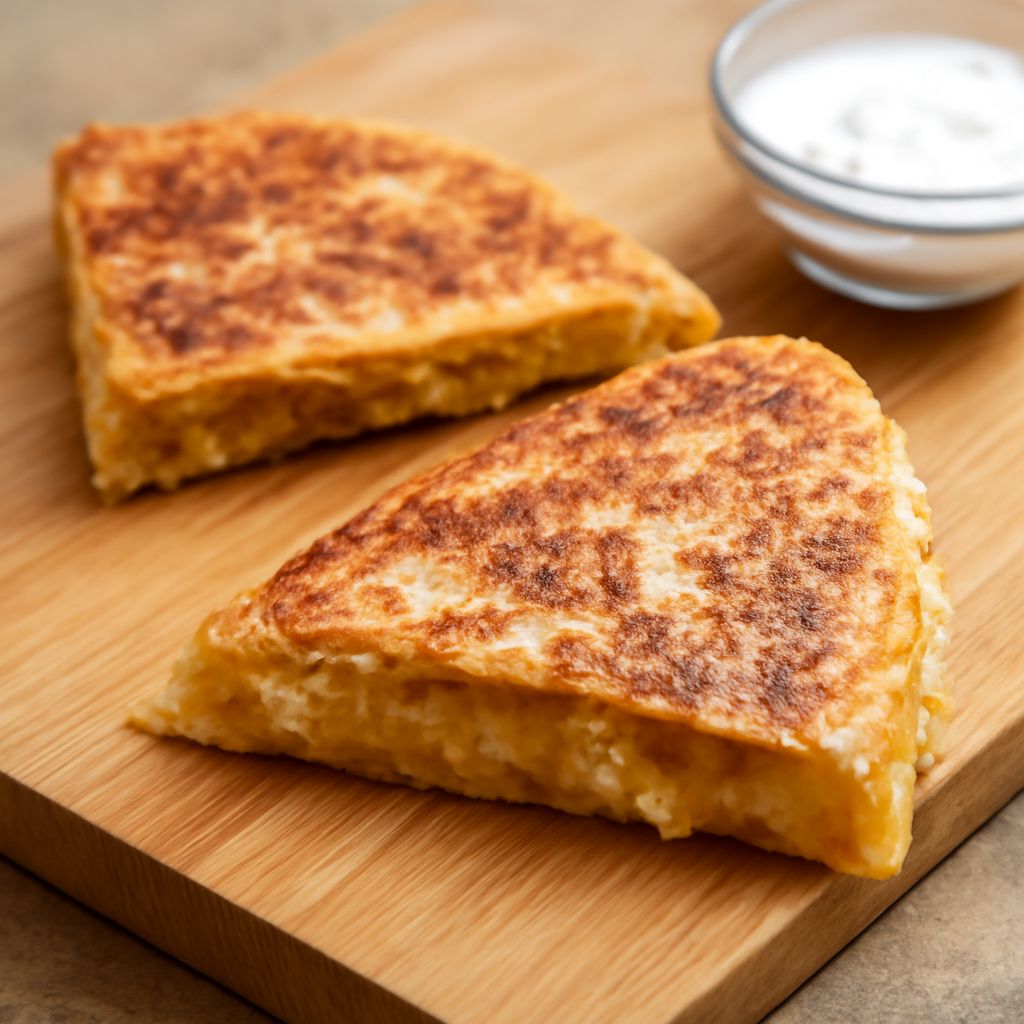
How do you get a crisp, golden outside and a fully melted center? Use a modest layer of filling and give it time over medium-low heat. For a cheese-filled quesadilla, choose cheese that melts smoothly; a patient turn in the pan takes care of the rest.
This method makes two folded quesadillas, enough for one generous meal or two lighter servings. Have a spatula and a plate ready before the tortillas go into the pan. A simple salsa or a few slices of avocado can go on the table while the filling is melting.
Quesadilla Cheese: What Melts Well?
Oaxaca cheese pulls into soft strands as it melts and has a mild, milky flavor. Monterey Jack is another excellent choice and is widely available in US grocery stores. Low-moisture mozzarella melts smoothly, too, though its flavor is mild; a little shredded cheddar mixed into it adds a sharper note.
For this recipe, use 4 ounces Monterey Jack, about 1 cup shredded. Grate it from a block if you can: fine, even shreds spread easily and melt before the tortilla becomes too dark. Crumbly, salty cheeses such as cotija make a lively garnish, but use a melting cheese for the main filling so the halves hold together.
Your quesadilla cheese should be spread in a thin, even layer. A mound in the center takes longer to melt and can spill out when you turn it. Leave about a half-inch border around the curved edge to give the filling room to soften and spread.
Gather Your Ingredients
- 2 medium flour tortillas, about 8 inches across
- 4 ounces Monterey Jack, shredded, about 1 cup
- 1 teaspoon neutral oil, divided, or enough to lightly film the skillet
- Salsa and avocado, for serving, if desired
Flour tortillas are pliable and brown readily in a skillet. Corn tortillas offer a distinct toasted-corn flavor; if using them, choose pliable ones and warm each briefly before folding so it is less likely to crack. Smaller tortillas need less filling, so distribute the cheese in a thin layer and cook in batches.
This cheese quesadilla recipe uses one tortilla per serving, folded over itself. The fold gives you a neat edge to guide with the spatula, while the open sides allow you to peek at the melting cheese.
Cook Slowly, Then Turn
- Place a large skillet over medium-low heat. Add 1/2 teaspoon oil and spread it into a thin film with a paper towel or spatula.
- Lay one tortilla flat in the skillet. Scatter 1/2 cup shredded cheese over one half, leaving the border clear. Fold the empty half over the filling and press gently with the spatula.
- Cook for 2 to 3 minutes, checking underneath after about 2 minutes. When the bottom has golden-brown patches, slide the spatula under the folded side and steady the top as you turn it toward the open edge.
- Cook the second side for another 2 to 3 minutes. The tortilla should have golden patches on both sides, and the cheese at the open edge should be fully melted. Transfer to a plate, add the remaining 1/2 teaspoon oil, and repeat with the second tortilla and remaining cheese.
- Rest each cheese-filled quesadilla for 1 minute, then cut into wedges. The brief pause lets the molten filling settle so it stays inside when sliced.
A tortilla with cheese needs enough contact with the pan to brown, but little oil: a thin film gives a pleasant crispness without making the surface greasy. If the skillet is small, cook one at a time and adjust the heat between batches. The second may brown faster because the pan is already thoroughly warm.
Make It Your Own
Once you are comfortable with a recipe for a cheese-filled quesadilla, try a spoonful of finely chopped roasted peppers or cooked mushrooms with the filling. Pat moist additions dry and keep the layer thin. Too much wet filling can steam the tortilla and delay browning; large pieces also make the fold difficult to turn.
Serve the wedges straight from the skillet with salsa for acidity and avocado for a cool, creamy contrast. A squeeze of lime over the plate is welcome, and a spoonful of sour cream gives everyone a choice of how rich to make each bite. Keep dips alongside so the toasted surface stays crisp.
If the outside browns before the center melts, lower the heat and cover the skillet for a minute. The trapped warmth will help soften the filling; uncover briefly at the end to restore the crisp surface.