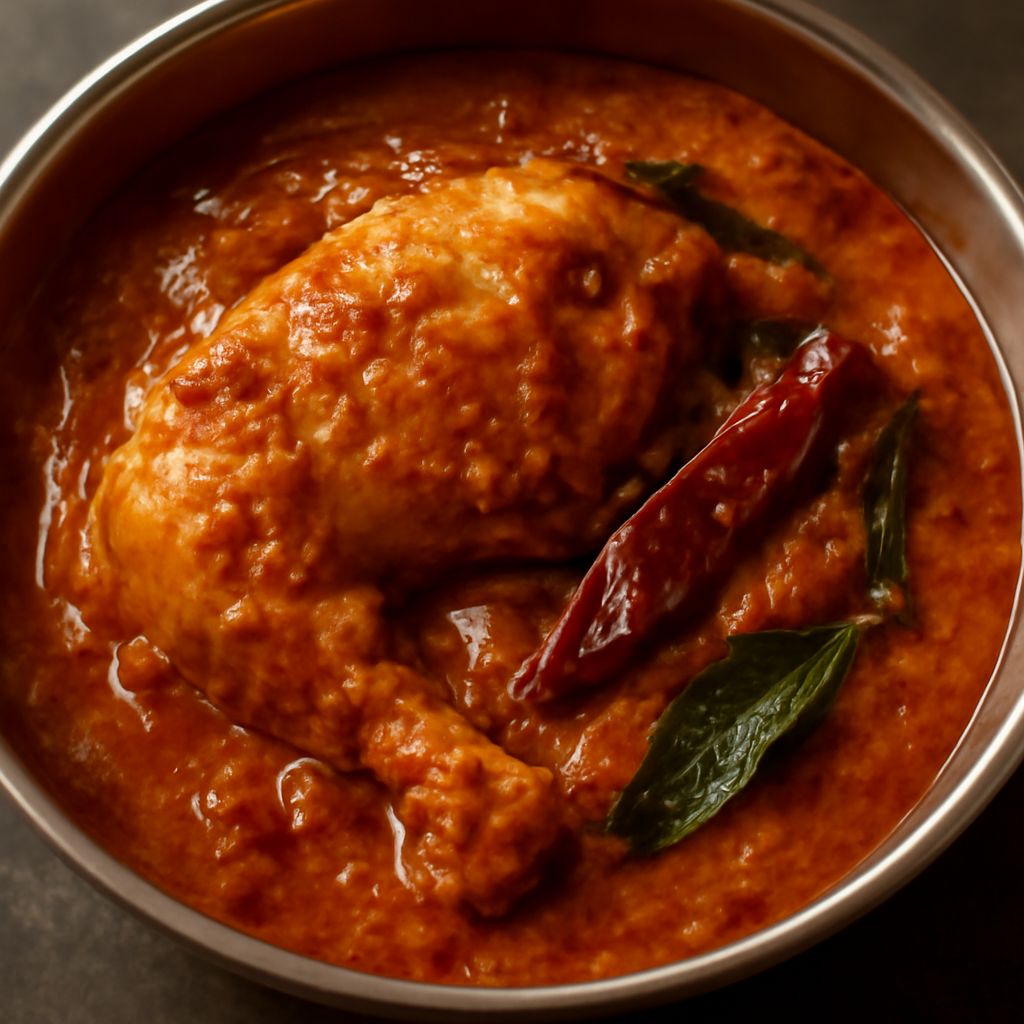
You have chicken for dinner and want a sauce generous enough to spoon over rice. This Chettinad-style chicken recipe makes a fragrant kulambu, or gravy, with toasted spices, coconut, tomato, and curry leaves. The pepper warms the palate while fennel and coriander give the sauce a sweet, aromatic depth.
This is one interpretation of a dish associated with the Chettinad region of Tamil Nadu. Cooks vary the spices, heat, and consistency; here the gravy is loose enough to mingle with rice while still clinging to each piece of chicken.
Chicken Chettinad recipe: ingredients
This chicken chettinad recipe serves four and takes about 50 minutes. Use a heavy skillet with a lid and a blender or spice grinder. Cut the chicken into roughly equal pieces so it cooks evenly.
For the spice paste:
- 1 tablespoon coriander seeds
- 1 teaspoon fennel seeds
- 1 teaspoon black peppercorns
- 1/2 teaspoon cumin seeds
- 2 dried red chilies, stems removed
- 1 small cinnamon stick, about 2 inches long
- 2 cloves
- 1/3 cup unsweetened shredded coconut
- 1/3 cup water, plus more as needed for blending
For the gravy:
- 1 1/2 pounds boneless, skinless chicken thighs, cut into 2-inch pieces
- 2 tablespoons neutral oil
- 1 large onion, finely chopped
- 8 to 10 fresh curry leaves
- 4 garlic cloves, minced
- 1 tablespoon finely grated fresh ginger
- 2 medium tomatoes, chopped
- 1/2 teaspoon ground turmeric
- 1 teaspoon fine salt, plus more to taste
- 1 to 1 1/2 cups water
- Chopped cilantro, for serving
Serve with steamed rice, or with dosa or chapati for scooping up the sauce. Fresh curry leaves have a distinctive citrusy, savory fragrance and are worth seeking out at an Indian grocery. They are different from curry powder.
Toast and grind the spices
Set a dry skillet over medium-low heat. Add the coriander, fennel, peppercorns, cumin, dried chilies, cinnamon, and cloves. Stir for 2 to 3 minutes, until fragrant. Add the coconut and stir for another minute or two, until it turns lightly golden. Tip everything onto a plate immediately so the residual heat does not scorch the spices.
Once cool, grind the mixture with 1/3 cup water to a fairly smooth paste. Add a tablespoon or two more water if the blades need help moving. The paste will still have a little texture from the coconut; it should not contain large, hard pieces of cinnamon or whole peppercorns.
In this Chettinad chicken recipe, black pepper supplies a bright heat and the toasted coconut gives body to the gravy. For a gentler result, use one dried chili instead of two. Chili varieties differ in heat, so you can add more later if the finished sauce needs it.
Build the gravy
Heat the oil in the skillet over medium heat. Add the onion and cook, stirring, for 6 to 8 minutes, until softened and lightly golden. Add the curry leaves carefully; they may sputter in the hot oil. Stir in the garlic and ginger and cook for about 30 seconds, just until fragrant.
Add the tomatoes, turmeric, and salt. Cook for 5 to 7 minutes, stirring occasionally, until the tomatoes soften and begin to form a thick mixture. If the pan looks dry before they break down, add a splash of water and scrape up anything sticking to the bottom.
Add the ground paste and cook for 2 minutes, stirring frequently. Its aroma will deepen as it meets the warm onion and tomato. Pour in 1 cup water and stir well, reaching into the corners of the pan so the paste disperses evenly. Bring the sauce to a gentle simmer.
Simmer the chicken
Add the chicken pieces and turn them through the sauce. Cover and simmer gently for 18 to 25 minutes, stirring once or twice, until the pieces are cooked through. Check the thickest pieces with an instant-read thermometer: chicken should reach 165°F. If needed, continue simmering and check again.
The gravy should be pourable but substantial enough to coat a spoon. If it thickens too much during cooking, stir in a little of the remaining water. In this recipe for chicken from Chettinad, adjust the water to suit what you are serving alongside it. If it is thinner than you like, uncover the pan and simmer for a few minutes, stirring so the coconut does not catch. Taste for salt after the chicken is fully cooked.
Chettinad chicken kulambu belongs at the table with something to receive the sauce. Spoon it over hot rice and scatter cilantro on top, or place warm chapati alongside. The sauce carries the spices into every bite; the chicken remains the center of the plate.
If the spices taste bitter
The most likely trouble is scorching the spice mixture. Dark, nearly black coconut or a sharp burnt smell is the sign. If you notice it before grinding, discard the scorched mixture and toast a fresh batch over lower heat, moving it constantly. Once burnt spices are mixed into the gravy, their bitterness is difficult to remove, so starting again with a clean pan gives the best result.