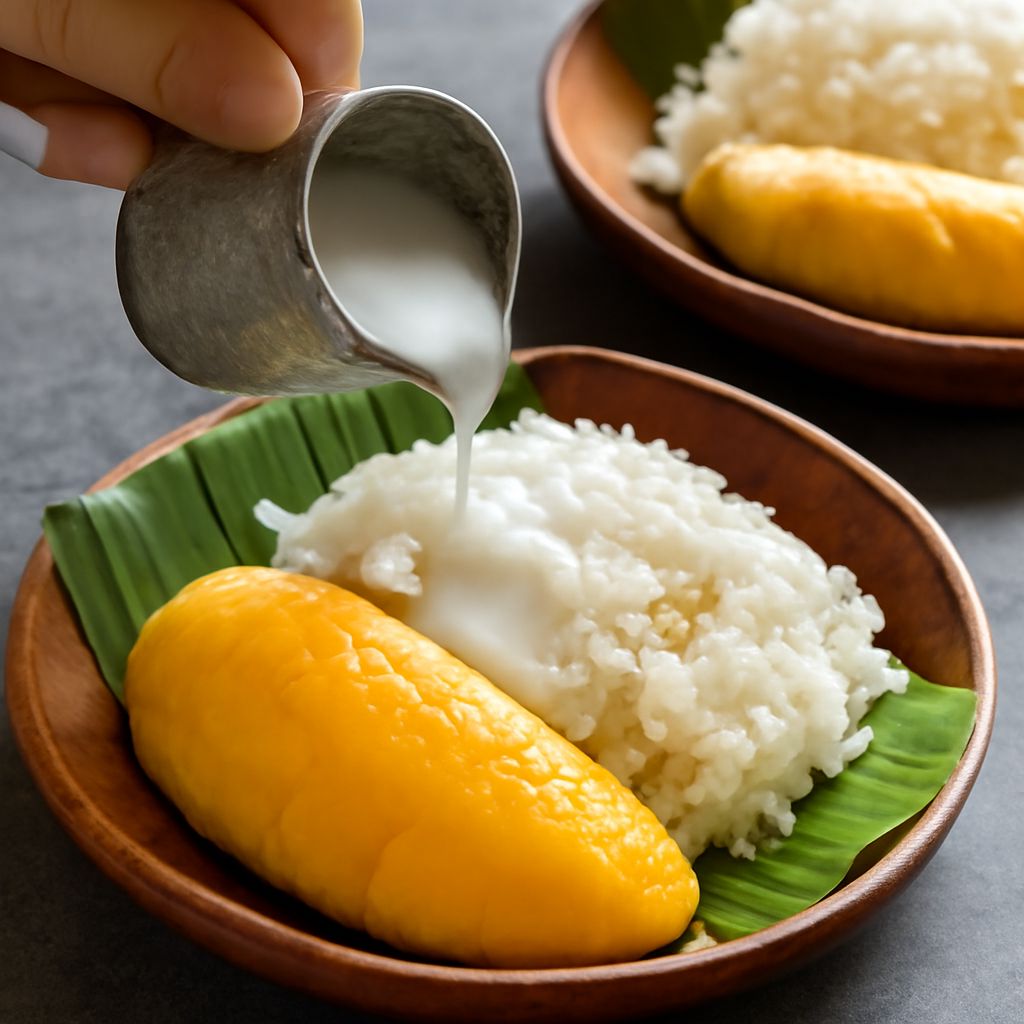
How do you make the rice tender and pleasantly chewy beneath slices of ripe mango? Soak Thai glutinous rice, steam it, and let it absorb warm, sweetened coconut milk. The resulting sticky rice with mango has distinct grains that hold together softly, with a fragrant richness that meets the fruit’s bright sweetness.
Give the rice time to soak and the coconut mixture time to settle into it. This Thai combination of mango with sticky rice is at its loveliest slightly warm or at room temperature, when the fruit is cool and the grains are still supple.
Mango and sticky rice: what to gather
This recipe serves four. Allow at least four hours for soaking, about 25 minutes for steaming, and 30 to 40 minutes for the rice to absorb the coconut mixture. You will need a steamer basket, a clean thin cotton cloth or muslin, a saucepan, and a covered bowl.
- 1 cup uncooked Thai white glutinous rice, also sold as sweet rice or sticky rice
- 1 1/6 cups unsweetened coconut milk, divided into 2/3 cup and 1/2 cup
- 1/3 cup granulated sugar
- 1/2 teaspoon table salt, divided
- 1 teaspoon rice flour
- 1 tablespoon water
- 2 ripe mangoes
- 1 tablespoon toasted sesame seeds or crispy mung beans, optional
Use full-fat coconut milk for a rich result. Stir the contents of the can before measuring, since the thick cream can separate from the liquid. The larger portion sweetens the rice; the smaller portion becomes a lightly salted sauce for the top.
Choose the rice and fruit
Look for long-grain Thai glutinous rice at an Asian market or in the international aisle. Despite its name, glutinous rice contains no gluten: the word describes its sticky character. When steamed, its grains cling together while keeping a gentle chew.
Ordinary long-grain rice cooks into more separate, less elastic grains. It can make a pleasant coconut rice dessert, but it will not give this mango and coconut sticky rice dessert its characteristic cohesive texture. Buy the glutinous variety when you want to shape a small mound that holds its place beside the fruit.
Choose mangoes that yield slightly to gentle pressure and smell fragrant near the stem. Their flesh should be sweet and tender rather than fibrous or sharply sour. Yellow Ataulfo or Champagne mangoes are a good choice when available; let firm fruit ripen at room temperature before cutting it.
Soak and steam
Rinse the rice in a bowl of cool water, swishing it with your fingers and pouring off the cloudy water. Repeat several times until the water is mostly clear. Cover generously with fresh cool water and soak for at least four hours. Drain thoroughly in a fine sieve: excess water caught in the cloth can make the bottom layer soggy.
Bring water to a lively boil in the steamer. Line the basket with the damp cloth, spread the drained grains in an even layer, and fold the cloth loosely over them. Leave space around the rice for steam to rise, and keep the basket above the water. Cover and steam for 20 to 25 minutes, checking the water level so the pot does not boil dry.
Taste a few grains from the center. They should be translucent and tender all the way through, with a slight chew and no hard core. If they are still firm in the middle, cover and steam a few minutes longer. The rice should be fully cooked before the coconut milk goes in; the warm mixture adds flavor and moisture rather than completing the steaming.
Sweeten the rice and make the sauce
While the rice steams, gently heat 2/3 cup coconut milk with the sugar and 1/4 teaspoon salt, stirring until dissolved. Keep it warm. Transfer the cooked rice immediately to a bowl, pour the warm mixture over it, and stir to break up any clumps. It will look quite wet at first. Cover and let stand for 20 minutes, stir again, then cover for another 10 to 20 minutes until the liquid is absorbed.
For this sticky rice dessert with mango, stir the rice flour and water together in a small saucepan. Add the remaining 1/2 cup coconut milk and 1/4 teaspoon salt. Heat gently, stirring, until just thick enough to coat a spoon. Set aside. In mango sticky rice, Thai cooks balance sweet coconut rice with a little salty sauce; the contrast makes the fruit taste especially vivid.
Slice and serve
Peel each mango and cut the broad cheeks from either side of the flat pit. Slice the cheeks crosswise. Spoon the warm coconut rice onto four plates, arrange the fruit alongside, and drizzle a little sauce over each mound. Add sesame seeds or crispy mung beans for a delicate crunch, if you like.
Mango and sticky rice are best enjoyed soon after the rice has absorbed its coconut mixture. Serve extra sauce at the table so each person can add a spoonful. The rice should be moist and cohesive, with grains still visible; sticky rice and mango meet most beautifully when neither is hidden beneath a pool of sauce.
If the rice stays hard
The most likely setback is rice with a chalky, hard center after steaming. Taste grains from several spots before adding the coconut mixture. If they are still hard, return them to the covered steamer, check that water is boiling underneath, and steam for a few more minutes before tasting again. A full soak and an even layer in the basket help the next batch cook through evenly.