Indulging in a warm, buttery croissant fresh out of the oven is one of life’s simple pleasures. Creating these flaky pastries from scratch might seem daunting, but with the right technique and a bit of patience, you can master the croissant recipe and achieve bakery-quality results at home. This guide will walk you through every step, from understanding the ingredients to troubleshooting common issues.
Understanding Croissant Ingredients
The perfect croissant begins with the right ingredients. Here’s what you’ll need:
- Flour: Use all-purpose flour or a blend of all-purpose and bread flour for the best texture.
- Yeast: Use active dry yeast to give the croissant its rise.
- Milk: Whole milk adds richness and flavor.
- Sugar: Helps with browning and adds a touch of sweetness.
- Salt: Enhances the flavors and strengthens the dough.
- Butter: Use high-quality unsalted butter, as it’s the star of the show. You’ll need it both in the dough and for laminating.
- Water: Helps to combine the ingredients and activate the yeast.
Step-by-Step Guide to Making Croissant Dough
- Activate the Yeast: In a small bowl, combine warm water, a pinch of sugar, and yeast. Let it sit until frothy, about 5 minutes.
- Mix the Dough: In a large bowl, combine flour, sugar, and salt. Add the yeast mixture and milk, and mix until a dough forms.
- Knead the Dough: Knead the dough on a lightly floured surface for about 5-7 minutes until smooth and elastic.
- First Rise: Place the dough in a greased bowl, cover with a damp cloth, and let it rise in a warm place until doubled in size, about 1-2 hours.
- Prepare the Butter Block: Place the butter between two sheets of parchment paper and pound it into a square about 1/2 inch thick. Chill until firm but pliable.
- Laminate the Dough: Roll the dough into a rectangle, place the butter block in the center, and fold the dough over the butter. Roll it out again and perform a series of folds to create layers.
- Chill the Dough: Wrap the laminated dough in plastic wrap and refrigerate for at least 1 hour.
Shaping and Proofing Your Croissants
- Roll and Cut: Roll the chilled dough into a large rectangle. Cut the dough into triangles.
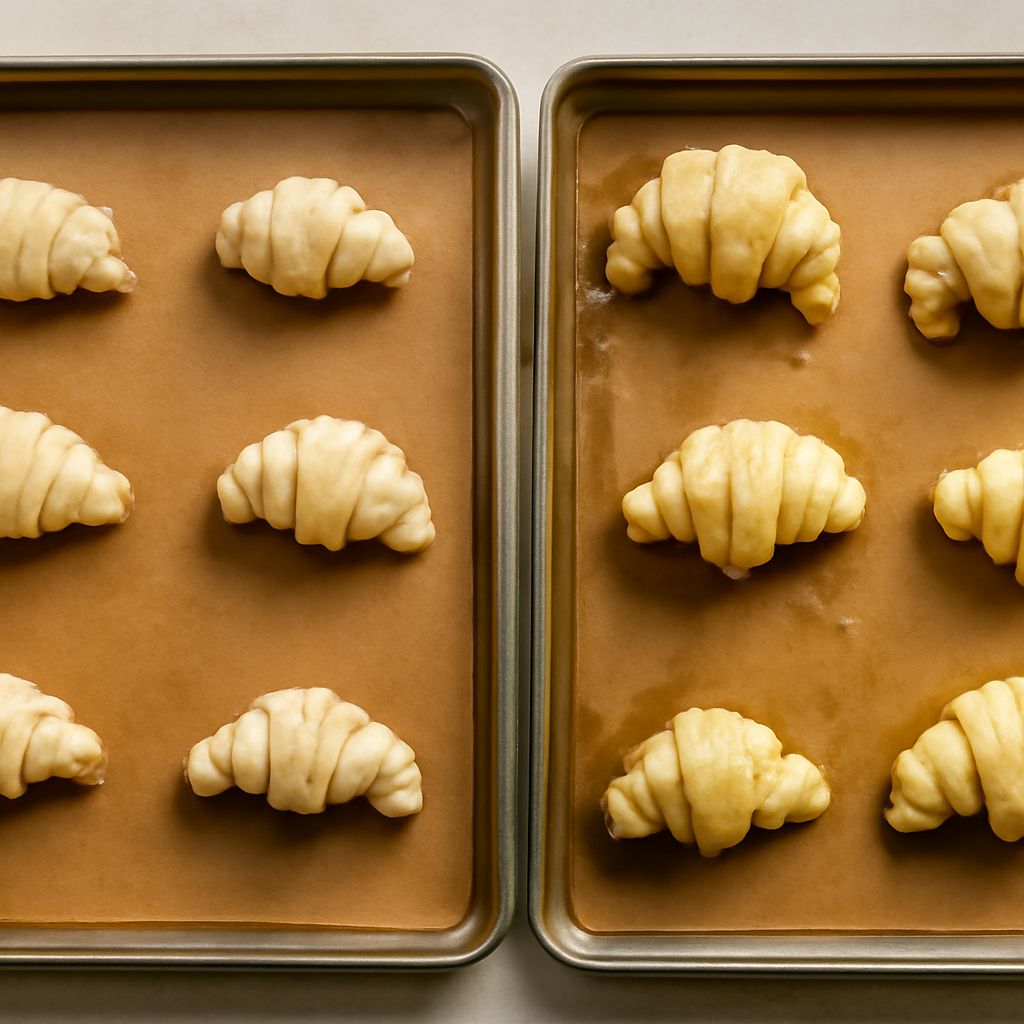
- Shape the Croissants: Starting from the wide end, roll each triangle towards the tip to form a crescent shape.
- Proofing: Place the shaped croissants on a baking sheet lined with parchment paper. Cover them lightly with plastic wrap and let them proof in a warm place until doubled in size, about 1-2 hours.
Baking and Finishing Touches
- Preheat the Oven: Preheat your oven to 375°F (190°C).
- Egg Wash: Brush the proofed croissants with an egg wash (a beaten egg mixed with a tablespoon of milk) for a glossy finish.
- Bake: Bake the croissants for 15-20 minutes or until golden brown and flaky.
- Cool: Let them cool on a wire rack for a few minutes before serving.
Troubleshooting Common Croissant Issues
- Flat Croissants: Ensure your yeast is fresh and the dough is properly proofed.
- Butter Leaking: Keep the dough and butter cold during laminating to prevent melting.
- Dense Texture: Avoid over-kneading the dough, and ensure proper proofing for airy layers.
- Uneven Layers: Roll and fold the dough carefully, maintaining even thickness throughout.
By following this comprehensive croissant recipe from scratch, you’ll be able to create delicious, buttery croissants that will impress everyone who tries them. Enjoy the process, and relish the reward of homemade croissants that are truly a labor of love.